Interclub Pickleball Leagues: Run MLP Formats Without Admin Chaos
Interclub Pickleball Leagues: Run MLP Formats Without Admin Chaos

An interclub pickleball league is a club-to-club competition where teams, not just individual players, face off over a season, usually with rosters that mix women’s doubles, men’s doubles, and mixed doubles pairings. If you want in, the fastest route is to contact your club’s captain or check your local league’s signup page directly, since most interclub leagues run on fixed registration windows.
TL;DR:
- Established leagues commonly run 10 to 14 weeks, while introductory or off season sessions may last about six weeks; match days are usually fixed.
- Expect women’s doubles, men’s doubles, and mixed doubles, but confirm local scoring and tiebreakers because regional leagues often simplify formats inspired by Major League Pickleball.
- Before registering, check roster limits, mixed doubles gender balance, club membership or guest player rules, and how divisions are assigned by skill.
- FlexLeague+ charges no monthly subscription, but organizers pay a $25 platform fee per division, and players pay when they register.
Table of Contents
- Why clubs organize interclub leagues and what players gain
- Common team formats and how match scoring works
- How long seasons run and when matches happen
- What teams and players need before the season starts
- Running a season without the admin headaches
- Choosing software to manage registration, scoring, and payments
- Three priorities that make or break a season
- How FlexLeague+ supports interclub leagues
- FAQ
- Sources
Why clubs organize interclub leagues and what players gain
Clubs run interclub leagues because they keep members engaged between tournaments and give casual players a reason to show up every week. A team format builds loyalty that open play and solo ladders rarely create, since players are competing for their club, not just their own record.
For players, the draw is consistent, scheduled competition without the isolation of ladder play or the one-and-done nature of a weekend tournament. Most interclub setups follow a regional structure: a season with set divisions, club membership tied to a home facility, and matches against other clubs in the same area.
- Clubs gain member retention and a built-in reason for players to renew.
- Players get scheduled matches, teammates, and a format that rewards consistency over a single tournament bracket.
- Interclub play sits between casual open play and solo tournament brackets, combining team structure with regular competition.
Common team formats and how match scoring works
Most interclub leagues borrow their format from Major League Pickleball’s team structure, where a single team match is built from multiple games rather than one. A typical match includes women’s doubles, men’s doubles, and mixed doubles games, with the overall team score determined by combining results across all of them.
- Team matches commonly include separate games for women’s doubles, men’s doubles, and mixed doubles pairings.
- Rosters are usually balanced by skill or age division, so clubs field players rated similarly to their opponents.
- Tiebreaker formats like DreamBreaker style play show up when team matches end tied after regulation games.
MLP’s rules guide specifies that MLPlay team matches use multiple games per match with built-in tiebreaker formats such as DreamBreaker, a structure increasingly adapted by regional interclub leagues. Local leagues rarely copy MLP’s format exactly. Many trim roster sizes or simplify tiebreakers to fit club capacity, so always check your own league’s published rules before assuming a standard applies. For a deeper look at how these scoring variants work in practice, our breakdown of team-league scoring and DreamBreaker formats covers the mechanics in more detail.
How long seasons run and when matches happen
Season length varies more than most new players expect, and the format shapes how much time you’re committing to.
- Short sessions run about 6 weeks, often used for intro or off-season play.
- Standard seasons stretch 10 to 14 weeks, which is the most common structure for established interclub leagues.
- Match days are typically set weekends or a fixed weeknight, chosen to keep attendance predictable.
Home and away matches carry different responsibilities. The home club usually reserves courts, covers court fees, and handles basic hospitality like water or scorekeeping supplies, while the visiting team handles its own travel. Playoffs generally follow regular-season standings, seeding top teams into a bracket, with the champion determined after one or two elimination rounds. Some leagues skip playoffs entirely and crown a season champion based on win percentage alone.
What teams and players need before the season starts
Before a season opens, captains need to lock in rosters and confirm every player meets the league’s eligibility rules. Most interclub leagues set a minimum and maximum roster size, allow a handful of substitutes, and require gender balance for mixed formats so a team can field a legal mixed doubles lineup every week.
- Rosters typically need enough players to cover women’s doubles, men’s doubles, and mixed doubles without relying on the same four people every match.
- Some leagues require current club membership, while others allow guest players for a season or a single match.
- Registration usually runs through an online form managed by a captain or league organizer, with a per-player fee covering court time, balls, and administrative costs.
Eligibility checks vary by league. Some rely on self-reported skill ratings, while others cross-reference a rating platform before placing a team in a division. If you’re still searching for a league to join, our guide on finding and joining a team pickleball league walks through the search and signup process in more detail.
Running a season without the admin headaches
A smooth interclub season depends on a few clearly assigned roles rather than one person juggling everything. Most clubs split responsibilities across a team captain, a scheduler, someone handling score reporting, and a rules liaison who fields disputes.
- Captains manage the roster and communicate match details to players each week.
- A scheduler coordinates court reservations and confirms home and away assignments ahead of time.
- Score reporters submit results by a set deadline so standings stay current and disputes stay rare.
- A rules liaison keeps the league’s rule document updated, including any local modifications to USA Pickleball or UPA-A standards.
Most interclub leagues govern play using USA Pickleball rules, UPA-A’s rulebook, or MLPlay adaptations, then publish a short appendix listing where local rules differ, a pattern seen in community leagues like East Bay Team Pickleball, which adapts MLP’s format for local club play while aligning its governance to USA Pickleball and UPA-A standards.
Pro Tip: Set one daily cutoff time for score reporting and automate a reminder, since missed deadlines are the most common source of standings disputes.

For organizers building a season from scratch, our step-by-step guide to starting a pickleball league covers the full setup process, including rule documentation.
Choosing software to manage registration, scoring, and payments
The right league-management tool removes most of the manual tracking that makes interclub seasons exhausting to run by hand. Look for a platform that handles the full cycle, not just one piece of it.
- Online registration forms that collect player information and fees in one step.
- Automated scheduling that assigns match days and court times without back-and-forth emails.
- Payment processing through a service like Stripe, so fees get collected securely without cash or checks.
- Live standings and score entry that update automatically as results come in.
- Playoff bracket generation based on final standings.
- Rating integration, such as DUPR, which helps place players in divisions matched to their actual skill level.
A platform covering these features cuts down on spreadsheets, shortens the time between a match ending and standings updating, and gives captains one place to check schedules instead of chasing text threads. For a closer look at scheduling-specific tools, see our rundown of scheduling apps for league organizers.
Three priorities that make or break a season
After looking at how interclub leagues succeed or stall, three things stand out above the rest: clear schedules, simple public rules, and a real social layer. Clubs that bury their fee structure or rule exceptions in a group chat lose players to confusion, not competition. The leagues that last balance the team format’s intensity with enough social connection that players stick around even in a rebuilding season.
— Robert
How FlexLeague+ supports interclub leagues
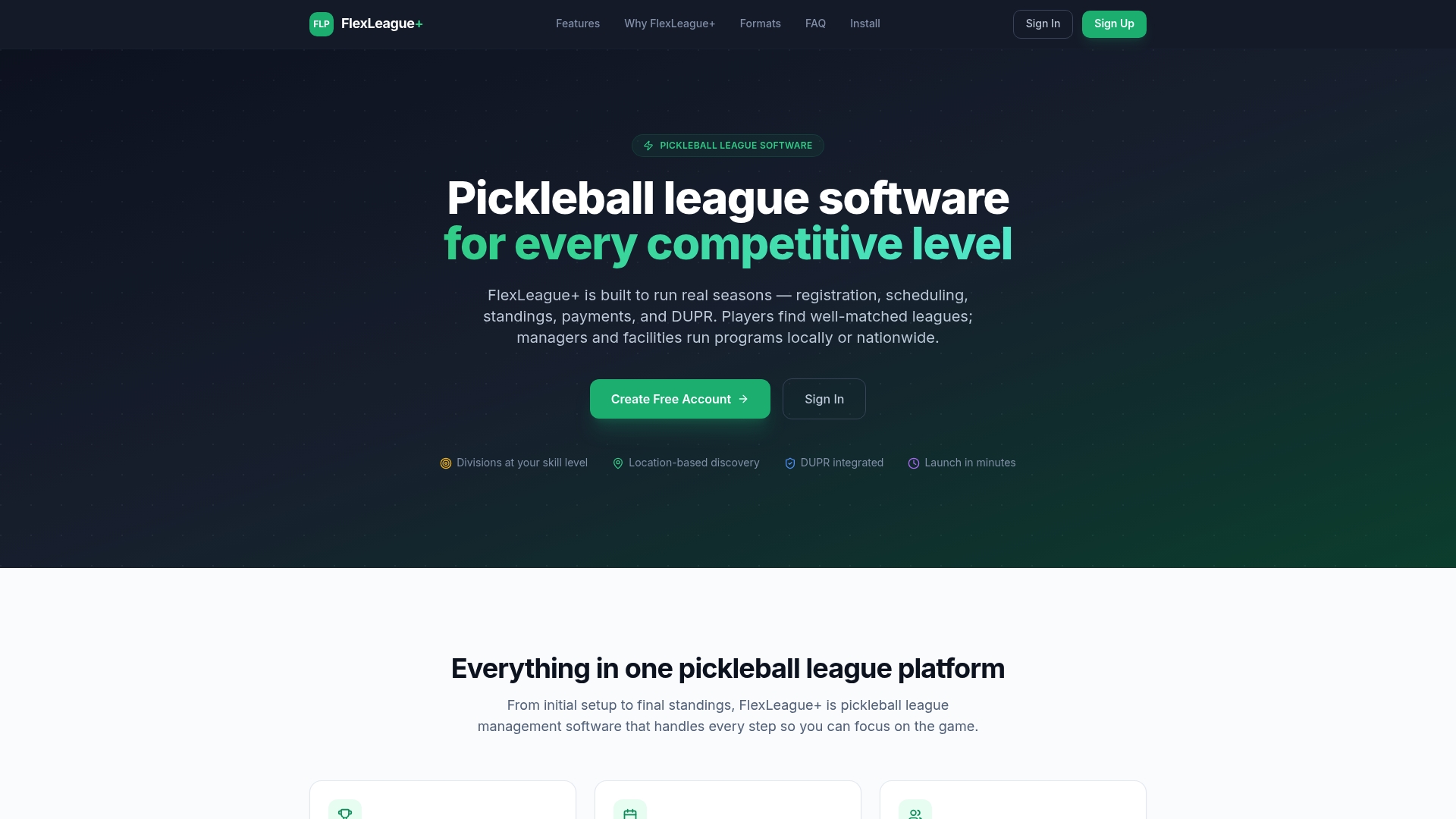
Running an interclub season by hand means juggling spreadsheets, chasing payments, and manually updating standings after every match. We built FlexLeague+ to handle registration, scheduling, standings, DUPR integration, and Stripe payments in one place, so captains spend their time coaching, not administrating.
- Online registration forms that collect player details and fees without manual entry.
- Automated match scheduling across men’s doubles, women’s doubles, mixed doubles, and FLP team formats.
- Payment collection through a service like Stripe so organizers control revenue without handling cash.
- Rating integration, such as DUPR, for placing players into fair, accurately rated divisions.
- Live standings and playoff bracket generation updated as scores come in.
| What you need | How we handle it |
|---|---|
| Collecting fees | Stripe payment processing built into signup |
| Fair divisions | DUPR integration for skill-based placement |
| Running the season | Automated scheduling, live standings, playoff brackets |
There’s no monthly subscription. Organizers pay a 25 dollar platform fee per division, and players only pay when they register for a season. If you’re ready to see how it fits your club, visit the pickleball league software page to review features or start setting up your first season.
FAQ
Is pickleball participation growing or declining?
Pickleball has seen rapid growth in recent years, with more clubs and facilities adding dedicated courts to meet demand. That growth is part of why interclub and team-based leagues have expanded alongside casual and tournament play.
What is the 10 second rule in pickleball?
The rule gives the receiving team up to 10 seconds after the score is called to get into position before the serve. It’s a standard timing rule referenced in USA Pickleball and UPA-A governed play, including most interclub league matches.
How do I join an interclub pickleball league?
Most players join by contacting their home club’s captain or checking a regional league’s website for an open signup window. Registration typically happens online through a form that collects player information, division preference, and a per-player fee.
What rules govern interclub pickleball matches?
Most interclub leagues follow USA Pickleball rules or the UPA-A Rulebook, with some adopting MLPlay-style team formats for multi-game matches. Leagues typically publish a short appendix listing any local rule modifications.
What features should I look for in pickleball league software?
Look for registration forms, automated scheduling, live standings, score entry, playoff bracket generation, and payment processing through a service like Stripe. DUPR or rating integration also helps place players into divisions matched to their skill level.
Sources
- 2025 MLP Rules Guide - 4.18.25
- 2026 UPA-A Rulebook- V0.8, 5.17.2026
- League Rules - East Bay Team Pickleball