Fix Mobile Checkout First to Increase League Signups for Organizers
Fix Mobile Checkout First to Increase League Signups for Organizers

The fastest way to increase league signups is to make registration effortless on mobile, pair that streamlined flow with targeted outreach where your players already spend time, and add a simple referral ask. Start today by publishing a one-page, mobile-friendly signup link and sharing it in a channel your community already trusts, a team group chat, a coach’s newsletter, or a parent Facebook group.
TL;DR:
- Fixing a mobile registration form that takes longer than two minutes to complete can result in significant sign-up improvements.
- Targeted outreach through short videos on platforms like TikTok, Instagram, and YouTube Shorts effectively engages teens and younger players.
- Running a short, focused referral campaign with clear incentives tends to convert current players into recruitment ambassadors better than passive advertising.
- Implementing early-bird pricing with a hard deadline and transparent refund policies creates urgency that boosts signups without long-term discounting.
- Prioritizing platform features such as secure mobile payments, automated waiver capture, and cohort management streamlines registration and reduces drop-off.
Table of Contents
- Top tactics at a glance: prioritized checklist
- Simplify registration and payment
- Digital outreach that reaches players and parents
- Referral and community outreach that fills rosters
- Pricing and promotions that convert without discounting forever
- Onboarding new signups and improving retention
- Real-world example: mapping tactics to a league-focused platform
- Target audience analysis and segmentation
- Partnerships with local schools and community centers
- Using email marketing campaigns effectively
- Leveraging testimonials and success stories
- Organizing open house or introductory events
- Author’s practical priorities and quick wins
- How Flex League Plus can implement the tactics above
- FAQ
- Sources
Top tactics at a glance: prioritized checklist
Before diving into execution, here is the shortlist worth testing first. Each tactic below targets a different stage of the signup funnel, from first click to second season.
- Optimize signup forms and payment flow so a player can register in under two minutes on a phone.
- Meet teens and parents where they scroll: short video content on social platforms built for mobile viewing.
- Run a short referral campaign that rewards current players for bringing a friend.
- Offer early-bird pricing or group discounts to create urgency without a permanent price cut.
- Onboard new cohorts deliberately so they stick around for the next season.
Most leagues only need one or two of these running well to see a real lift. Pick the one that matches your current bottleneck: if people start registering but abandon the form, fix friction first. If few people ever click the link, fix outreach first.
Simplify registration and payment
A signup form that asks for too much, loads slowly on a phone, or buries the price is the single biggest signup killer for recreational and youth leagues. Most players decide whether to finish registering within the first thirty seconds of landing on the page.
- Build a single-page mobile signup that asks only for name, contact information, division, and payment, nothing else until after registration is confirmed.
- Route payments through a secure processor and state the total fee, including any platform charge, before the player reaches checkout.
- Offer an installment plan or a family-pack rate when siblings or couples register together, since split payments reduce sticker shock.
- Automate the waiver and receipt so the registrant gets instant confirmation instead of waiting on a manual email.
A step-by-step registration guide walks through configuring a mobile-first signup flow if you want a working example to copy.
Pro Tip: Test your own signup form on a phone with one bar of signal. If it frustrates you, it is losing you players.
Digital outreach that reaches players and parents
Outreach only works when it matches where your audience actually scrolls. Teens and younger players respond to short, mobile-native video, while parents making the payment decision respond better to email and Facebook.
- For teens, prioritize TikTok, Instagram, and YouTube Shorts, plus Snapchat for the younger end of that range.
- For parents, lean on Facebook, Instagram, and email, where longer explanations and trust signals land better.
- Use 15 to 30 second video ads that show real gameplay, then send viewers to a mobile landing page with one clear button: register now.
- Run small-budget ad tests with UTM tracking or a simple conversion pixel so you know which creative actually drove signups, not just clicks.
teens use TikTok and Instagram, and 55% use Snapchat, which is why short mobile video outperforms static flyers or long-form posts for reaching this age group.
Referral and community outreach that fills rosters
Personal invitations from someone a prospective player already trusts convert better than almost any ad. Building a referral ask into your regular communication rhythm turns your current roster into a recruiting team.
- Ask every current player to invite one friend, and make the ask specific rather than vague, “bring someone for week one” works better than “tell your friends.”
- Reward successful referrals with a small discount or a gift card, something concrete enough to mention but cheap enough to scale.
- Run a concentrated 2 to 3 month recruitment window rather than a year-round trickle, since cohorts who join together tend to bond and stick around, a tactic echoed in the League of Women Voters’ recruitment planning guide.
- Give coaches and parents a prewritten message and a sharable graphic so the invite takes them thirty seconds, not thirty minutes.
- Track every referral with a unique promo code or a “referred by” field on the signup form so you know which incentives are actually working.
Pro Tip: Set your referral discount at a level you would happily pay twice. If it feels too generous, it is probably right.
Pricing and promotions that convert without discounting forever
Urgency and clarity move more signups than a lower price alone. A limited window or a limited number of cohort seats pushes fence-sitters to act now instead of “maybe next season.”
- Use early-bird pricing with a hard deadline, and cap cohort seats so the scarcity is real, not manufactured.
- Offer family or group discounts with a clearly stated eligibility rule, for example two or more registrants from the same household.
- State your refund policy plainly on the signup page, since hesitation often comes from uncertainty about what happens if plans change.
- Compare signups during a promotional window against a normal-price control period to see whether the lift is real or just moved signups earlier.
Discount codes are easiest to manage when they are built into your registration tool rather than tracked by hand; a guide to discount code mechanics covers common setups for early-bird and referral offers.
Onboarding new signups and improving retention
A signup is not a win until that player shows up for week one and registers again next season. The days right after signup decide which outcome you get.
- Send an immediate welcome email with the schedule, location, and what to bring, so there is no ambiguity about what happens next.
- Run a short cohort welcome session or a first-week checklist that introduces new players to their division and a few familiar faces.
- Automate reminder messages before each match and encourage players to introduce themselves in a group chat or at check-in.
- Follow up promptly with anyone who misses week one, since a quick, friendly check-in often uncovers a fixable barrier, like a schedule conflict or confusion about location.
Real-world example: mapping tactics to a league-focused platform
Most of the tactics above become faster and more consistent when your registration tool is built for leagues rather than general event ticketing. The specifics matter more than the category.
- Mobile-first signup forms and Stripe-based payment processing cut the steps between “interested” and “registered.”
- Saved player profiles and automated waiver capture mean returning players skip re-entering the same information every season.
- Built-in email templates and promo code controls make referral and early-bird campaigns easy to launch without a separate marketing tool.
- Division and cohort management keeps a concentrated recruitment push organized instead of scattered across spreadsheets.
Pro Tip: When comparing any registration platform, check four things first: payment security, scheduling automation, built-in communication tools, and reporting on where signups actually came from.
Target audience analysis and segmentation
Not every player responds to the same message, so the first real decision in any signup push is who you are actually trying to reach. A youth recreational league, an adult competitive division, and a mixed doubles social league each need a different pitch, a different channel, and often a different price point.
Start by segmenting your current and prospective players into a few practical groups: new-to-the-sport beginners, returning competitive players, parents registering kids, and casual players looking for a social outlet. Each group has a different trigger. Beginners respond to low-pressure language like “no experience needed” and a clear explanation of skill divisions. Competitive players want to know about format, scoring, and whether results feed into a rating system like DUPR. Parents care most about safety, schedule reliability, and total cost. Casual players respond to social proof, photos of past seasons, and an easy entry point.

Once you have your segments, match your channel to the segment rather than blasting one message everywhere. A teaser video for competitive players might highlight bracket play and standings, while the same league’s family-pack pricing gets promoted directly to parents through email. SFIA’s mid-year participation data shows cost remains a common barrier to youth sport participation, which reinforces why a parent-facing message needs to lead with value and flexible payment options rather than assuming price is a given.
Segmentation also shapes your onboarding. A beginner cohort benefits from a slower first week and a buddy system, while a competitive cohort just wants a clean bracket and a reliable schedule.
Partnerships with local schools and community centers
Schools, recreation centers, and community gyms already have the audience you are trying to reach, and a partnership gets you in front of that audience without paying for an ad.
Start with a simple ask: a flyer in a school newsletter, a table at a community center open house, or a short demo during a PE class or after-school program. Many schools and centers are open to this kind of partnership because it fills their own gym time or courts with productive activity, and it costs them nothing to post a flyer or forward an email.
Community centers in particular are worth prioritizing because they already have a built-in calendar of events and a mailing list of local families. Offering a discounted “community center member” rate, or simply being listed in their activity guide, can bring in a steady trickle of signups with very little ongoing effort on your part.
For schools, target coaches and PE teachers directly rather than going through general administration first, since they often have direct access to the exact age group you want and can mention your league casually during practice or class. A short conversation with a coach, backed by a prewritten flyer or digital asset you hand them, often converts better than any ad spend aimed at the same age group.
Using email marketing campaigns effectively
Email remains one of the most reliable channels for league communication because it reaches parents and returning players directly, without competing with a social feed algorithm. The key is treating it as a sequence rather than a single blast.
A basic sequence works well: an announcement email when registration opens, a reminder a week before the early-bird deadline, a final reminder before the deadline closes, and a welcome email once someone registers. Each email should have one clear purpose and one clear call to action, register now, claim your early-bird rate, or here is your week-one schedule.
Keep your list clean and permissioned. The FTC’s CAN-SPAM compliance guide requires every commercial email to include a clear way to opt out, and senders must honor those opt-out requests promptly. For a league, that means every email needs a visible unsubscribe link and a process for removing someone who asks, not just a vague “contact us” at the bottom.
Ready-made templates save time here, since most organizers are not writing marketing copy as their day job. A set of league email templates covers welcome sequences, referral asks, and reminder emails that you can adapt rather than write from scratch.
Leveraging testimonials and success stories
A new prospect deciding whether to register is really asking one question: will this be worth my time and money? Nothing answers that faster than hearing it from someone who already played.
Collect short testimonials after each season, a sentence or two about why someone enjoyed the league, how they met new people, or how the competition pushed their game. These work best as real quotes from real participants, attached to a first name, rather than a generic claim about the league itself. A photo of a past season’s playoff bracket or a group shot from a cohort welcome event often does more work than a paragraph of marketing copy.
Place these stories where a hesitant prospect will actually see them: the signup page itself, a follow-up email to someone who started but did not finish registering, or a social post timed right before your next registration window opens. The goal is not to oversell the league, it is to show, in a believable voice, what a new player can expect.
Organizing open house or introductory events
An open house removes the biggest barrier for anyone unsure about committing: the fear of showing up somewhere new and not knowing what to expect. A short, no-pressure introductory event lets prospective players try the sport, meet the organizer, and see the format before they pay anything.

Keep it simple and short, an hour or two on a weekend, with a few courts or fields set up for casual play, and a quick explanation of how the league works. Have your signup link ready on a phone or tablet so anyone who gets excited can register on the spot, ideally before they leave. Pair the event with your referral program by asking attendees to bring a friend, which turns a single open house into a small recruitment push rather than a one-off event.
Promote the open house through the same channels you use for the league itself, a short video clip, an email to your existing list, and a flyer at any partner school or community center. Treat it as a funnel step, not the finish line: the real goal is a signup within a few days of attending, while the experience is still fresh.
Author’s practical priorities and quick wins
If you only run two experiments this month, fix mobile checkout first, then run a two-week social ad and referral test together. Set one measurable goal, like fifteen new signups, and a small test budget before you start. Once a tactic consistently beats your baseline, that is the signal to move from experimentation to a platform built to run it every season.
— Robert
How Flex League Plus can implement the tactics above
Most of what we have covered here, mobile-first signup, secure payment collection, referral tracking, and cohort onboarding, is exactly what Flex League Plus is built to run for pickleball leagues.
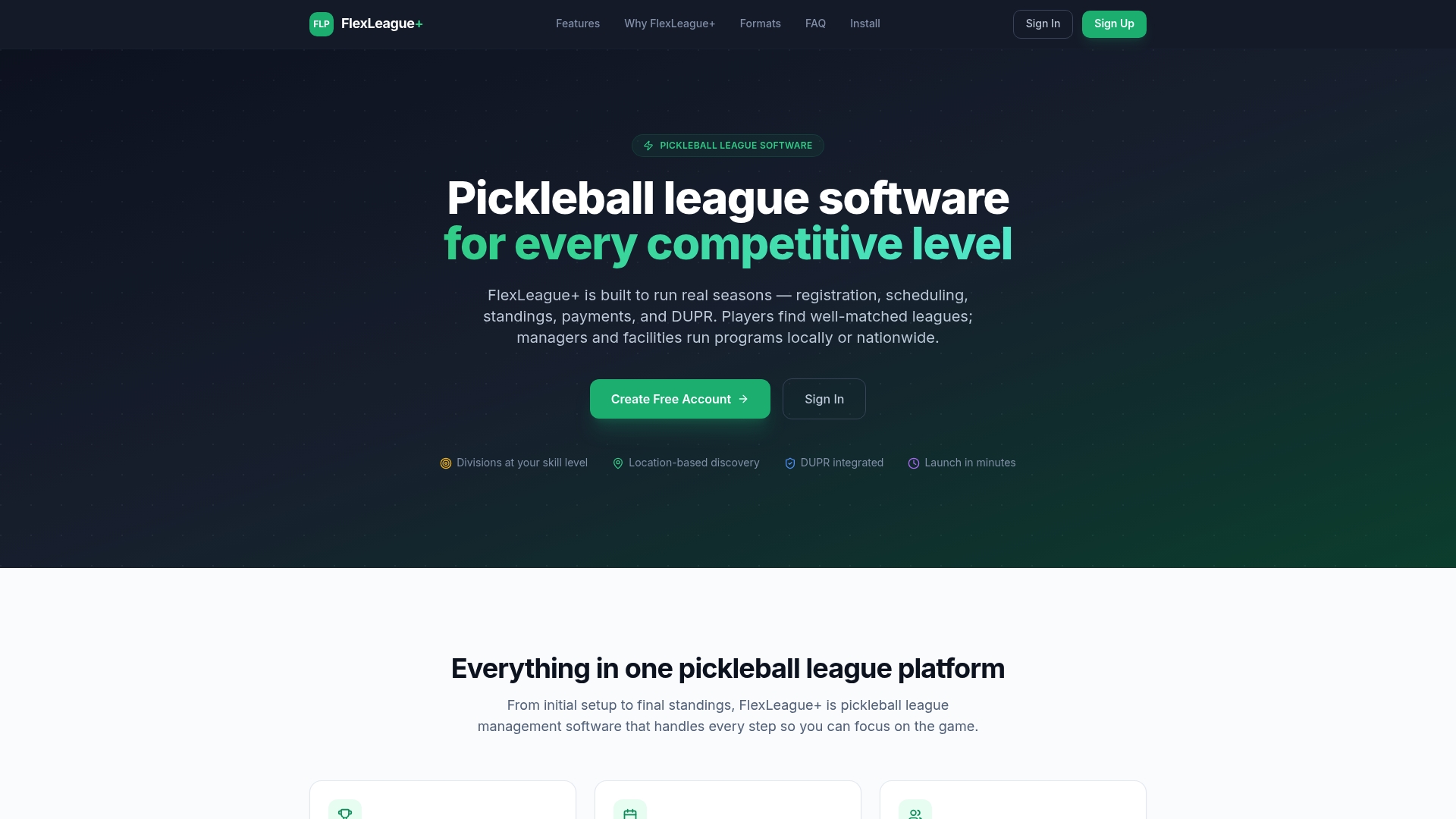
- Mobile registration that lets a player sign up and pay in one short flow, with Stripe handling payment processing.
- Email templates for welcome sequences, reminders, and referral asks, to simplify campaign creation.
- Controls for discounts and promo codes to support early-bird pricing, family packs, and referral rewards.
- Cohort and division scheduling features to help organize recruitment efforts across different league formats.
- Integration options for organizers running competitive divisions that need verified ratings.
Our league platform fee is a flat $25 one-off charge per division, with no monthly subscription. If you are weighing whether to switch from spreadsheets or a general-purpose signup tool, the fair test is running one season side by side with your current process and comparing completed signups, not just clicks. Full details on what the platform includes are on our pickleball league software page.
FAQ
What is the single fastest way to increase league signups?
Fixing a slow or confusing mobile registration form usually produces the quickest lift, since most people who click a signup link decide within seconds whether to finish. Pair that fix with a short referral push for the fastest combined result.
How much should I spend testing social ads for league recruitment?
A small test budget is often enough to learn whether a platform and creative resonate with local players before committing more spend, since the goal at this stage is a signal, not scale. Track conversions with simple UTM links or a pixel so you know the test actually worked.
Do referral discounts really bring in more players than ads?
Personal invitations from a trusted current player tend to convert better than passive advertising, which is why building a simple “bring one friend” ask into your regular communication works well. Reward the referral with a small, specific incentive like a discount or gift card.
What does CAN-SPAM require for league email campaigns?
The FTC’s compliance guide requires every commercial email to include a visible way to opt out, and senders must honor opt-out requests promptly. Keeping a clean, permissioned list protects your league from compliance issues and keeps your emails landing in inboxes.
What should I look for in a league registration platform?
Prioritize mobile-first checkout, secure payment processing, built-in waiver capture, and easy promo code controls, along with cohort or division management that matches how you recruit. Flex League Plus covers these for pickleball leagues specifically, with a flat per-division platform fee and no player subscription.
Sources
- Teens, social media and technology 2024 | Pew Research Center
- CAN-SPAM Act compliance guide for business | Federal Trade Commission
- SFIA mid-year participation report | SFIA
- Ten-step membership recruitment plan | League of Women Voters