Best Youth Pickleball Leagues and Programs in the US
Best Youth Pickleball Leagues and Programs in the US
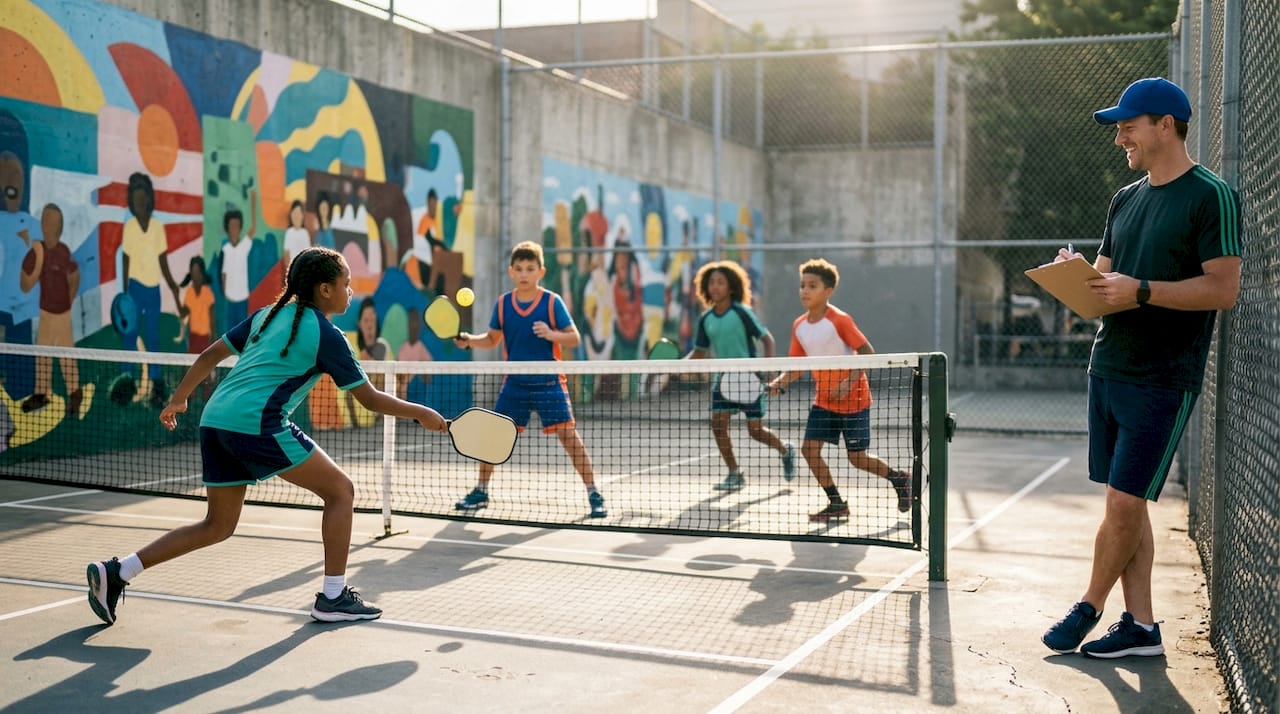
Youth pickleball leagues in the United States give kids a structured path into one of the country’s fastest-growing sports, with programs ranging from beginner camps to USA Pickleball-sanctioned tournaments. Whether your child has never held a paddle or is already competing, there is a program format built for them. Here is what parents can expect across the country:
- Program types: instructional camps, weekly leagues, skill clinics, and competitive tournaments
- Age and skill groupings: typically organized by skill level rather than age alone, so kids compete fairly
- Formats: round-robin leagues, ladder play, team-based matches, and individual singles or doubles
- Core focus: skill development, sportsmanship, physical activity, and social connection
Why youth pickleball builds more than just court skills
USA Pickleball recommends that youth programs center on sportsmanship, social development, and confidence in a positive, inclusive environment. That guidance shapes how the best programs are built. Kids who play in structured leagues gain more than a backhand.
- Physical benefits: cardiovascular fitness, hand-eye coordination, and agility
- Mental benefits: focus, resilience after a lost point, and decision-making under pressure
- Social benefits: teamwork through doubles formats, respect for opponents, and friendships across skill levels
- Long-term engagement: team-based play significantly improves player retention compared to unstructured open play
Doubles and mixed doubles formats are particularly effective. Rotating partners builds adaptability and keeps kids invested in the team’s outcome, not just their own score.
Upcoming youth pickleball leagues, classes, and tournaments across the US
Youth pickleball programs run year-round in most regions, with summer camps peaking June through August and school-year leagues filling fall and spring slots. The geographic spread is wide.
| Region | Provider / Program | Program Types | Season / Schedule |
|---|---|---|---|
| Utah | Club Pickleball USA | Leagues, open play, tournaments | Year-round |
| Utah (St. George) | Junior Pickleball League | Ladder leagues, age-group play | Summer 2026 (6 weeks) |
| Minnesota | Picklebarn | Leagues, certified lessons, tournaments | Year-round |
| Orange County, CA | US Pickleball Federation | Certified leagues, tournaments, coaching | Year-round |
| Seattle, WA | Pickleball Forward Foundation | Summer camps, school partnerships | Summer / school year |
| Oakland, CA | Pickle Athletics | Group classes, open play, social events | Year-round |
| Wilmington, DE | Ace Pickleball Club | Youth programs, fitness, court play | Year-round |
| National | LevelUp Pickleball Camps | Multi-level skill camps | Seasonal camps |
| National | USA Pickleball Golden Ticket Tournaments | Junior singles and doubles | Select dates annually |
Notable upcoming events: USA Pickleball’s junior tournament divisions offer age groups for 12 & under, 13–14, and 15–16, with co-ed doubles on Saturdays and singles on Sundays. The American Youth Pickleball Organization (AYPO) runs an 8-week season for grades 6–12, using DUPR ratings and team-based formats that mirror the Major League Pickleball structure.
Registration, fees, and what to expect from program duration
Typical costs for youth pickleball range from $30 to $100 depending on program length and scope, while intensive camps may cost $200 or more. Municipal programs often include tiered pricing with some resident discounts. Club Pickleball USA memberships start at $42/month, with tournament entry fees around $25 per player. USA Pickleball’s junior registration fee is $35 for players competing only in junior events, with a $5 entry fee plus $5 software fee per event.
League seasons typically run 5–8 weeks, with sessions lasting 60–90 minutes each. Intensive camps compress that development into a single week. Key logistics to confirm before registering:
- Shoes: court shoes or tennis shoes are required at virtually every facility
- Paddles: beginner programs often provide loaner paddles; competitive leagues expect players to bring their own
- Water: always required; some venues have cafes or vending on site
- Attendance: look for programs with flexible attendance policies and tiered skill groups to keep kids motivated
Types of youth pickleball programs and which skill levels they serve
Youth pickleball programming typically serves ages 5–18 across both developmental and competitive tracks. The right fit depends on where your child is right now.
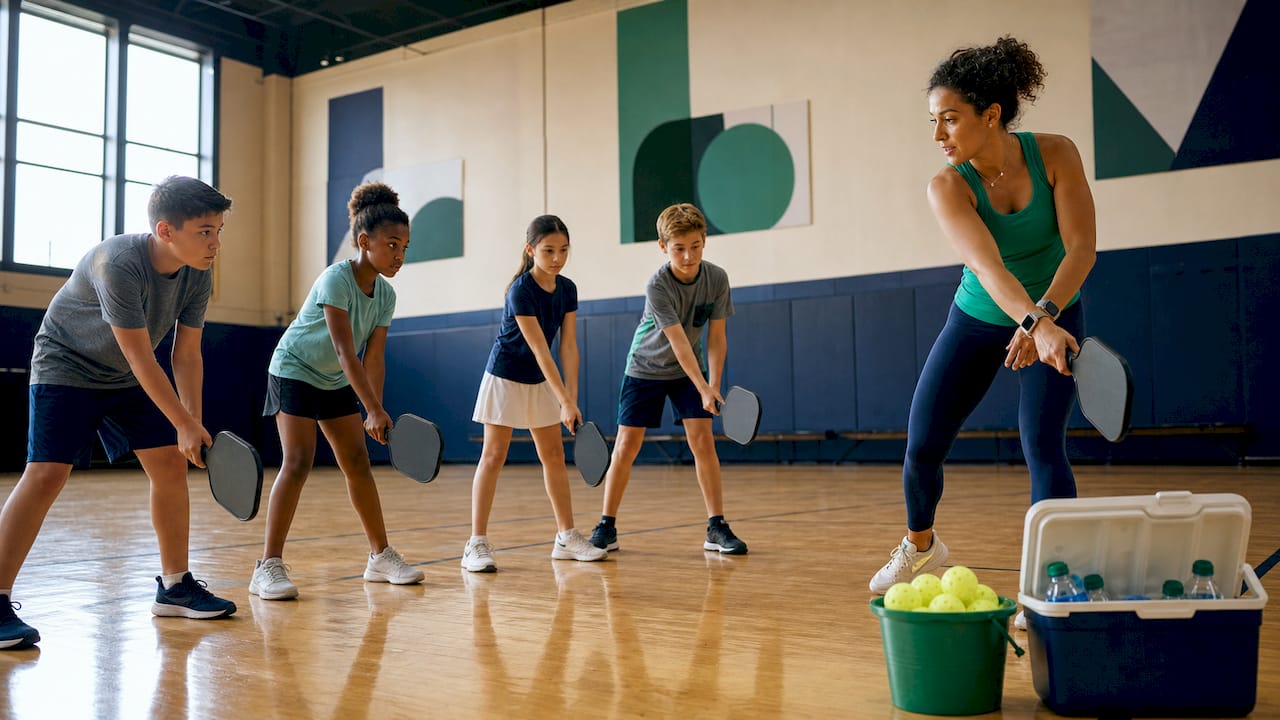
Developmental programs include clinics, beginner camps, and instructional classes. LevelUp Pickleball Camps runs structured camps from beginner through advanced, all led by professional instructors. The Pickleball Forward Foundation partners with Seattle-area schools to bring the sport to kids who might not otherwise access it.
Competitive leagues use skill-based groupings rather than age alone. AYPO, for example, places players into beginner, intermediate, or advanced divisions regardless of grade. DUPR ratings support this model by giving organizers an objective measure of each player’s level, so a 10-year-old intermediate is never stuck playing against beginners just because of their age.
Formats to know:
- Round-robin and ladder leagues for weekly competitive play
- Team-based formats (boys doubles, girls doubles, mixed doubles) for school-year leagues
- Tournament brackets in the final weeks of a season, seeded by regular-season record
Pro Tip: If your child is brand new to the sport, look for a program that explicitly offers loaner paddles and beginner-only groupings. Dropping a first-timer into a mixed-skill session is the fastest way to lose their interest.
How to choose the right youth pickleball program for your child
The single most important factor is skill-level matching. A child who is consistently outmatched or never challenged will disengage fast. Beyond that, here is what to look for:
- Coach qualifications: seek certified instructors, such as IPTPA Level 1 or higher. The Greater Morristown YMCA, for example, uses a 4.0+ rated IPTPA-certified instructor for its youth classes.
- Program format: team-based play builds camaraderie and retention; individual ladder formats suit kids who prefer self-directed competition
- Schedule fit: a 6-week Wednesday evening league works differently for a family than a week-long summer camp. Confirm session frequency and makeup policies before committing.
- Facility quality: indoor climate-controlled courts matter more in extreme climates. Picklebarn in Minnesota and Club Pickleball USA in Utah both offer indoor facilities year-round.
- Sportsmanship emphasis: programs aligned with USA Pickleball’s youth guidelines explicitly teach respect and positive play, not just technique.
- Equipment policy transparency: programs that publish clear equipment and weather protocols reduce confusion and signal well-organized management.
Comparing leading youth pickleball programs and leagues in the US
Nine programs stand out for parents researching options nationally. The table covers the key dimensions that actually matter for a family decision.

| Program | Location | Program Types | Ages / Skill Levels | Unique Features | Rating |
|---|---|---|---|---|---|
| LevelUp Pickleball Camps | National | Skill camps (beginner to advanced) | All ages, all levels | Pro-led; promo discount | 4.9★ (589) |
| Club Pickleball USA | Utah | Leagues, open play, lessons, tournaments | All levels | Utah’s largest indoor club; from $42/month | 4.7★ (285) |
| Ace Pickleball Club | Wilmington, DE | Youth programs, fitness, court play | Youth focused | Community fitness + pickleball combined | 5★ (142) |
| Pickle Athletics | Oakland, CA | Group classes, open play, social events | All levels | Fitness studio, sauna, cafe on site | 5★ (91) |
| Pickleball America | National | Tournaments, social events, memberships | All levels | Extensive event hosting | 4.6★ (81) |
| Picklebarn | Minnesota | Leagues, certified lessons, tournaments | All levels | USA Pickleball-sanctioned; certified pros | 4.9★ (65) |
| US Pickleball Federation | Orange County, CA | Certified leagues, tournaments, online coaching | Competitive youth | Best Pickleball Court Award 2024 | 4.9★ (10) |
| Pickleball Forward Foundation | Seattle, WA | Summer camps, school partnerships | Developmental, all ages | Non-profit; school and community outreach | 5★ (3) |
| Pickleball Kids USA | National | Youth-focused programs | Kids and teens | Dedicated youth pickleball resource | — |
LevelUp Pickleball Camps is the strongest national option for parents who want structured, coach-led skill development with clear level progression. The promo discount makes it accessible for families testing the sport before committing to a full season.
Picklebarn stands out for families who want sanctioned competition. Its certified teaching pros and USA Pickleball tournament hosting give competitive kids a real pathway, not just recreational play.
Pickleball Forward Foundation fills a gap the other programs do not. As a non-profit with school partnerships in Seattle, it reaches kids who would never find the sport through a club membership. If community access and affordability are priorities, this is the program to call first.
US Pickleball Federation suits the serious junior competitor in Southern California. Certified leagues, structured coaching, and the 2024 Best Pickleball Court Award signal a facility that takes competitive youth programming seriously.
For social, fitness-forward play, Pickle Athletics in Oakland combines pickleball with wellness programming in a way no pure pickleball club does.
Safety measures and coaching qualifications in youth pickleball programs
Reputable youth programs address safety through both facility standards and coach credentials. On the facility side, indoor climate-controlled courts eliminate heat and weather risk, which matters for summer programs in states like Utah and California. Court surfaces should be non-slip, and nets must meet regulation height (34 inches at center) to prevent tripping hazards.
Coach qualifications vary, but the benchmark to look for is IPTPA (International Pickleball Teaching Professional Association) certification or USA Pickleball-recognized instructor status. Certified coaches understand age-appropriate progressions and can spot technique issues before they become injury patterns. Programs affiliated with USA Pickleball, like Picklebarn and the US Pickleball Federation, operate under the governing body’s safety and conduct standards.
Ask any program directly: what is the coach-to-player ratio? For youth, a ratio above 1:8 starts to compromise individual attention. The best beginner programs, like the Greater Morristown YMCA’s classes, cap enrollment at 8 players per session for exactly this reason.
Flexleagueplus offers a different path for league organizers
Those nine programs are all consumer-facing options your child joins. If you are a coach, recreation director, or parent volunteer who wants to run a junior pickleball team or school-based league from scratch, the logistics can get complicated fast: scheduling, score reporting, standings, payments, and DUPR integration all need a home.
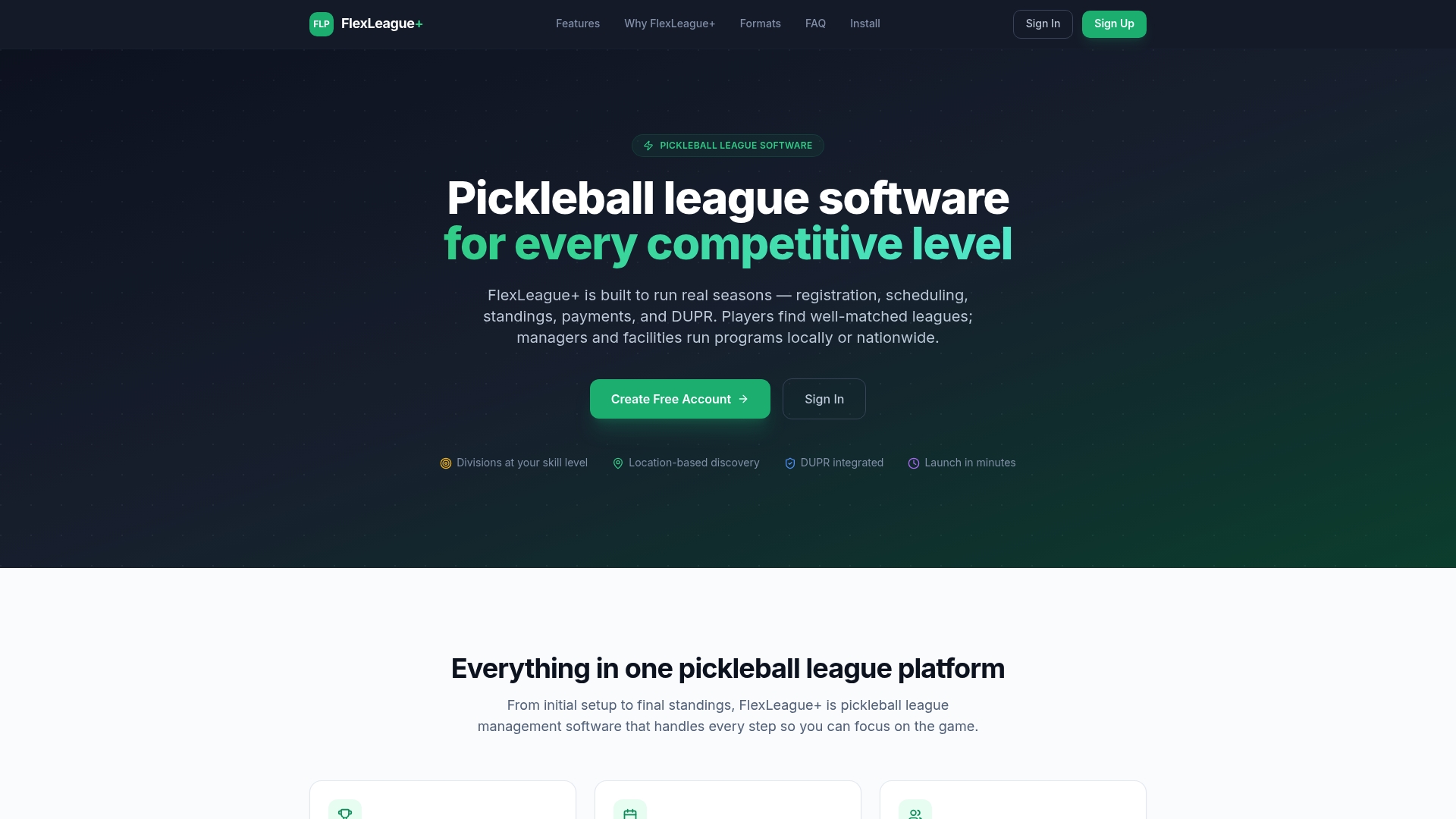
Flexleagueplus is pickleball league software built for exactly that situation. Organizers can set up singles, doubles, mixed doubles, or FLP team leagues, collect registration fees through Stripe, manage divisions and playoff brackets, and sync player ratings through DUPR, all without a monthly subscription. Players register, report scores, and track standings through the same platform. If your school, rec center, or club is ready to launch a youth program and needs the infrastructure to run it cleanly, Flexleagueplus is worth a close look.
Key Takeaways
Structured, skill-matched youth pickleball programs consistently outperform unstructured open play for both player retention and skill development.
| Point | Details |
|---|---|
| Skill matching beats age grouping | Programs using DUPR ratings place kids by ability, not birthday, for fairer and more engaging competition. |
| Costs range widely | Typical fees run $30–$100 for league seasons; intensive camps often exceed $200. |
| Season length is predictable | Most youth leagues run 5–8 weeks with 60–90-minute sessions, fitting most family schedules. |
| Coach credentials matter | Look for IPTPA-certified or USA Pickleball-recognized instructors and a coach-to-player ratio no higher than 1:8. |
| Flexleagueplus for organizers | Coaches and rec directors can launch and manage a youth league with DUPR integration and Stripe payments through Flexleagueplus. |