Youth League Sponsor Logos: 2 1/4 sq in Rule and Approval Workflow
Youth League Sponsor Logos: 2 1/4 sq in Rule and Approval Workflow

Sponsor logos on team uniforms typically belong on the chest, sleeves, upper back, or a lower panel, with shorts and warm-ups as secondary options. Before you place a single logo, check your league’s maximum logo size and confirm the sponsor mark will not interfere with player numbers. When you are unsure, submit a mockup with exact measurements for approval before placing any apparel order.
TL;DR:
- Most leagues cap sponsor logos at 2 1/4 square inches, with commemorative patches allowed up to 4 square inches, but local rules may vary.
- The most suitable placement spots are the upper chest, sleeves, upper or lower back panels, and less prominent options like shorts or warm-ups, with care to keep logos away from numbers.
- Submit a detailed mockup, measurements, final artwork, and sponsor agreement at least three to four weeks before ordering to allow time for approval and revisions.
- Logos must be placed so they do not obstruct or crowd the player number, maintaining clarity for referees and scoring.
- Vector file formats are preferred from sponsors, with raster files at 300 DPI or higher acceptable for small or high-quality prints.
Table of Contents
- Where sponsor logos typically go on jerseys, shorts, and warm-ups
- What league rules and size limits actually require
- Artwork and file specs vendors need from sponsors
- How to submit sponsor designs for league approval
- Keeping team identity ahead of sponsor branding
- How a league management tool can simplify sponsor tracking
- What happens when uniforms don’t meet sponsor logo rules
- Where organizers get sponsor logos wrong
- A practical option for managing sponsor logos and payments
- Sources
- FAQ
Where sponsor logos typically go on jerseys, shorts, and warm-ups
Placement decisions come down to visibility versus the risk of crowding out team identity. A center-front placement gets the most eyes, but it competes directly with the team name or crest, so many leagues reserve that spot for the primary sponsor only and cap its size tightly. Left-chest placement is a common compromise: visible in every photo and broadcast angle without dominating the jersey.
Sleeves and shoulders work well for secondary sponsors, especially when combined with capturing youth games through a youth sports camera to increase sponsor visibility. They show up in sideline photos, close-up shots, and local news coverage, and their smaller surface area naturally limits how large a logo can be, which keeps costs down for smaller sponsors.
Upper back and lower back panels are strong for advertising that needs to read from a distance, since these areas face the crowd during play and are visible in most action photography.
Beyond the jersey itself, shorts, warm-ups, practice shirts, and even bags or equipment bags offer extra sponsor inventory without touching the game jersey’s primary layout.
- Center front or upper chest: highest visibility, tightest size restrictions, usually reserved for title sponsors.
- Sleeves and shoulders: frequent close-up exposure, ideal for secondary or smaller sponsors.
- Upper back or lower back panel: strong crowd-facing visibility during play.
- Shorts, warm-ups, and equipment: added inventory that does not compete with the main jersey design.
Whatever spot you choose, keep sponsor marks a safe distance from the player number and any manufacturer or team logo already on the uniform. Overlapping elements are one of the most common reasons designs get sent back for rework.
What league rules and size limits actually require
Youth and amateur leagues generally follow guidance set by state athletic associations or national governing bodies, and the specifics matter more than general intuition. The Basketball Uniform and Adornment Guide from KHSAA and NFHS caps a single manufacturer’s logo at 2 1/4 square inches and states plainly that sponsor elements must not interfere with number visibility.
A single manufacturer logo may not exceed 2 1/4 square inches under NFHS-based guidance, a limit that shows up across multiple state association rulebooks and gives organizers a reliable default when a league’s own rules are silent on exact dimensions.
The NFHS basketball uniform rules PDF adds detail: commemorative or memorial patches can run up to 4 square inches, larger than the standard manufacturer logo cap, because they serve a different purpose and typically appear once per season rather than as ongoing sponsor branding.
- Manufacturer or sponsor logo cap: commonly 2 1/4 square inches under NFHS-based rules.
- Commemorative or memorial patches: allowed up to 4 square inches, a separate category from sponsor marks.
- Number clearance: sponsor elements must not obscure or crowd the uniform number.
- Youth leagues like those under Little League often set their own local sponsor-signage policies rather than following high-school association dimensions exactly.
That last point matters. Little League guidelines focus more on team and league identification than on strict square-inch caps, so local league boards frequently set their own sponsor placement rules. Always confirm with your specific league office rather than assuming a high-school rule applies to a youth recreational team, since the two systems are not interchangeable.
Artwork and file specs vendors need from sponsors
Poor file quality causes more uniform delays than any rule violation. Ask every sponsor for vector artwork first: AI, EPS, or PDF files scale cleanly to any size without pixelation, whether the logo ends up two inches on a sleeve or six inches on a back panel. When a sponsor only has a raster file, request PNG or TIFF at 300 DPI or higher at the actual print size, not scaled up after the fact.
Color mode matters too. Ask for CMYK builds for full-color printing, and if the sponsor has official Pantone spot colors, include those codes so the printer can match brand colors precisely. For small placements like sleeves or cap badges, a single-color knockout version avoids a full-color logo turning into a muddy blob at that scale.
- Vector formats preferred: AI, EPS, or PDF for clean scaling at any size.
- Raster minimum: PNG or TIFF at 300 DPI or higher, sized for actual print dimensions.
- Color builds: CMYK for standard printing, Pantone codes when brand color accuracy matters.
- Single-color version: request a knockout logo for small placements like sleeves.
Keep a safe area around every logo so nothing gets trimmed or folded into a seam, and confirm maximum dimensions differ by location: a chest logo has more room than a sleeve badge.
Pro Tip: Ask sponsors for three lockups up front: full-color horizontal, full-color stacked, and single-color, so you never scramble for an alternate version mid-production.
How to submit sponsor designs for league approval
Getting a sponsor logo approved is mostly about sequencing and documentation.
- Identify the right contact: your league office or state association representative, not just the apparel vendor.
- Build one submission packet per sponsor containing a mockup with measurements, the final art files, and the signed sponsor agreement.
- Submit at least three to four weeks before your uniform order deadline to leave room for rework requests.
- If the league requests changes, resubmit the corrected mockup and wait for written confirmation before ordering.
- Save every approval as a signed PDF or stamped mockup, along with the approval email thread, in a dedicated sponsor folder.
Treat this checklist as a template you reuse for every sponsor each season. Skipping the paper trail is the single most common reason organizers end up re-ordering uniforms mid-season at their own expense.
Keeping team identity ahead of sponsor branding
Sponsors want visibility, but a uniform that reads as an ad panel rather than a team jersey creates problems with players, parents, and the league itself. The team name, crest, and numbers should stay the largest and most prominent elements every time, with sponsor logos sized and placed to complement rather than compete.
- Keep sponsor logos noticeably smaller than the team crest or number, even where rules technically allow more.
- Check contrast: a sponsor logo in team colors can disappear or clash, so test it against the actual jersey fabric.
- Tier sponsorships by placement value: sleeve sponsors pay less than front-panel or back-panel sponsors, which reflects the visibility difference.
- Rotate or phase in new sponsors between seasons rather than mid-season, which limits reorder costs and confusion.
Pro Tip: Mock up sponsor placement on the actual uniform color and fabric before signing off. A logo that looks fine on a white background can vanish on navy mesh.
Negotiating with multiple sponsors works best when you set clear tiers up front, sleeve versus chest versus back panel, tied to price and contract length, so nobody expects prime real estate at a secondary rate.
How a league management tool can simplify sponsor tracking
Sponsor management often breaks down not because of design rules but because approvals, files, and payments live in scattered emails and someone’s personal drive. A league management platform can centralize that work so the same approved assets are available to every volunteer, vendor, and board member who needs them.
- Store the final approved logo files and stamped mockups in one place so vendors always pull from the current version.
- Use branded Stripe receipts to formalize sponsor invoices and payment confirmations, which gives sponsors a professional paper trail for their own records.
- Track approval deadlines and submission dates inside the platform so nobody discovers a missed deadline the week before uniforms ship.
- Link sponsor payment records to specific seasons or divisions, reducing the spreadsheet reconciliation that eats up volunteer time.
Platforms built for league operations, rather than general team communication apps, tend to handle this kind of administrative tracking as a core feature rather than an afterthought, which matters most for volunteer-run leagues juggling sponsors alongside scheduling and registration.
What happens when uniforms don’t meet sponsor logo rules
Non-compliance carries real costs, not just a warning. In high-school and state-association sports, a uniform that violates logo size or number-visibility rules can result in a player being required to change before competing, which creates a scramble minutes before a game. Some leagues extend penalties to the team or program, including fines or a formal compliance notice that stays on file for future seasons.
For youth and recreational leagues, consequences are usually less formal but still costly: a league board can reject an entire uniform order after production, leaving the organization to either eat the cost of a reorder or play a season out of compliance while working out a fix. Sponsors themselves can also walk away if their logo gets rejected late in the process, since a rushed fix often means a smaller or less prominent placement than originally promised.
The BBC’s coverage of changing sponsor-category rules in professional leagues is a reminder that category restrictions, not just size and placement, can trigger compliance problems. A youth league that accepts a sponsor in a restricted category, such as gambling or alcohol, risks a rule violation with no design fix available. Building category restrictions into the sponsor agreement itself, before any artwork is produced, prevents that outcome entirely.

Where organizers get sponsor logos wrong
The most common mistake is waiting on artwork until the order deadline is already tight, which leaves no time for a rework cycle if the league rejects the first mockup. A close second is skipping the number-clearance check, assuming a logo “looks fine” without measuring the actual distance to the player number. The third is simple: approvals live in someone’s inbox and disappear when that volunteer rotates off the board next season.
Build a standard sponsor brief you reuse every year, name one person as the point of contact for all sponsor communication, and always do a dry run approval on one sample jersey before placing the full order. A written sponsor agreement that spells out placement, duration, and renewal terms protects the relationship as much as it protects your compliance record.
— Robert
A practical option for managing sponsor logos and payments
Coordinating sponsor logos, uniform approvals, and payments across email threads and spreadsheets is where most volunteer-run leagues lose time. FlexLeague+ centralizes the operational side of running a pickleball league, from registration and Stripe-based payment collection to branded receipts that give sponsors a documented record of their contribution alongside player registration fees. For league organizers running various formats, having one system track division fees, standings, and payment history helps keep sponsor-related paperwork organized.
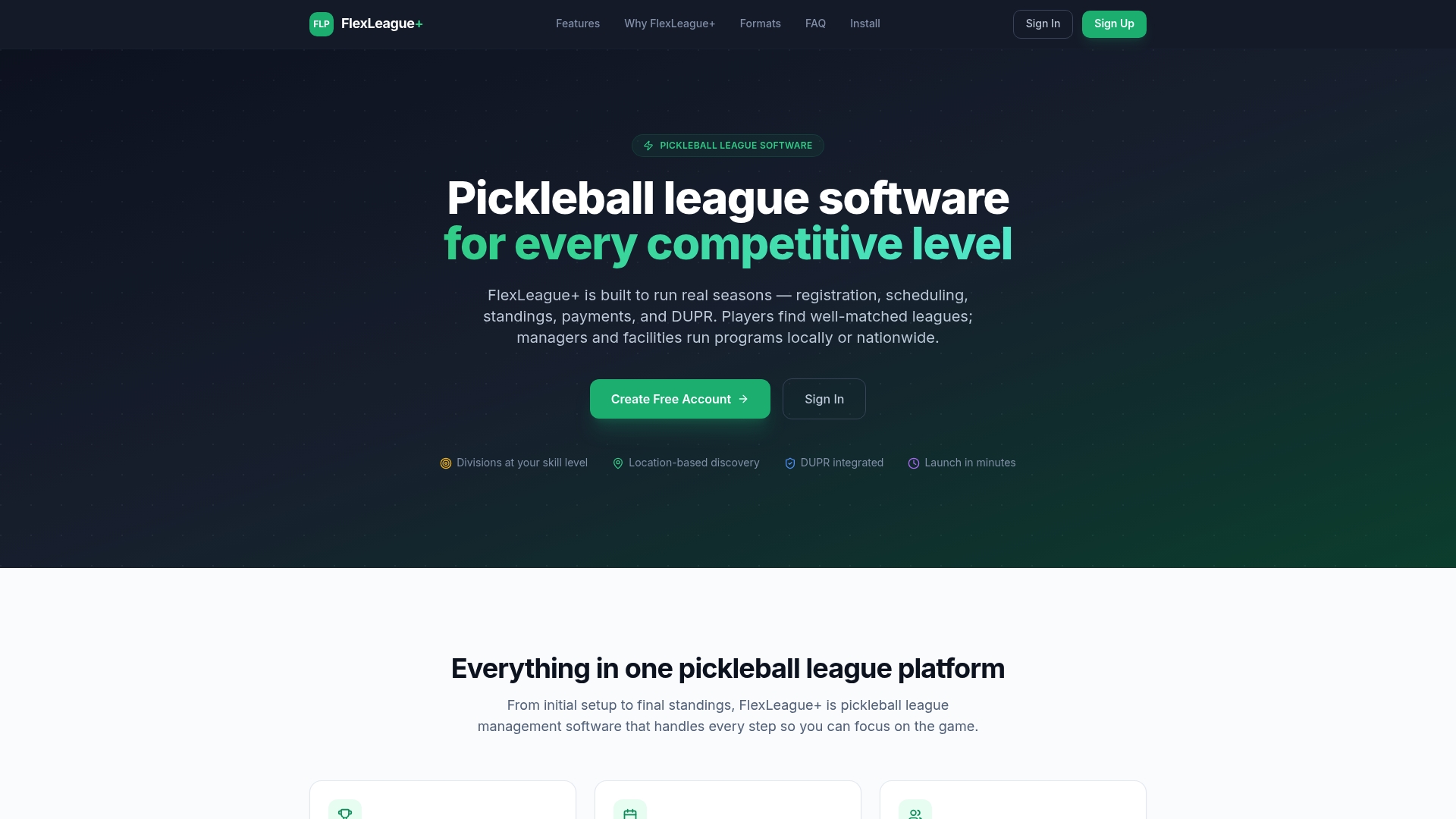
If you manage a pickleball league and want to see how the platform handles registration, payments, and season administration in one place, visit the FlexLeague+ pricing page to review the league platform fee and get started with your next season.
Sources
- Basketball Uniform and Adornment Guide (KHSAA / NFHS excerpt)
- NFHS Basketball uniform rules PDF
- Little League official site
- Gambling out - who is in? The changing face of Premier League shirts - BBC Sport
FAQ
What is the maximum size for a sponsor logo on a jersey?
Under NFHS-based guidance, a single manufacturer’s logo is capped at 2 1/4 square inches, though commemorative patches can run larger. Always confirm with your specific league or state association, since youth leagues like Little League often set their own local limits rather than following high-school sizing exactly.
Where should sponsor logos go on a uniform to stay compliant?
The most common approved spots are the upper chest, sleeves, upper back, and lower panel, with shorts and warm-ups as secondary options. The priority in every location is keeping the logo clear of the player number and any required manufacturer mark.
How far in advance should I submit sponsor artwork for approval?
Submit a complete packet, including a measured mockup and final files, at least three to four weeks before your uniform order deadline. That buffer leaves time for a rework cycle if the league requests changes to size or placement.
Can a sponsor logo cover part of the player’s number?
No, league and state association guidance consistently requires that sponsor elements not interfere with number visibility. This rule exists for referee and scorekeeper accuracy as much as for compliance, so it is checked closely during uniform review.
What file format should I request from a sponsor for their logo?
Ask for vector formats like AI, EPS, or PDF first, since they scale cleanly to any print size. If only a raster file is available, request PNG or TIFF at 300 DPI or higher at the actual size you plan to print.