How to Run a Singles Pickleball League That Fills Up Fast
How to Run a Singles Pickleball League That Fills Up Fast
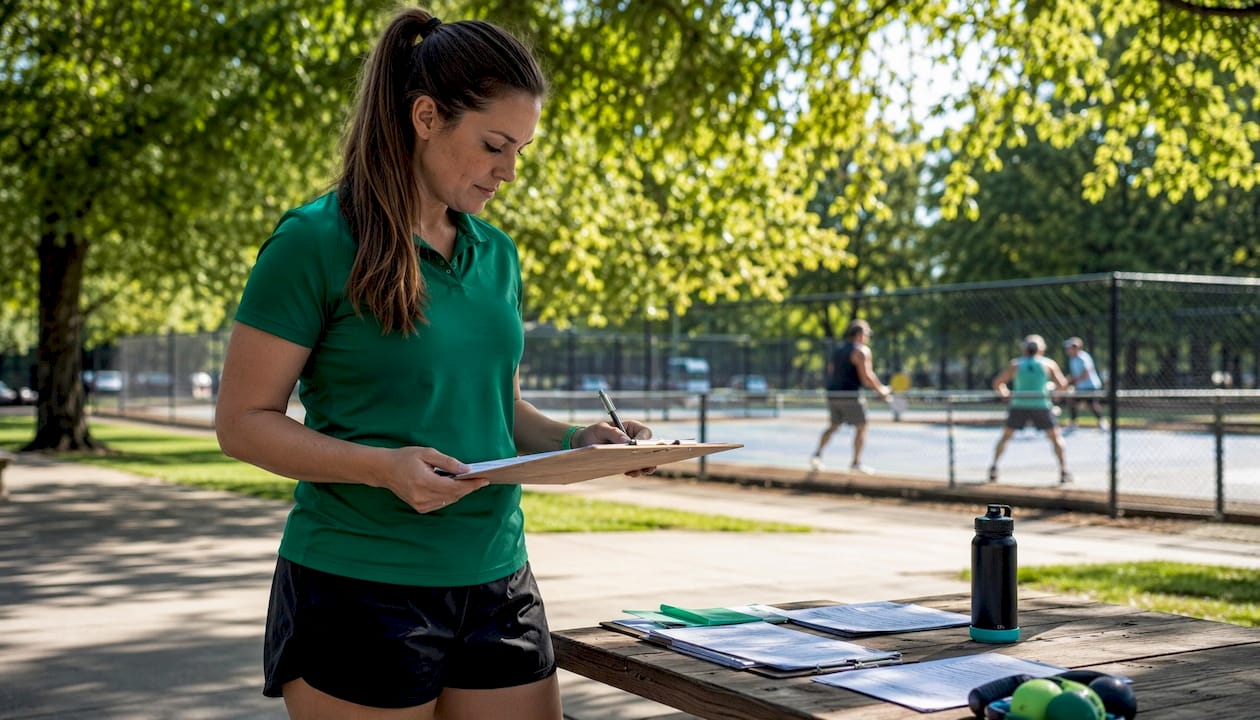
The most reliable way to run a successful singles pickleball league is to lock in a clear format, divide players by skill level, automate scheduling and score reporting, and collect fees through Stripe before the first ball is struck. Flexleagueplus handles all of that in one place: registration, automated scheduling, DUPR-based seeding, Stripe payments, live standings, and playoff brackets. It is DUPR approved, Stripe integrated, and built around a session guarantee ensuring multiple matches per player per night.
Pro Tip: Publish your session guarantee and scoring format on the registration page before you open signups. Players who know exactly what they are getting show up more reliably and complain less.
Table of Contents
- What does a singles pickleball league need before registration opens?
- Which singles format is right for your player base?
- How do you set divisions and keep skill levels balanced?
- How do you build a session schedule that guarantees 2 matches?
- What should registration cost, and how do you collect payment?
- How do you collect scores and keep standings accurate?
- How do you reduce no-shows and set clear player expectations?
- What does a safe, well-set-up singles court look like?
- How do you fill your roster and keep players coming back?
- What are the most common problems and how do you fix them?
- Copy-ready templates for your league launch
- Key Takeaways
- Why automation and clear expectations are what singles leagues actually run on
- Flexleagueplus runs the operational side so you can focus on the game
- Useful sources and next steps
What does a singles pickleball league need before registration opens?
Before you publish a registration link, confirm every item below. Missing even one creates friction that costs you players.
- Venue: Court dates and times locked in, backup courts identified for weather or conflicts.
- Divisions: Minimum player counts per division set to a workable floor, skill bands defined.
- Match format: Scoring rules, session length, and the multiple-matches-per-session guarantee documented.
- Registration page: Payment processor (Stripe) connected, price listed, refund policy written.
- Score reporting: Workflow defined, whether through in-app reporting or manual entry, with DUPR integration enabled if you want ratings to update automatically.
- Communications plan: Reminder cadence set, no-show policy written, dispute escalation path clear.
| Pre-Launch Item | Minimum Standard |
|---|---|
| Courts confirmed | Dates, times, and backup location secured |
| Divisions defined | 4–8 players per division minimum |
| Session guarantee | At least multiple matches per player per session |
| Payment setup | Stripe connected, fee and refund policy published |
| Score reporting | Workflow documented before Day 1 |
| Communications | Reminder schedule and no-show policy written |
Event pages that skip registration deadlines or minimum-player requirements create confusion and last-minute attrition. Publish those details upfront.
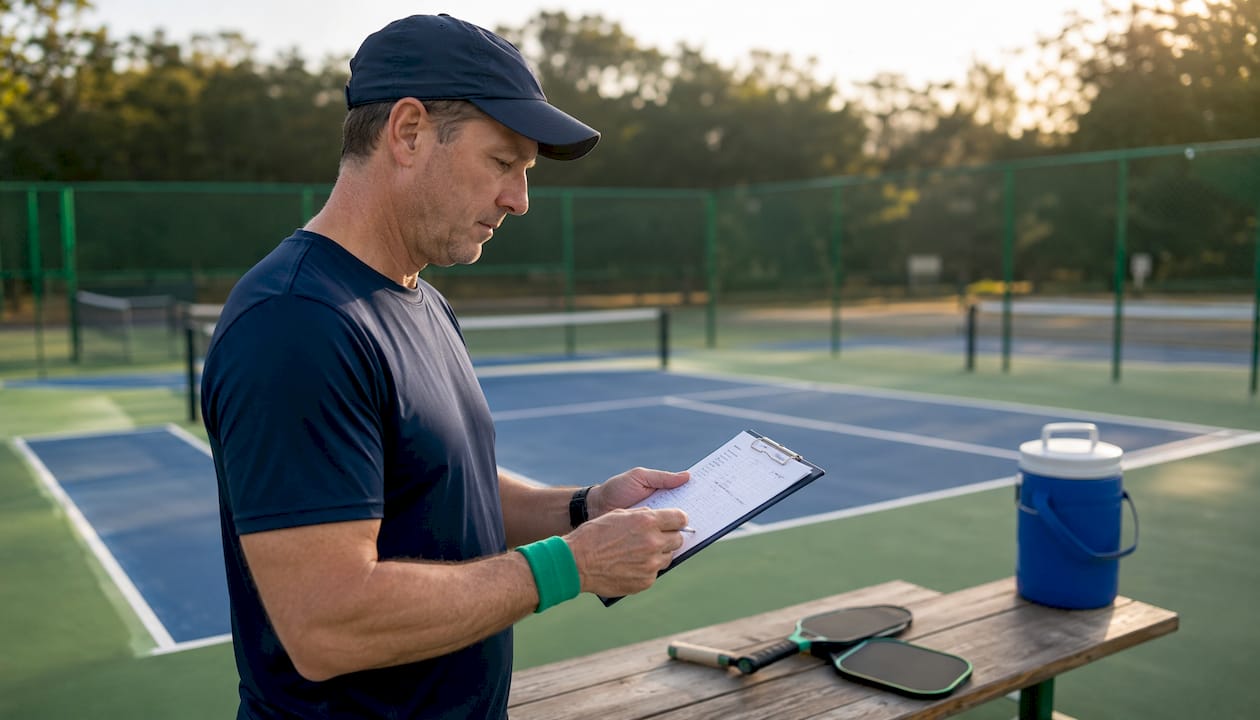
Which singles format is right for your player base?
Three formats cover almost every singles league scenario. Picking the wrong one for your group is the fastest way to lose players after week two.
Ladder works best for ongoing leagues where competitive motivation matters. Players earn promotion or face relegation based on match results, which keeps engagement high across a full season. It rewards consistency and gives mid-level players a clear goal.
Round-robin fits short seasonal leagues or placement weeks. Every player faces every other player in the division, so seeding is accurate and no one feels locked into a bad starting position. Use it for an initial placement phase before switching to a ladder phase.
Skinny Singles restricts court coverage to reduce the physical demand of full-court singles. It is the right entry point for doubles players transitioning to singles or for facilities that want to run a trial night before committing to a full program.
Matches commonly run as best-of-3 games to 11, win by 2. That structure keeps sessions moving while giving players enough court time to feel the match.
| Format | Best Use Case | Session Length Impact |
|---|---|---|
| Ladder | Ongoing season, competitive retention | Moderate; stagger start times |
| Round-robin | Placement weeks, short seasons | Higher; plan extra court time |
| Skinny Singles | Entry-level, trial nights, doubles crossover | Lower; fits tighter schedules |
Pro Tip: Add a Skinny Singles night before your first full ladder season. It converts doubles regulars into singles registrants and fills your roster faster than any ad.
How do you set divisions and keep skill levels balanced?
Divisions running from 2.5 through 5.0+ cover the full range of recreational and competitive players. Leagues that offer divisions across a wide skill range reduce intimidation and keep matches enjoyable for everyone, which directly affects renewal rates.
For initial seeding, you have three options: DUPR scores (most accurate), self-reported skill level (fastest to collect), or a 2–3 week placement phase where players compete before divisions are finalized. The hybrid approach, a placement phase followed by ladder play, gives you the most accurate starting positions and the motivational structure players respond to.
| Division | DUPR Range | Promotion Trigger | Relegation Trigger |
|---|---|---|---|
| Beginner | 2.5–3.0 | Win majority of matches in a session block | N/A |
| Intermediate | 3.0–3.5 | Win majority of matches in a session block | Lose majority of matches |
| Advanced | 3.5–4.5 | Win majority of matches in a session block | Lose majority of matches |
| Elite | 4.5–5.0+ | N/A | Lose majority of matches |
New players without a DUPR score get a provisional placement for the first two weeks. Lock divisions after the placement phase ends, and only move players mid-season when a skill mismatch is obvious and both parties agree.
Pro Tip: Never move a player mid-season without a written policy that defines the trigger. Arbitrary moves create more disputes than mismatched skill levels do.
How do you build a session schedule that guarantees 2 matches?
Singles is physically harder than doubles. Organizers who schedule 3-game blocks to 11 and manage court rotations carefully avoid the long waits that kill player satisfaction.
A typical session length and court usage example is as follows:
- 6:00–6:10 PM — Arrival and warm-up (courts open, no match play).
- 6:10–6:45 PM — Match block 1: 4 matches run simultaneously across 2 courts.
- 6:45–6:50 PM — Short break, score reporting, court reset.
- 6:50–7:25 PM — Match block 2: 4 matches, different pairings.
- 7:25–7:30 PM — Scores confirmed, standings updated.
With 2 courts and 8 players, each player gets 2 matches. Add a third court and you can handle 12 players in the same window. Every player on the schedule gets their guaranteed 2 matches, or you owe them a credit or similar compensation.
Pro Tip: Build a 10-minute buffer into every session. Singles matches run longer than expected when games go to deuce. A buffer protects your guarantee without extending your court rental.
What should registration cost, and how do you collect payment?
Registration fields to collect: full name, email, phone, DUPR ID or self-reported skill level, emergency contact, and a signed digital waiver. Keep it short. Every extra field drops completion rates.
Pricing depends on your market and session count, but a simple break-even calculation helps: divide your total court cost by the number of players, add your platform fee, and that is your floor. A state amateur championship singles event runs $35 per event, which gives you a useful benchmark for player price sensitivity in a one-off format. Seasonal leagues typically run higher per-player fees because players get multiple sessions.
- Early-bird discount: 10–15% off for signups 3+ weeks before the start date.
- Multi-session bundle: Offer a discount for players who register for two consecutive seasons.
- Refund policy: Full refund if canceled 7+ days before start; 50% refund within 3–6 days; no refund within 48 hours.
The payment flow with Flexleagueplus: player signs up → Stripe processes the fee → confirmation email fires automatically → player appears on the roster and standings. No manual reconciliation, no chasing checks. Stripe integration through the platform keeps every transaction traceable and reduces refund disputes.
How do you collect scores and keep standings accurate?
A clean score-reporting workflow prevents the disputes that derail leagues mid-season.
- Players report scores in the app immediately after each match.
- Both players confirm the result within 24 hours.
- Disputed scores escalate to the organizer, who has a 48-hour window to resolve.
- Standings update automatically after confirmation.
- DUPR ratings sync based on confirmed results.
Clubs that use DUPR ratings for seeding and ongoing fairness report fewer mid-season complaints about mismatched divisions. Connecting your league to DUPR through Flexleagueplus means ratings update without any manual entry on your end.
Pro Tip: Require a photo of the final scoreboard or an in-app confirmation before a score is accepted. It takes 10 seconds and eliminates most disputes before they start.
How do you reduce no-shows and set clear player expectations?
No-shows are the single biggest operational problem in singles leagues, because one missing player cancels a match entirely.
- Check-in window: Players must check in 10 minutes before their first match or forfeit it.
- No-show fee: First offense is a warning; second offense triggers a $10–$15 fee or a match forfeit.
- Late arrival: Players arriving after the check-in window play only remaining matches in the session.
- Dispute escalation: Players have 24 hours to contest a score; organizer decision is final.
Reminder cadence: send an automated message 48 hours before the session, another 24 hours out, and a final reminder 2 hours before play. Short, direct messages work best. Automation through Flexleagueplus handles this without any manual sends.
Pro Tip: Include a pre-filled score-report link in the 2-hour reminder. Players who already have the link open are far more likely to submit scores on time.
What does a safe, well-set-up singles court look like?
Equipment checklist for every session:
- Regulation nets set to 34 inches at center
- Scorecards or a visible scoreboard at each court
- First-aid kit accessible courtside
- Water station within 30 feet of play
- Boundary tape or permanent lines clearly marked
For singles play, sideline spacing matters more than in doubles. Players cover the full court width, so keep at least 5 feet of clear space outside each sideline. Evening sessions need lighting at a minimum of 30 foot-candles at court level to reduce injury risk. Slip-resistant surfaces and a clear emergency procedure posted at the facility entrance are non-negotiable.
Liability waivers belong in the registration flow, not handed out on paper at the door. Digital waivers collected at signup are timestamped and easier to retrieve if you ever need them.
How do you fill your roster and keep players coming back?
The fastest path to a full roster combines local outreach with a low-barrier trial format.
- Email your existing member list and previous league participants first. They already trust you.
- Post in local Facebook groups, Nextdoor, and community boards with a direct registration link.
- Run a free or discounted Skinny Singles trial night. Players who experience the format convert to paid registrants at a much higher rate than those who only read about it.
- Offer a referral discount: $5–$10 off for any player who brings a new registrant.
- Cross-promote with local clinics and pickleball tournaments. A flyer at a tournament reaches exactly the right audience.
Retention comes from visible standings, regular communications, and a small season-end reward. A trophy, a gift card, or even a featured post on your facility’s social page gives players a reason to finish the season and sign up for the next one.
What are the most common problems and how do you fix them?
| Problem | Immediate Fix |
|---|---|
| No-shows | Keep a short-notice substitute list; apply the no-show fee policy consistently |
| Mismatched skill levels | Run a mid-season rebalancing review; move players with documented match records |
| Schedule drift | Add 10-minute buffers; enforce the check-in window strictly |
| Small division (under 4 players) | Combine with adjacent division or offer credits/refunds |
| Score disputes | Require photo confirmation; resolve within 48 hours |
Pro Tip: Run a 2-week placement phase before the ladder starts. It catches seeding errors before they become mid-season complaints, and players accept early adjustments far more graciously than mid-season moves.
Copy-ready templates for your league launch
Sample 2-hour session schedule
| Time Block | Activity |
|---|---|
| 6:00–6:10 PM | Arrival, warm-up, check-in |
| 6:10–6:45 PM | Match block 1 (best-of-3 to 11, win by 2) |
| 6:45–6:50 PM | Break, score reporting, court reset |
| 6:50–7:25 PM | Match block 2 (best-of-3 to 11, win by 2) |
| 1:25–1:30 | Score confirmation, standings update |
Registration form fields
- Full name, email address, phone number
- DUPR ID or self-reported skill level (2.5 / 3.0 / 3.5 / 4.0 / 4.5+)
- Emergency contact name and phone
- T-shirt size (optional, for season-end awards)
- Digital waiver acknowledgment (date-stamped at submission)
Rules one-pager bullets to publish
- Match format: best-of-3 games to 11, win by 2
- Session guarantee: minimum 2 matches per player per session
- Check-in window: 10 minutes before first match
- No-show policy: warning on first offense, $10–$15 fee or forfeit on second
- Score reporting: submit in-app within 24 hours of match completion
- Disputes: 24-hour appeal window; organizer decision is final
- Playoffs: top players per division advance; bracket format announced at season midpoint
Key Takeaways
Running a successful singles pickleball league requires a clear format, skill-based divisions, a guaranteed 2-match session structure, Stripe-powered payment collection, and automated score reporting connected to DUPR.
| Point | Details |
|---|---|
| Lock format before launch | Choose ladder, round-robin, or Skinny Singles based on your player base and season length. |
| Seed with DUPR or placement weeks | An initial placement phase before ladder play produces the most accurate divisions. |
| Guarantee 2 matches per session | Build your court and time math around this promise; it is the single biggest retention lever. |
| Automate payments and reminders | Stripe-based collection and automated reminders cut no-shows and manual reconciliation. |
| Flexleagueplus covers the full stack | Registration, scheduling, DUPR seeding, Stripe payments, standings, and playoffs in one platform. |
Why automation and clear expectations are what singles leagues actually run on
Most league organizers underestimate how much of their attrition problem is an information problem. Players quit not because the competition is too hard or too easy, but because they did not know what to expect and the experience did not match what was promised. Clear rules, published upfront, solve more retention problems than any format tweak.
The second thing operators consistently underestimate is the administrative load of running singles versus doubles. One missing player in singles cancels a match. One disputed score without a clear resolution path becomes a forum complaint. Automation does not just save time; it removes the ambiguity that creates conflict. When scheduling, reminders, score reporting, and payment collection run without manual intervention, organizers can focus on the one thing that actually grows a league: making sure players have a good time on the court.
The combination of DUPR for accurate seeding and Stripe for frictionless payments is not a nice feature set. It is the operational foundation that lets a singles league scale past 20 players without the organizer spending their weekend on spreadsheets.
Flexleagueplus runs the operational side so you can focus on the game
Singles league organizers who try to manage registration, scheduling, score reporting, and payments across separate tools spend more time on administration than on growing their program. Flexleagueplus puts all of it in one place, built specifically for pickleball.
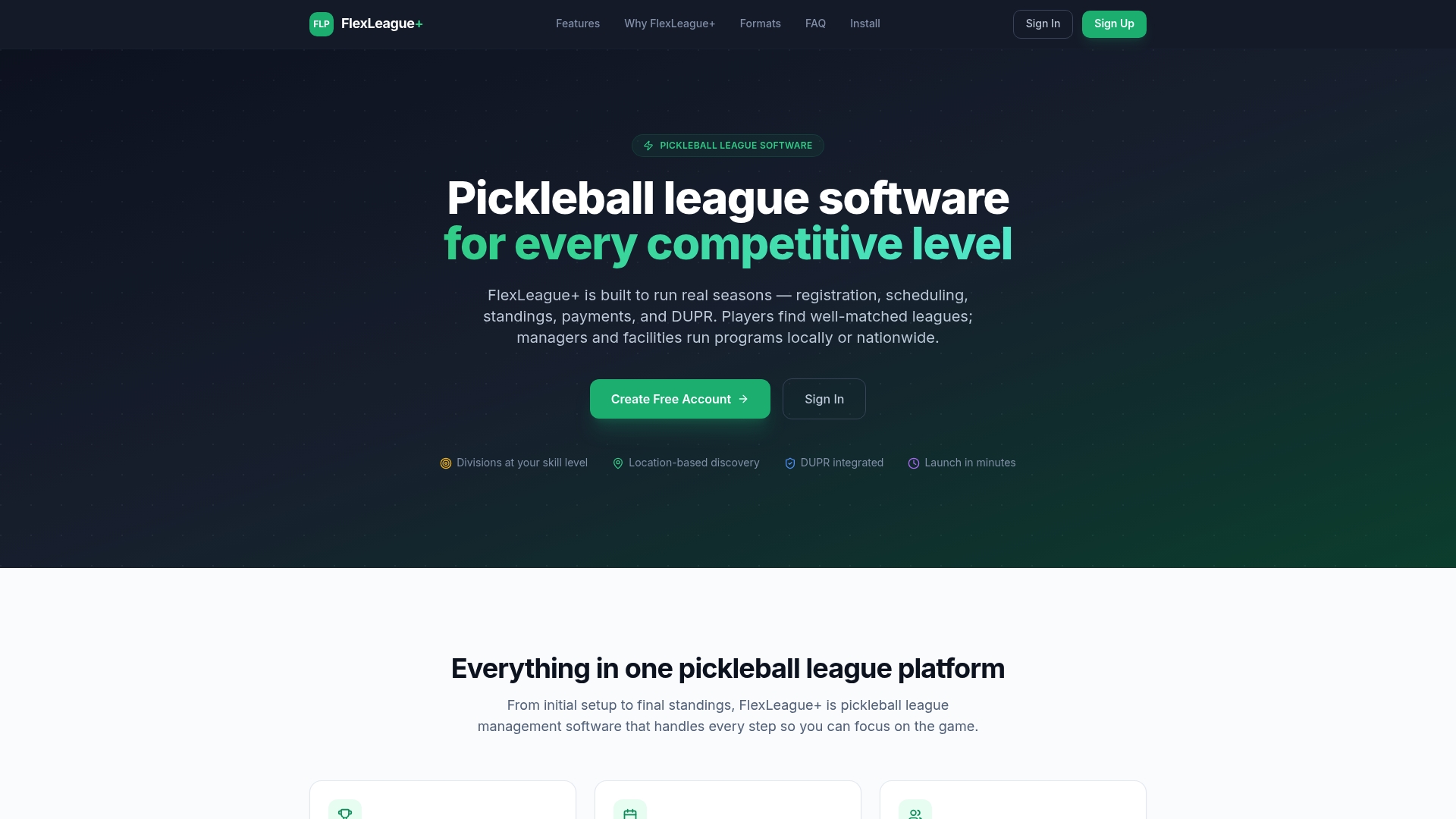
The platform handles automated scheduling, DUPR-integrated seeding, Stripe payment collection, live standings, score reporting, and playoff brackets. You set the format and divisions; the software does the rest. No manual reconciliation, no chasing down scores, no spreadsheet juggling between sessions.
Start your singles league on Flexleagueplus and have your registration page live today.
Useful sources and next steps
- Flexleagueplus pickleball league software: feature detail on DUPR integration, Stripe payments, scheduling, and standings.
- Griffin Club Los Angeles singles league: real-world example of session structure, match format, and registration requirements.
- Pickles and Play leagues: operator example of division structure and placement-phase approach.
- Lucky Shots Pickleball Club: example of DUPR-based seeding in a club ladder format.
- Pickleball Is Great tournament listings: benchmark for singles event pricing and registration field standards.