Automate Rotating Partner Leagues for Organizers with DUPR and Stripe
Automate Rotating Partner Leagues for Organizers with DUPR and Stripe

A rotating partner league is a solo sign-up doubles format where you get a new partner every round instead of playing the whole season with one person. It suits social players, drop-in schedules, and organizers who want full courts without chasing down fixed teams. Most seasons run several weeks with weekly sessions lasting under three hours, and planners can find practical golf tournament prize ideas helpful when organizing year-end awards or season prizes.
TL;DR:
- Setting up a rotating partner league requires clear capacity limits, consistent pairing methods, and precise scheduling to prevent confusion and maintain flow.
- Most leagues operate over several weeks with weekly sessions, where attendance rules and substitute policies must be enforced to minimize organizer headaches.
- Duplication in scoring and ranking is common, but only DUPR-linked results count toward official ratings, requiring players to link accounts and use app-based score submission.
- Choosing the correct format—round robin for social play, ladder for competitive progress, or hybrid for season-ending tournaments—depends on player goals and engagement style.
- Automating scheduling, scoring, and payments through league software like FlexLeague+ helps organizers reduce manual work and improve overall league management.
Table of Contents
- Common Rotating Partner Formats and Who They Fit
- How Does a Typical Rotating Partner Session Work?
- Scheduling, RSVPs, and Substitute Rules
- Scoring, Ranking, and DUPR Reporting
- Organizer Checklist: Running a Rotating Partner League
- How FlexLeague+ Removes Common Organizer Friction
- What Organizers Actually Learn From Running These Leagues
- Ready to Run Your Own Rotating Partner League?
- Sources
- FAQ
Common Rotating Partner Formats and Who They Fit
Most rotating partner leagues fall into three buckets, and picking the wrong one is the fastest way to frustrate your players.
The round robin is the default. Every player gets a fresh partner each round, usually across three to six rounds a night, and results feed a shared leaderboard. Program pages like this rotating partner round robin show how organizers structure a full night this way, pairing new partners round by round while keeping scoring predictable. It works best for groups of 12 to 24 players split into skill bands.
Ladder leagues move players up or down a ranked list each week based on how they perform, guaranteeing several short games per session. Ladder-style leagues lean more competitive than social round robins, since the whole point is climbing the ranking.
Hybrid formats blend both: rotating partners during regular season play, then locked teams for playoff brackets. Organizers use hybrids when they want the social upside early and a clean bracket structure at the end.
- Round robin: best for socializing and beginner-friendly nights
- Ladder: best for players who want visible weekly progress
- Hybrid: best for organizers running a season that ends in a tournament
How Does a Typical Rotating Partner Session Work?
A league night runs on a rhythm, and once you’ve played one, the rest feel familiar.
- Check-in and pairing. Players arrive, confirm their spot, and get assigned a partner for round one, either by a rotation matrix, a random shuffle, or seeding based on skill.
- Play the round. Games typically go to 11, win by 2, sometimes with a cap around 13 to keep court time predictable, a detail confirmed on program pages that manage back-to-back bookings.
- Rotate partners. After each round, players shift to a new partner and often a new court, following whatever system the organizer set up in advance.
- Repeat for 3 to 6 rounds. A full session generally runs a couple of hours, depending on court count and round length.
- Points post to a leaderboard. Wins, point differentials, or both feed a running standing that determines playoff seeding or ladder movement over the following weeks.
Some leagues use a fixed rotation chart printed for the whole season. Others reshuffle live each night, which keeps things unpredictable but requires more organizer attention on pairing.
Scheduling, RSVPs, and Substitute Rules
Seasons for rotating partner leagues usually run several weeks with one session per week, a cadence common enough that most rotating partner programs build their whole registration model around it. Players commit at signup, not week to week.
Attendance policies vary, but the pattern that works best sets clear rules up front instead of handling no-shows case by case.
- RSVP cutoffs before a session, so organizers can rebalance courts
- Substitute policies allowing a member sub for free or a small guest fee for a nonmember fill in
- Waitlist or standby systems that automatically fill an open spot the morning of play
- Cancellation and refund terms stated at registration, not improvised mid-season
Loose attendance rules are the single biggest source of organizer headaches in a rotating format, since one no-show throws off pairing for the whole night.
Scoring, Ranking, and DUPR Reporting
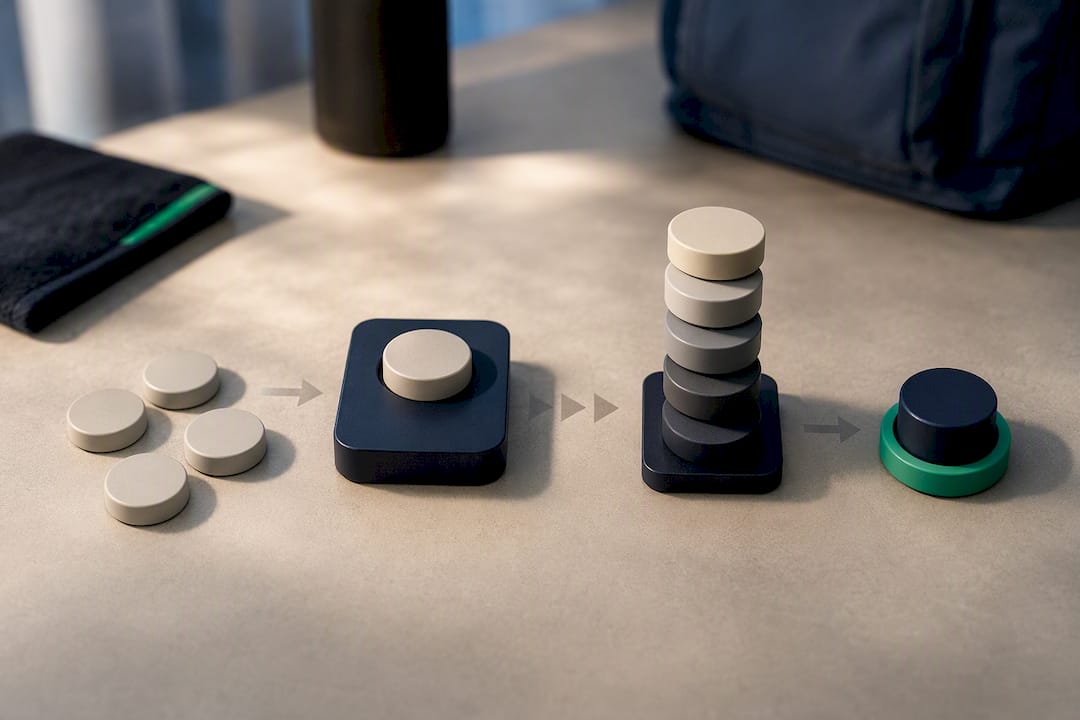
Not every rotating partner match belongs in your official rating. Internal leaderboards track wins and standings for the season itself. DUPR reporting is a separate, stricter process meant for results you want counted toward a player’s official rating.
Some programs are built for both. A DUPR-reported rotating partner league requires players to link their DUPR accounts and submit scores through an app, which keeps results consistent and reduces disputes over who won what.
- Confirm whether your league is DUPR reported before assuming results count
- Require account linkage and app-based score entry to avoid manual reconciliation
- Use scoring caps to prevent marathon games that delay the rest of the session
- Settle ties with point differential rather than a coin flip, so rankings stay defensible
Organizers running a mixed doubles format with DUPR in mind should decide this policy before the season opens, not after players start asking.
Organizer Checklist: Running a Rotating Partner League
Running one of these leagues well comes down to sequencing. Skip a step and you’ll be fixing it live on court night.
- Plan capacity first. Decide how many courts you have, then cap registration to a number that divides cleanly into groups of four, sorted by skill band.
- Build the registration form. Collect self-assessed skill level, DUPR ID if applicable, and payment up front through a processor like Stripe.
- Choose your pairing method. Decide between a fixed rotation matrix, a random shuffle each week, or seeded pairing based on standings, then stick with it for the season.
- Assign courts each round. Post the rotation somewhere visible, whether that’s a printed sheet or a screen at the venue.
- Collect scores and update standings. Whether by paper scorecard or app entry, get results logged before players leave so the leaderboard stays current.
- Handle payments and refunds. Set a clear refund window and stick to it consistently across every player.
- Send reminders. A short message the day before, plus anything urgent like a court change, keeps no-shows down.
For a full walk-through of setup from scratch, the step-by-step league guide covers registration templates organizers reuse season after season.
Pro Tip: Print the full rotation matrix before week one instead of reshuffling live each night. It cuts confusion at check-in and gives players something concrete to check when they walk in.
How FlexLeague+ Removes Common Organizer Friction
Every step in that checklist above is a place where manual work piles up, and that’s exactly where league software earns its keep. Tools built for this job automate scheduling, pairing, and standings so organizers aren’t rebuilding a spreadsheet every Tuesday night.
- Automated scheduling and pairing options that handle round robin, ladder, and hybrid rotations without manual rebuilding
- Live leaderboards and playoff brackets that update as scores get entered, so standings never lag behind actual play
- DUPR-approved reporting workflows that convert session results into official matches without a separate manual submission step
- Stripe-powered payment collection for registration, so fees, subs, and refunds run through one system instead of cash and spreadsheets
For organizers running round robins specifically, the round robin league guide breaks down implementation details that pair well with these tools.
What Organizers Actually Learn From Running These Leagues
Rotating formats keep players coming back because nobody’s stuck with a mismatched partner for eight weeks straight. But that flexibility only works if your RSVP and substitute rules are airtight from day one. If you’re choosing between formats, start rotating partners for casual or mixed-skill groups, and save fixed-partner leagues for players who’ve already found their preferred teammate.
— Robert
Ready to Run Your Own Rotating Partner League?
Running one of these leagues by spreadsheet works until week three, when three substitutes, two refund requests, and a scoring dispute land in your inbox at once. FlexLeague+ replaces that manual juggling with automated pairing, live standings, and Stripe-based registration built specifically for formats like round robins and ladders.
Every checklist item covered above, capacity planning, pairing logic, score collection, DUPR reporting, payment handling, maps directly to a feature inside the platform. You set your rotation method once, and the system handles reshuffling players and updating leaderboards every week after that. Organizers who need DUPR-reported results get that workflow built in rather than bolted on afterward.
Visit the FlexLeague+ product page to see how setup works for your court count and group size, or check the pickleball league software details to compare features against what you’re currently running by hand.
Sources
FAQ
What Is a Rotating Partner League?
It’s a doubles format where players sign up solo and get a new partner each round instead of committing to one teammate for the season.
How Long Do Rotating Partner Leagues Typically Run?
Most seasons run several weeks with one weekly session, and each session usually lasts a couple of hours across multiple rounds.
Can Rotating Partner Matches Count Toward My DUPR Rating?
Only if the league is specifically set up for DUPR reporting, which usually requires linking your DUPR account and submitting scores through an app rather than tracking results internally only.
What Happens if I Miss a Week or Need a Substitute?
Most leagues allow a member substitute for free or a small fee for a nonmember guest, provided you RSVP or notify the organizer before the posted cutoff.
Does FlexLeague+ Support Rotating Partner Formats?
Yes. FlexLeague+ automates pairing, live standings, and DUPR-approved reporting for round robin, ladder, and hybrid rotating partner formats, alongside Stripe-based registration payments.