From Pool Standings to a Clean Elimination Bracket
From Pool Standings to a Clean Elimination Bracket

Convert pool results into a bracket by locking final scores, running your pre-declared tiebreaker sequence, assigning seeds, filling gaps with byes for top seeds when the field isn’t a power of two, and publishing with a short buffer for disputes. That’s the whole workflow.
The harder decision is format. A few signals point the way:
- Single-day, small field: skip the hybrid step and run straight elimination.
- Multi-day event or player development is a goal: run a hybrid, pools first, then bracket, since pool play guarantees games while bracket play decides a champion.
- Tight travel budgets or limited courts: hybrid formats justify travel costs by guaranteeing multiple matches per team before anyone gets eliminated.
Key Takeaways
The fastest path from pool standings to a published bracket is locking scores, applying pre-declared tiebreakers, seeding with serpentine distribution, and assigning byes to top seeds before publishing with a buffer window.
| Point | Details |
|---|---|
| Lock scores first | Assign one person to verify final pool results within 10 to 15 minutes of the last match. |
| Pre-declare tiebreakers | Use head-to-head, then point differential, then points scored, then coin flip, in that order. |
| Seed with serpentine distribution | Spread top teams evenly across bracket slots instead of stacking them in round one. |
| Byes go to top seeds | Round up to the next power-of-two bracket size and give extra slots to your highest seeds. |
| FlexLeague+ automates the transition | The platform applies tiebreakers, assigns byes, and publishes brackets with built-in DUPR and Stripe support. |
Table of Contents
- How Do Pool Play and Bracket Play Work Together?
- What’s the Step-by-Step Process to Turn Pool Results Into a Bracket?
- Which Tiebreaker Sequence Should You Use?
- How Do You Avoid Scheduling Delays When Assigning Byes?
- What Tools Actually Handle the Pool-to-Bracket Conversion?
- What Should You Check in the First 30 Minutes After Pool Play Ends?
- How FlexLeague+ Handles the Pool-to-Bracket Transition
- Why the 30-Minute Window Deserves More Respect Than It Gets
- Run Your Next Pool-to-Bracket Conversion Without the Guesswork
- Sources
How Do Pool Play and Bracket Play Work Together?
Pool play guarantees games. Every team plays a set number of matches inside a small group, and standings come from win totals, point differential, or a mix of both. Bracket play does the opposite: one loss and you’re out. Hybrid formats exist because organizers want both outcomes at once, guaranteed playing time early, then a decisive finish.
Most operators keep pools at three to five teams, with four being the common sweet spot. Three-team pools move fast but produce thin data for seeding. Five-team pools generate better standings but eat more court time.
- Guaranteed games: pools win, every team gets multiple matches regardless of result.
- Scheduling complexity: pools lose, more matches means more court time and more room for delay.
- Best use case: pools for development leagues and multi-day tournaments; straight brackets for one-day, high-stakes events.
What’s the Step-by-Step Process to Turn Pool Results Into a Bracket?
This is the workflow that matters most, the one you’ll actually run when pool play wraps up and coaches are hovering by the scorer’s table.
- Collect and verify final scores. Assign one person, not a committee, to confirm every pool result. Set a hard deadline (10 to 15 minutes after the last match) for score submission.
- Run your tiebreaker sequence. Apply the rules you announced before the tournament started: head-to-head result, then point differential, then total points scored, then a coin flip if it’s still tied.
- Assign seeds. Rank teams by final pool standings. When distributing seeds across multiple pools into one bracket, use serpentine seeding, 1 goes to bracket slot A, 2 to B, 3 to C, 4 back to C, 5 to B, 6 to A. This spreads top teams evenly instead of stacking them against each other in round one.
- Fill bracket slots and handle byes. If your field isn’t a power of two, round up to the nearest bracket size and give the extra slots to your top seeds as byes.
- Publish and communicate. Post the bracket, assign courts, and build in a buffer window before the first bracket match starts.
Pro Tip: Announce your tiebreaker order in the tournament packet, not verbally on game day. A rule nobody can point to on paper turns into an argument the moment two teams are tied.
Which Tiebreaker Sequence Should You Use?
Order matters because each rule resolves ties the previous one couldn’t. A standard sequence looks like this:
- Head-to-head result between tied teams
- Point differential across all pool games
- Total points scored
- Fewest cards or discipline violations
- Coin flip, only as a last resort
Say three teams finish a pool tied at 2-1. Team A beat Team B but lost to Team C. Team B beat Team C but lost to Team A. Team C beat Team A but lost to Team B, a perfect three-way loop where head-to-head can’t separate anyone. You move straight to point differential. If Team A won its games by wider margins, Team A gets the top seed, and the other two fall in behind by their own differential.
Document this sequence in writing before the event and post it where teams can see it. The single biggest failure organizers report is trying to invent tiebreaker logic under pressure with a line of coaches waiting on a decision.
How Do You Avoid Scheduling Delays When Assigning Byes?
Build a buffer between the last pool match and the first bracket match. Skipping this step is the most common source of errors in the whole transition, since tiebreakers take time to verify and disputes need a window to surface before you lock the bracket.
Bye assignment follows a simple rule: convert your field to the next power-of-two bracket size and hand the extra slots to your top seeds.
- 6 teams: round up to an 8-slot bracket, top two seeds get byes.
- 10 teams: round up to a 16-slot bracket, top six seeds get byes.
- 12 teams: round up to a 16-slot bracket, top four seeds get byes.
Pro Tip: Publish the bracket template (the 8-slot or 16-slot shell) before final scores are even in. Teams see the structure early, and you only need to drop names into slots once tiebreakers settle.
Stagger bracket start times by court, hold one reserve court open, and text teams a realistic wait window rather than a fixed start time you might miss.
What Tools Actually Handle the Pool-to-Bracket Conversion?
Pick your tool by the size of the problem, not by habit.
Quick bracket generators work fine for one-off, small events, drop in team names, get a printable bracket, done. Scheduling apps solve a different problem: avoiding double-booked courts when multiple pools run simultaneous rounds. A dedicated scheduling app earns its keep here. Full league platforms go further, handling registration, payment collection, auto-seeding, tiebreaker logic, and automatic notifications the moment brackets are ready.
Before committing to any tool, confirm it covers:
- Configurable tiebreaker logic (not just win percentage)
- Automatic bye assignment for non-power-of-two fields
- Printable, shareable bracket output
- Built-in notification channels for players and coaches
Full league platforms remove the manual rebuild step entirely, which matters most in the 30-minute window when everyone’s watching the board.
What Should You Check in the First 30 Minutes After Pool Play Ends?
Run this in order:
- Confirm every final score is submitted and matches the scorer’s sheet.
- Apply your tiebreaker sequence to any tied standings.
- Assign seeds and byes according to your pre-declared rules.
- Publish the bracket and assign courts.
- Notify coaches and players through your chosen channel.
If a score is missing or disputed, publish a provisional bracket labeled clearly as such, then open a 15 to 30 minute appeals window before locking it. A short text works better than a long email: “Provisional bracket posted, final seeding confirmed by [time]. Flag any score discrepancy now.”
Pro Tip: Keep two message templates ready before the tournament starts, one for “provisional bracket, please review” and one for “final bracket, first round begins at.”
How FlexLeague+ Handles the Pool-to-Bracket Transition
Robert has spent years watching tournament directors scramble through this exact window, tiebreakers argued on a clipboard, seeds recalculated by hand, byes assigned wrong because nobody double-checked the math against the bracket size.
FlexLeague+ was built around that specific failure point. The platform automates seeding, applies your configured tiebreaker sequence instantly, assigns byes correctly for any field size, and pushes notifications the moment a bracket publishes. It’s DUPR approved and runs payment collection through Stripe, so registration fees and bracket logistics live in one system instead of three spreadsheets and a group text.
The tournaments that run smoothest aren’t the ones with the fewest ties, they’re the ones where nobody has to invent a rule on the spot.
- Automated tiebreaker application removes the clipboard argument entirely.
- Bye assignment follows bracket math automatically, no manual recount.
- Notifications go out the moment the bracket locks.
Why the 30-Minute Window Deserves More Respect Than It Gets
Most tournament advice focuses on pool sizing and format selection, which matters, but organizers rarely fail there. They fail in the transition window, the 30 to 90 minutes between the last pool match and the first bracket match, when tiebreakers get argued verbally and seeds get assigned from memory instead of a documented standings sheet.
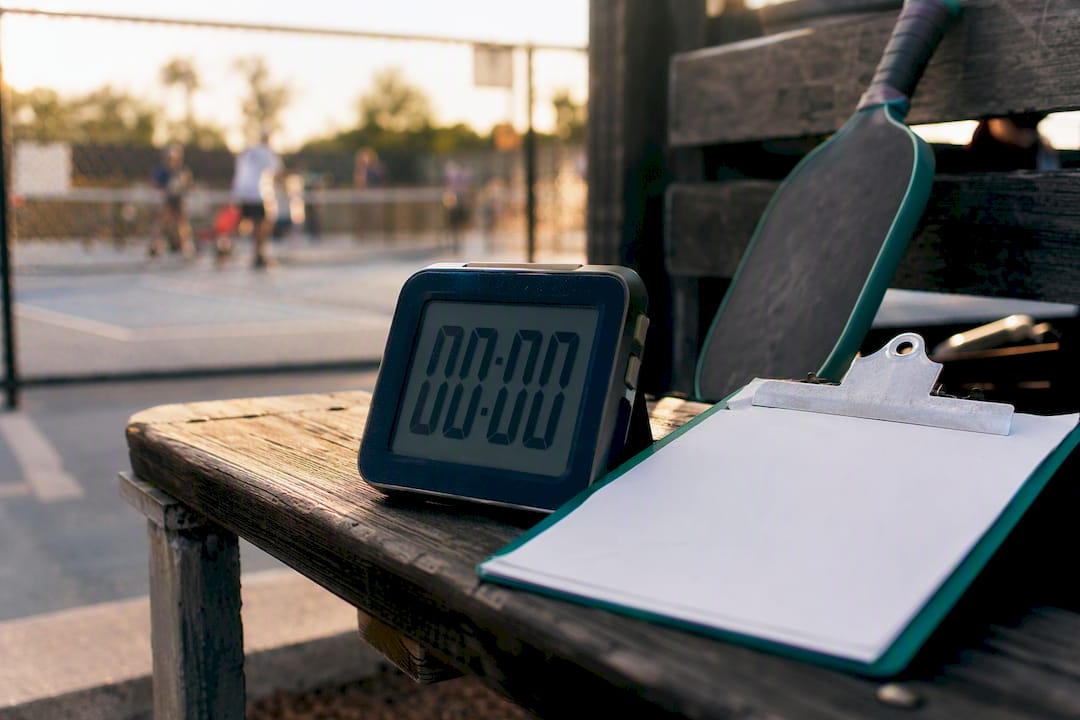
The conventional advice treats this window as an afterthought, a quick administrative step between the “real” competitive phases. That’s backward. It’s the highest-risk part of the entire event. A dispute here doesn’t just cost time, it costs trust, and a team that feels shorted on seeding remembers it long after the trophy gets handed out.
Prioritize the paperwork before the tournament, not during it. Write your tiebreaker sequence down. Decide your bye rules before you know your final field size. Build your buffer window into the schedule, not into your hope that things run on time. Everything else, pool size, format choice, court assignments, matters less than having those three things locked before the first ball drops.
— Robert
Run Your Next Pool-to-Bracket Conversion Without the Guesswork
Every step in this workflow, tiebreakers, seeding, byes, notifications, is exactly what FlexLeague+ automates for pickleball league organizers. Instead of rebuilding a bracket by hand while coaches wait, you configure your rules once and let the platform apply them the second pool play ends. It handles singles, doubles, mixed doubles, and FLP team formats, with DUPR integration and Stripe-powered registration built in from day one.
If you’re running a league or one-off tournament and want to see how the pickleball league software handles seeding and bye logic on your exact field size, check the pricing page and get your next event set up before your next pool play window closes.
Sources
- Pool Play vs Bracket Play Guide (Update July 2026)
- Tournament Bracket Maker - Free, Printable, 3 to 128 Teams