NYC Organizers: Avoid 50 Hour Insurance Trigger for Pickleball Permits
NYC Organizers: Avoid 50 Hour Insurance Trigger for Pickleball Permits

Yes, you need a permit to run a recurring or paid pickleball league on public courts in New York City, and the NYC Department of Parks & Recreation is who issues it, through borough permit offices. Building or converting courts is a separate municipal approval process entirely. Your first move: check the parks availability map or call the borough permit office for your target location.
TL;DR:
- Check court availability first, choose the permit category that matches your season, and submit a complete schedule, roster, rules, waiver, and emergency plan.
- NYC Parks requires coverage after 50 permitted seasonal hours: at least $1 million per occurrence and $2 million aggregate, with the city named as an additional insured.
- Each borough requires a separate application and one group representative; use a shared master schedule, then set dates around the site with the tightest availability.
- Renewal requires a fresh application each season, and changes in hours or divisions can alter insurance needs; keep coverage active throughout the permit period.
- At Brooklyn Bridge Park, tournaments need a special event permit, and timed league reservations cannot extend into open play, which remains first come, first served.
Table of Contents
- What a permit covers versus what it doesn’t
- Step-by-step: applying for an NYC field or court permit
- Insurance, liability, and budgeting for a season
- If you plan to build or modify courts
- Your league permit packet: what to bring
- Running leagues across multiple boroughs or sites
- Renewing your permit each season
- Staying compliant once your permit is active
- What a pickleball league permit actually costs in NYC
- Court-specific rules organizers should know
- Who to contact for help with your application
- Lessons from running leagues: what trips organizers up
- After your permit: what Flex League Plus handles next
- FAQ
- Sources
What a permit covers versus what it doesn’t
A field or court permit and a building permit solve two different problems, and mixing them up wastes time. A league permit reserves uninterrupted time on an existing court. It tells NYC Parks when your group shows up, how long you stay, and that you have priority over casual walk-ins during that window. It does not touch the physical structure of the court at all.
Construction or land-use approvals are a different animal. If you want to build new courts, resurface a lot, add fencing or lighting, or convert tennis courts to pickleball, you are now dealing with building departments, zoning reviewers, and sometimes a planning board. These reviewers care about structures, not schedules.
In New York City, NYC Parks handles the scheduling site for its own courts. Municipalities elsewhere in New York state handle the construction side through their local building and planning departments, and those rules vary by jurisdiction. A league organizer renting time on an existing court almost never needs to touch the construction process. A facility operator adding courts almost always does, even if they also plan to run a league once the courts exist.
Step-by-step: applying for an NYC field or court permit
Getting a permit approved comes down to sequencing. Skip a step and you will be bounced back to the borough office with a request to resubmit.
- Check availability first. Use the NYC Parks field and court availability map or call indoor facility owners directly to confirm open time slots before you build a schedule around them.
- Choose the right permit category. Adult league, youth league, tournament, single-play, and full-season permits each have different application windows through the Field and Court Requests system, so match your category to how long and how often your league runs.
- Build your documentation set. Assemble a written schedule grid, a roster template, organizer contact information, published rules, a signed waiver, and an emergency contact plan before you start the application.
- Secure insurance ahead of time. If your season crosses the hours threshold that triggers coverage requirements, get your certificate of liability and additional-insured endorsement locked in before you submit, not after.
- Submit to the correct borough office. File with the borough permit office covering each location where your courts sit, and follow up directly with the borough coordinator rather than waiting for a reply.
Each of these steps feeds into the next. A clean schedule grid makes the insurance calculation easier, since you already know your total court hours. A confirmed insurance certificate makes the borough submission faster, since reviewers do not have to chase you for it later.
Insurance, liability, and budgeting for a season
Insurance is where most first-time organizers get caught off guard, mostly because the threshold sneaks up on them. NYC Parks requires commercial general-liability insurance with at least $1 million per occurrence and $2 million aggregate once a permit exceeds 50 seasonal permitted hours, and the city must be named as an additional insured on the policy.
That 50-hour threshold is easier to hit than it sounds: two courts booked for two hours a week over a 13-week season come out to 52 permitted hours, which already crosses the line.
Beyond the baseline requirement, a few factors can push you toward higher limits or a cleanup bond:
- Expecting a large number of spectators changes the city’s risk calculation.
- Bringing in vendors or sponsors for a tournament often triggers additional insurance review.
- A prior history of permit violations or complaints at a site can raise the bar for your application.
To budget correctly, multiply your court count by weekly hours by number of weeks before you ever call an insurer. That number tells you whether you are shopping for a basic policy or a season-level commercial package, and it tells your insurer exactly what to quote.
If you plan to build or modify courts
Constructing new courts or converting existing surfaces means leaving the permit process behind and entering the construction approval process, and the two are not interchangeable. Depending on the municipality, you may need a building permit, a certificate of occupancy, site-plan or planning-board review, separate permits for lighting and fencing, and sometimes a parking or transportation review if the project affects traffic flow.
These requirements vary by locality across New York state, and what one town requires another may not. Some jurisdictions fold everything into a single building department review. Others require a planning board hearing before any building permit gets issued.
The practical move is to call your local building and planning or zoning office with a one-page project description before you spend money on design work. A quick conversation up front can save months of redesign later, especially if your plan runs into setback rules, lighting ordinances, or parking minimums you did not anticipate.
Your league permit packet: what to bring
Borough permit offices move faster when your application arrives complete the first time. Build a packet with these pieces before you submit:
- A schedule grid listing dates, times, and specific court IDs for every session.
- A roster template that matches your league’s division structure.
- Organizer contact information, including a backup contact.
- Published rules and a signed waiver covering player liability.
- An insurance certificate with the additional-insured endorsement attached.
- An emergency contact and incident plan for each site.
- A facility agreement if you’re using indoor or privately managed courts.
Beyond the paperwork NYC Parks asks for, document your operational plan too: how you place players by skill (many NYC leagues use DUPR verification for this), how rotations and score reporting work, and how you communicate late cancellations to players. None of this is required by the borough office, but it heads off disputes once registration opens.
Pro Tip: Keep your applicant-of-record name identical across every form, use one simple schedule table instead of several conflicting versions, and map every court location by name and address so reviewers don’t have to guess which site you mean.
Running leagues across multiple boroughs or sites
NYC Parks requires separate applications for each borough, and only one person can apply as the group’s representative per borough. If your league spans Brooklyn and Queens courts, you’re filing two applications, not one.
Keep a single master schedule that you split by borough when submitting, rather than maintaining separate schedules that can drift out of sync. Assign one borough lead per site or submit consistent duplicate applications yourself, and track approval status in a shared spreadsheet so nothing falls through during a long review window. When sites have different availability calendars, build your season dates around the most restrictive site first, then adjust the others to match.
Renewing your permit each season
Permits are not evergreen. Each new season or league cycle typically means a fresh application through the borough permit office covering your courts, following the same seasonal windows that applied the first time around. Treat renewal as a full reapplication rather than a formality, since conditions can shift between seasons.
Changes worth flagging at renewal time include adjusted court hours, a different number of divisions, a new insurance carrier, or a shift in your applicant-of-record. If your season now exceeds the 50-hour threshold when it didn’t before, your insurance requirements change accordingly, and you’ll need an updated certificate before the office approves the renewal.
Your permit history at a given site matters too. A clean record of following your permitted hours, respecting shared court time, and avoiding complaints makes renewal smoother. A pattern of no-shows, overstaying permitted windows, or unresolved issues from a prior season can slow down or complicate your next approval.
Build renewal into your season calendar rather than treating it as a last-minute scramble. If your current permit’s application window opens while your season is still running, submit the renewal early using the same schedule-grid and documentation approach that worked the first time. Keeping your roster template, waiver language, and emergency plan consistent season over season also means less rework each time you reapply.

Staying compliant once your permit is active
Holding a permit comes with ongoing obligations, not just a one-time approval. Your group needs to use the courts within its permitted windows, respect the priority given to permitted play over casual drop-ins, and keep the site in the condition you found it.
Enforcement at NYC Parks sites generally centers on a few recurring issues: groups overstaying their permitted time, permit holders letting non-permitted players use reserved slots, and conflicts between permitted league time and informal open play. Some sites draw a hard line here. Brooklyn Bridge Park, for example, does not allow leagues with timed permits to use open-play windows, and drop-in time stays strictly first-come, first-served regardless of permit status.
Insurance compliance carries through the whole season, not just the application date. If your policy lapses or your additional-insured endorsement expires mid-season, that’s a problem the borough office can act on, including suspending your permit until coverage is restored.
Repeated violations, whether that’s running over your time slot, failing to maintain required insurance, or ignoring site-specific rules like the Brooklyn Bridge Park policy above, can affect your standing for future permits at that location. Keeping your paperwork current and briefing your players on the ground rules for each site protects your ability to renew without friction.

What a pickleball league permit actually costs in NYC
NYC Parks publishes fee structures for its permit categories, and costs scale with how many hours and courts your league books rather than a single flat rate. A full-season permit covering many weekly hours across multiple courts costs more than a single-play or short tournament permit, since the fee structure in the Field and Court Requests system is tied to usage volume.
Beyond the permit fee itself, budget for your insurance policy, which becomes a required cost once your season crosses the 50-hour threshold described earlier. Depending on your carrier and your claims history, a season-level commercial general-liability policy with the required limits and the city named as additional insured can be a meaningful line item, separate from the permit fee itself.
If your event draws a large crowd or includes vendors, a cleanup bond may be requested on top of your standard fees, adding another cost to plan for before you finalize your budget. The safest approach is to call the borough office early, describe your league’s size and schedule, and ask for the current fee schedule for your specific permit category rather than assuming last season’s numbers still apply.
Court-specific rules organizers should know
Pickleball courts inside NYC parks often share space with other sports or sit inside shared field areas, and that shared use shapes what your league can and cannot do. Some parks treat open, casual pickleball play differently from permitted league play, and a recurring paid league should never rely on informal access since only a permit guarantees your group an uninterrupted block of time.
Individual sites can layer on their own restrictions beyond the citywide baseline. Brooklyn Bridge Park requires a special event permit for tournaments and keeps timed league permits separate from open-play hours entirely, which means a permit holder there cannot simply extend into open-play time if a match runs long. Other sites publish their own operating documents covering things like paddle noise mitigation, net setup responsibilities, and guest policies for non-registered players showing up to watch or substitute in.
Before finalizing your schedule, check whether your specific site has published pickleball-specific guidelines beyond the general field and court permit rules. Site-level documents often cover practical details, like whether players can bring their own equipment setups or how shared courts transition between league blocks and open play, that the citywide permit rules don’t spell out.
Who to contact for help with your application
Your first stop for most questions is the borough permit office covering the park or courts you want to use, since NYC Parks assigns permit administration at the borough level rather than through a single citywide office. Each borough office can confirm current application windows, required documents, and fee schedules for your specific permit category.
Before calling, use the field and court availability map to narrow down which sites have open time, so your conversation with the borough office starts with specific courts and dates rather than a general inquiry. The Field and Court Requests system itself also lists guidance on seasonal windows and documentation, which can answer basic process questions before you need to speak with staff directly.
If your league spans multiple boroughs, expect to coordinate with more than one office, and keep notes on who you spoke with at each one. Borough coordinators handle a high volume of requests, so a clear, complete application with consistent documentation gets you a faster answer than a partial one that requires back-and-forth before it can even be reviewed.
Lessons from running leagues: what trips organizers up
The same mistakes repeat every season: insurance purchased too late to make the application deadline, a schedule grid that changes after submission, and organizers confusing a permit’s guaranteed time with first-come court access that evaporates the moment someone else shows up with a reservation.
Published rules, a signed waiver, and DUPR-based division placement head off most disputes before they start. When players know how skill groups are set and what happens if they cancel late, arguments mostly disappear. For deeper operational playbooks on structuring divisions and schedules, our guide to starting a pickleball league walks through the setup work that pairs with your permit paperwork.
— Robert
After your permit: what Flex League Plus handles next
Once your permit is approved, the administrative work shifts from paperwork to running the actual season, and that’s where we come in. 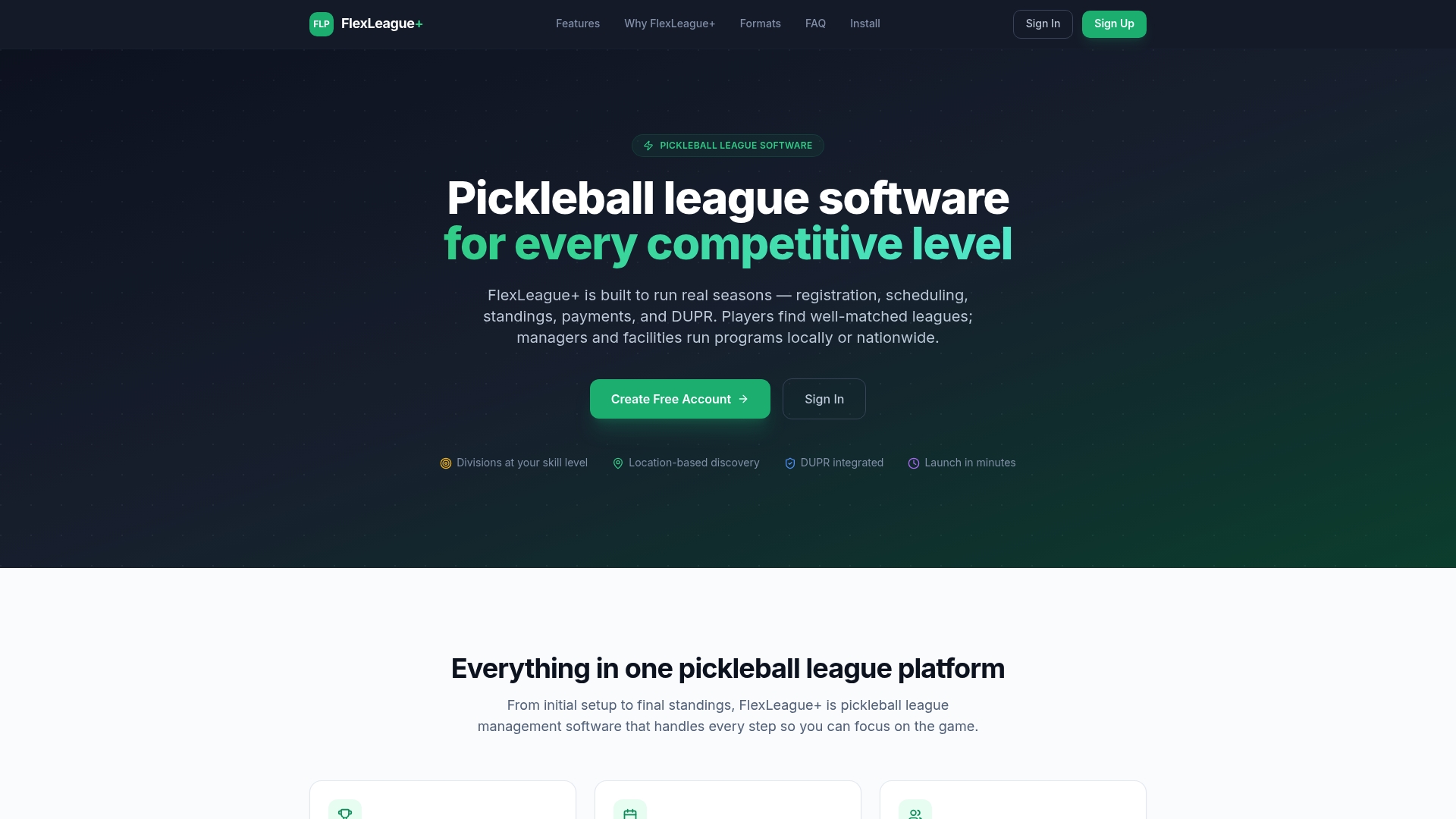
We built our platform to take over everything that happens after the borough office signs off: registration pages that collect player sign-ups, Stripe-powered payment processing for league fees, and automated scheduling that builds your weekly matchups without a spreadsheet.
- Registration pages that handle singles, doubles, mixed, and FLP team formats in one system.
- Stripe payment processing so fees land directly with you, and you control the registration fees charged.
- Automated schedules, live standings, and playoff brackets generated from your season structure.
- Official DUPR integration for verified skill placement across divisions.
- Built-in waivers and player communications for rule updates and cancellations.
If you’re ready to move past manual rosters and group texts, our pickleball league software page walks through the full feature set, and our pricing page covers the $25 one-time platform fee per division with no subscription attached.
FAQ
How do I start a pickleball league in New York?
Secure your courts first, either through an NYC Parks field or court permit for public sites or a facility agreement for indoor space, then build your schedule, roster, and rules before opening registration. Our guide to starting a pickleball league covers the setup steps that typically follow permit approval.
Are there pickleball leagues already running in New York City?
Yes, several established leagues operate across NYC using ladder formats, weekly scheduled sessions, and DUPR-based skill verification to place players into appropriate divisions. These leagues still operate under the same borough permit requirements as any new organizer would.
Is pickleball participation growing in New York?
Demand for court time has risen enough that several New York City sites, including Brooklyn Bridge Park, now separate permitted league play from open drop-in hours to manage access. That separation reflects a sport drawing enough organized play to require formal scheduling rather than informal pickup alone.
Do I need a permit just to build a pickleball court?
Building or converting a court requires a different approval path than a league permit, typically involving a building permit, zoning or site-plan review, and sometimes a certificate of occupancy depending on your municipality. These construction-related requirements vary by locality across New York state, so confirm with your local building and planning office before starting design work.
What insurance do I need for a New York pickleball league permit?
Once your season exceeds 50 permitted hours, NYC Parks requires commercial general-liability insurance with at least $1 million per occurrence and $2 million aggregate, with the city named as an additional insured. Calculate your total hours early, since multiplying courts by weekly hours by season length often crosses that threshold faster than organizers expect.
Sources
- Rules — New York City Department of Parks & Recreation
- Field and Court Permits — NYC Parks
- NYC Pickleball — Leagues
- Pickleball — Brooklyn Bridge Park