Pickleball Growth Statistics: U.S. Trends Through 2026
Pickleball Growth Statistics: U.S. Trends Through 2026

Pickleball growth statistics at a glance: 24.3 million players and climbing
Pickleball is now the fastest-growing sport in the United States, and the numbers make that claim hard to argue with. According to the Sports & Fitness Industry Association, 24.3 million Americans played pickleball in 2025, a 22.8% year-over-year increase from 2024. That is not a blip. The sport has held the title of fastest-growing in the country for five consecutive years.
To put the trajectory in perspective: participation stood at roughly 4.2 million in 2020. By 2025, that figure had grown to 24.3 million, a 171.8% increase from 2022 to 2025 alone. Tennis, pilates, and cardio tennis have all been outpaced.
Key figures at a glance:
- Total U.S. pickleball participants increased significantly through 2025
- Year-over-year growth remained strong
- The sport saw growth in both casual and core players
- USA Pickleball membership expanded
- The number of pickleball courts and locations nationwide has increased notably
Stat callout: Pickleball grew 479% from 2017 to 2022, but from 2020 to 2025, participation rose from 4.2 million to 24.3 million, a growth of 479% if calculated across those five years.
Table of Contents
- Who is actually playing? A demographic breakdown
- Court and facility expansion across the U.S.
- Market size, membership, and organizational growth
- What experts say about pickleball’s staying power
- Where pickleball is growing fastest in the U.S.
- How pickleball stacks up against other racket sports
- What the growth projections say about pickleball’s future
- The economic ripple effect: jobs, tourism, and local spending
- How equipment approval and regulations work in pickleball
- Key Takeaways
Who is actually playing? A demographic breakdown
The old stereotype of pickleball as a retirement-community pastime is statistically obsolete. The average player age is now 34.8 years, and roughly 70% of players fall between 18 and 44. The fastest-growing age segments are 13–24 and 25–34, which signals a generational handoff already underway.

Gender distribution has also shifted. Women represented 42.9% of players in 2025, up from 38.6% in 2020. That five-point swing in five years reflects deliberate outreach through women’s leagues, mixed doubles formats, and beginner-friendly programming.
Participation by engagement level and demographic:
| Segment | 2025 Figure | Notes |
|---|---|---|
| Total participants | 24.3 million | SFIA annual count |
| Casual players | 16.8 million | Largest segment |
| Core players (8+ sessions/yr) | 7.5 million | Fastest-growing segment |
| Female players | 42.9% of total | Up from 38.6% in 2020 |
| Average player age | 34.8 years | Declining year over year |
| Players aged 18–44 | ~70% of total | Dominant age band |
Fastest-growing demographic segments:
- Ages 13–24, driven by school programs and social media exposure
- Ages 25–34, attracted by the social and competitive formats
- Women across all age groups, accelerating since 2021
- Urban players in metro areas with new dedicated facilities
Court and facility expansion across the U.S.
Infrastructure is keeping pace, though just barely. There are now over 70,641 pickleball courts at 16,210 locations nationwide, representing a 35.7% year-over-year increase in court count. Public parks account for a large share of that growth, but private clubs and dedicated facilities are where the real investment is concentrating.
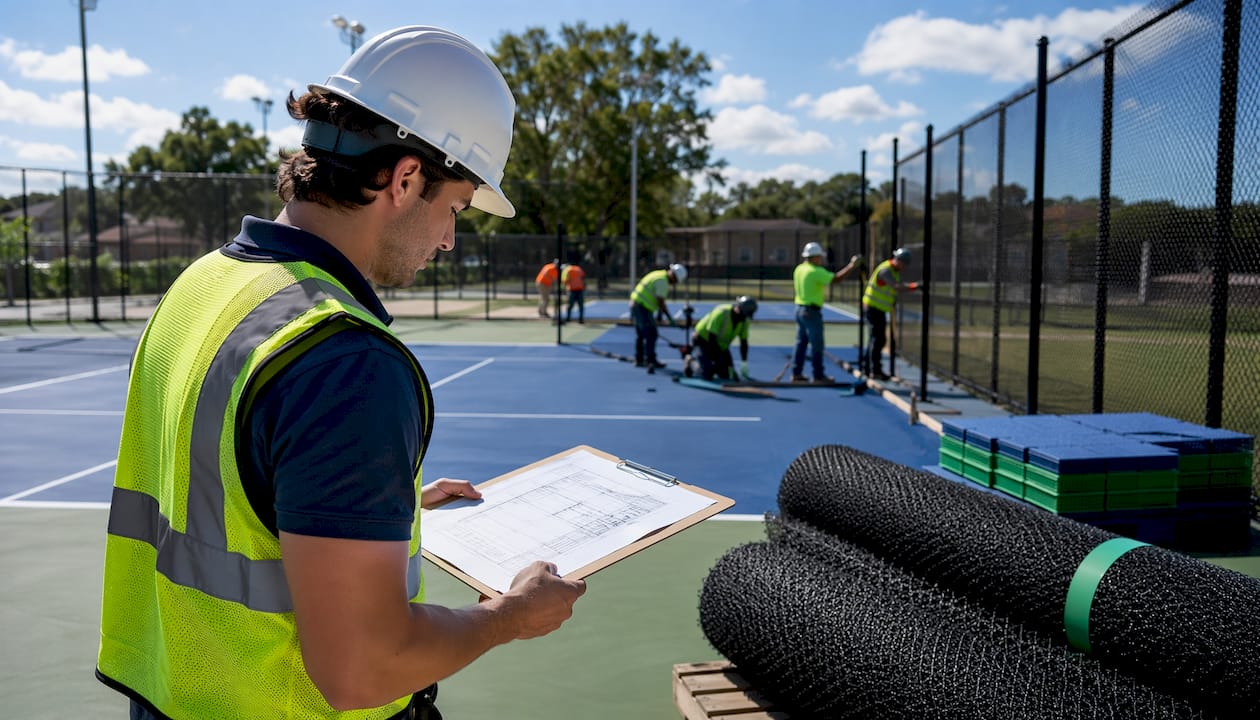
Dedicated pickleball-only facilities grew 55% year-over-year in 2024, with construction investment surpassing $152 million. These are not converted tennis courts with taped lines. They are purpose-built venues with climate control, pro shops, and league programming.
| Infrastructure Metric | 2024 Figure | Year-over-Year Change |
|---|---|---|
| Total courts nationwide | 70,641 | +35.7% |
| Total locations | 16,210 | Significant increase |
| Dedicated facilities growth | 55% | Year-over-year |
| Construction investment | $152+ million | 2024 total |
Stat callout: Despite $152 million in 2024 construction investment, analysts estimate a $855 million court construction gap remains to meet projected demand over the next 5–7 years.
That gap is the defining infrastructure story of 2026. Demand is outrunning supply in nearly every major metro, which is pushing both public and private developers to accelerate timelines.
Market size, membership, and organizational growth
USA Pickleball membership reached 104,828 in 2025, a figure that represents only the formally registered slice of the player base. The broader economic footprint is considerably larger.
Market and organizational growth indicators:
- USA Pickleball membership surpassed 100,000 for the first time in 2025
- Tournament participation has expanded alongside broadcast deals and professional tours
- Equipment sales, court construction, and event sponsorship are all growing revenue streams
- 2026 is seeing accelerated private equity interest, facility mergers, and league consolidation
- The Major League Pickleball (MLP) format has driven mainstream media attention and sponsorship dollars
- Apparel, paddle technology, and pickleball lifestyle products have become a distinct consumer category
The professional side of the sport is maturing fast. Broadcast visibility, player endorsements, and venue-based league programming are creating revenue models that did not exist five years ago. Facilities that once treated pickleball as a side offering are now building entire business plans around it.
What experts say about pickleball’s staying power
The growth numbers are striking, but the more interesting question is whether they hold. SFIA’s Senior Director has pointed to demographic diversification as the clearest signal of durability, noting that the sport is no longer reliant on a single age group or region to sustain its numbers.
Low entry barriers reinforce that confidence. A paddle and a court are all it takes to start. The game scales from a casual weekend rally to a competitive league format without requiring players to rebuild their skill set from scratch. That accessibility is rare in racket sports, and it is a structural advantage that keeps the retention curve healthier than critics expected.
Olympic inclusion remains a live conversation. If pickleball earns a spot in the 2028 Los Angeles Games, the exposure would accelerate participation in ways that even the current growth curve cannot fully predict.
Where pickleball is growing fastest in the U.S.
Growth is not evenly distributed. The Sun Belt states, particularly Florida, Texas, Arizona, and Georgia, have the highest absolute court counts and the densest player populations. But the fastest percentage growth is happening in the Midwest and Pacific Northwest, where the sport is newer and the baseline was lower.
Cities like Austin, Nashville, Denver, and Seattle have seen rapid facility development driven by younger urban demographics. Venues like Megasports Arena represent the kind of dedicated urban pickleball destination that is becoming a template for facility operators nationwide. Suburban communities in the Northeast are also accelerating, particularly in areas where tennis infrastructure already exists and conversion is cost-effective.
How pickleball stacks up against other racket sports
Pickleball has surpassed tennis in total annual participants, which was unthinkable a decade ago. Tennis participation in the U.S. sits in the 17–18 million range annually, while pickleball crossed 24 million in 2025, and badminton and squash remain niche by comparison.
What separates pickleball from tennis structurally is the learning curve. New players can have a genuinely competitive rally within their first session. Tennis typically requires months of instruction before recreational play feels rewarding. That difference in time-to-fun is a significant driver of pickleball’s retention advantage, especially among adults picking up a racket sport for the first time.
What the growth projections say about pickleball’s future
Participation is expected to continue climbing through 2026 and beyond, though the rate of growth will likely moderate as the base gets larger. The more telling metric going forward is core player retention: converting the 16.8 million casual players into the 8+ sessions-per-year category is where leagues and facilities will compete hardest.
Infrastructure investment will be the binding constraint. The $855 million construction gap means that demand will outpace available courts in many markets for years. That pressure creates opportunity for organized league programming, which can maximize utilization of existing courts through structured scheduling rather than waiting for new builds.
The economic ripple effect: jobs, tourism, and local spending
Pickleball’s economic impact extends well beyond equipment sales and facility fees. Major tournaments draw thousands of out-of-town participants, filling hotels, restaurants, and local businesses in host cities. The U.S. Open Pickleball Championships in Naples, Florida, for example, generates significant local economic activity annually.
Job creation is another underreported dimension. Court construction, facility management, coaching, officiating, and league administration are all growing employment categories. As dedicated facilities multiply, the staffing requirements scale with them, creating roles that did not exist at meaningful scale five years ago.
How equipment approval and regulations work in pickleball
USA Pickleball maintains the official approved paddle and ball lists, updated regularly to reflect testing standards for surface roughness, deflection, and size. Any paddle used in sanctioned tournament play must appear on the USA Pickleball approved equipment list.
The approval process involves third-party lab testing, and manufacturers submit paddles for evaluation before marketing them as tournament-legal. This matters for league organizers: running a DUPR-integrated league means players’ ratings are tied to match results, which creates an implicit expectation that equipment meets competitive standards. Platforms like Flexleagueplus, which carry DUPR approval, operate within this regulatory framework, connecting league play to the broader competitive ecosystem.
Key Takeaways
Pickleball’s 22.8% year-over-year growth to 24.3 million U.S. players in 2025 reflects a sport with structural advantages, not just a trend.
| Point | Details |
|---|---|
| Total participation in 2025 | 24.3 million U.S. players, up 22.8% from 2024, per SFIA data. |
| Demographic shift | Average player age is 34.8 years; 70% of players fall between 18 and 44. |
| Infrastructure gap | 70,641 courts exist, but an $855 million investment gap remains to meet demand. |
| Organizational growth | USA Pickleball membership exceeded 104,828 in 2025 for the first time. |
| Core player opportunity | 16.8 million casual players represent the conversion target for leagues and facilities. |
Ready to turn pickleball’s growth into a structured league at your facility? Flexleagueplus gives league managers the tools to run singles, doubles, and team formats with built-in DUPR integration, automated scheduling, and Stripe-powered registration, no subscription required.