Pickleball Flex League: Your Complete 2026 Guide
Pickleball Flex League: Your Complete 2026 Guide
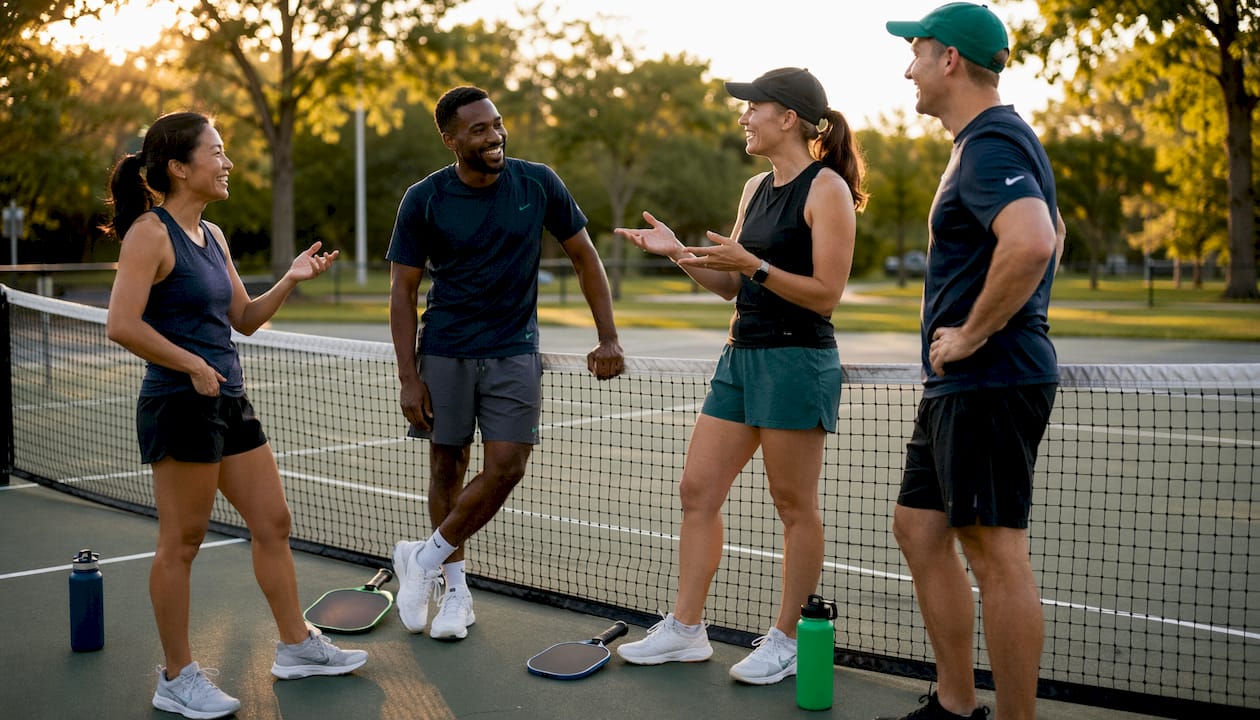
A pickleball flex league is a structured competitive format where players schedule their own matches within a set season window, rather than showing up to a fixed weekly time slot. This format has grown rapidly across the United States because it solves the number one barrier to league play: rigid scheduling. Whether you play singles, men’s doubles, women’s doubles, or mixed doubles, a flex league fits your calendar instead of the other way around. Flexleagueplus is built specifically for this format, giving organizers and players the tools to run matches, track scores, and manage standings without the administrative headache.
What is a pickleball flex league and how does it work?
A pickleball flex league places players into small round-robin groups, typically 4–10 players or teams, and gives them a season window to complete their matches on their own schedule. According to UTR Sports guidelines, flex leagues commonly run 5-week sessions with 4 guaranteed matches per player. That structure gives you enough games to matter competitively without locking you into a Tuesday night for the rest of the spring.
Match format is consistent across most flex leagues. Games are best-of-three, played to 11 points, and you must win by 2. That format keeps individual matches to roughly 60–90 minutes, which makes it easy to book a court and get in a full competitive session. The “flex” part refers to when you play, not how you play.
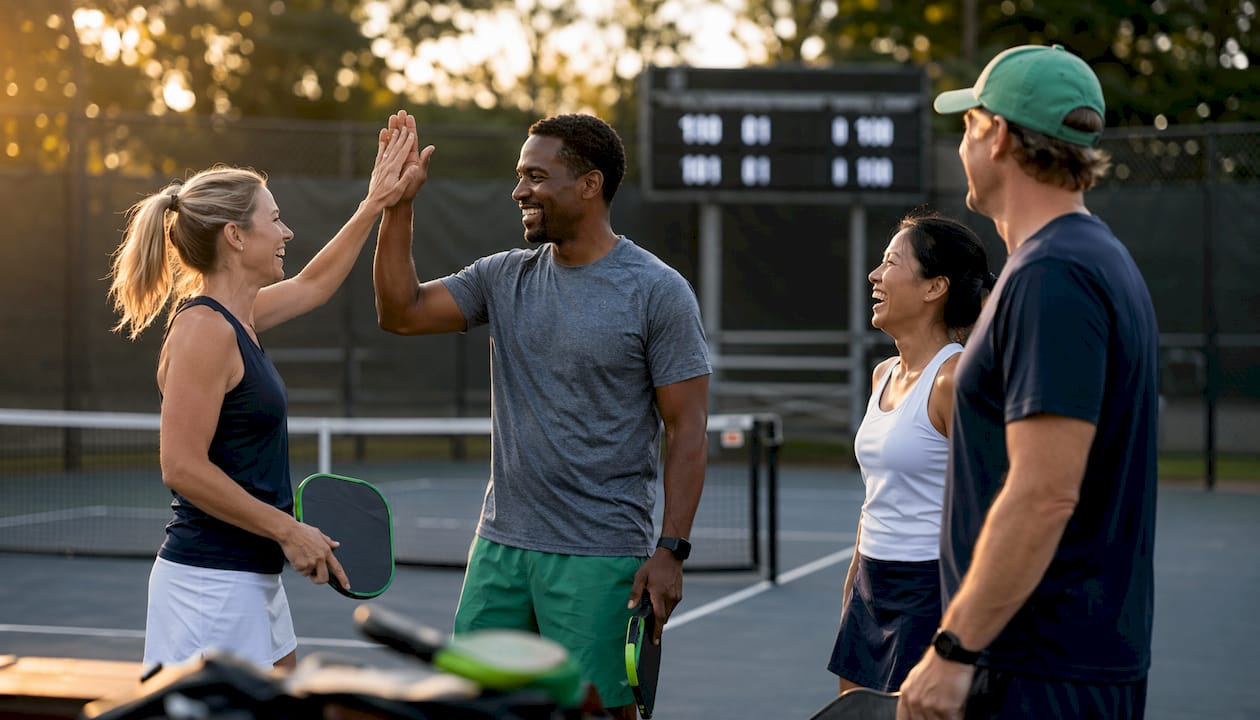
Standings work differently than in traditional leagues. Rather than ranking players purely by wins, standings use point differential, calculated by subtracting total points allowed from total points scored. That method rewards consistent, competitive play across all three games, not just match outcomes. If two players finish with identical differentials, tiebreaker rules apply.
How flex league scheduling and scoring actually operate
The self-scheduling model is the defining feature of this format. You contact your assigned opponents, agree on a court and time, and report the score when you finish. There is no home court and no away court. You find a facility that works for both players, which is a meaningful advantage in cities where court access varies by neighborhood.
Most seasons run 5–6 weeks, with playoffs added at the end. Season entry fees typically run around $40 per player, and top finishers often earn pro shop credits or similar rewards. That prize structure gives the format a competitive edge without requiring a large financial commitment.
Here is how a typical flex league season unfolds:
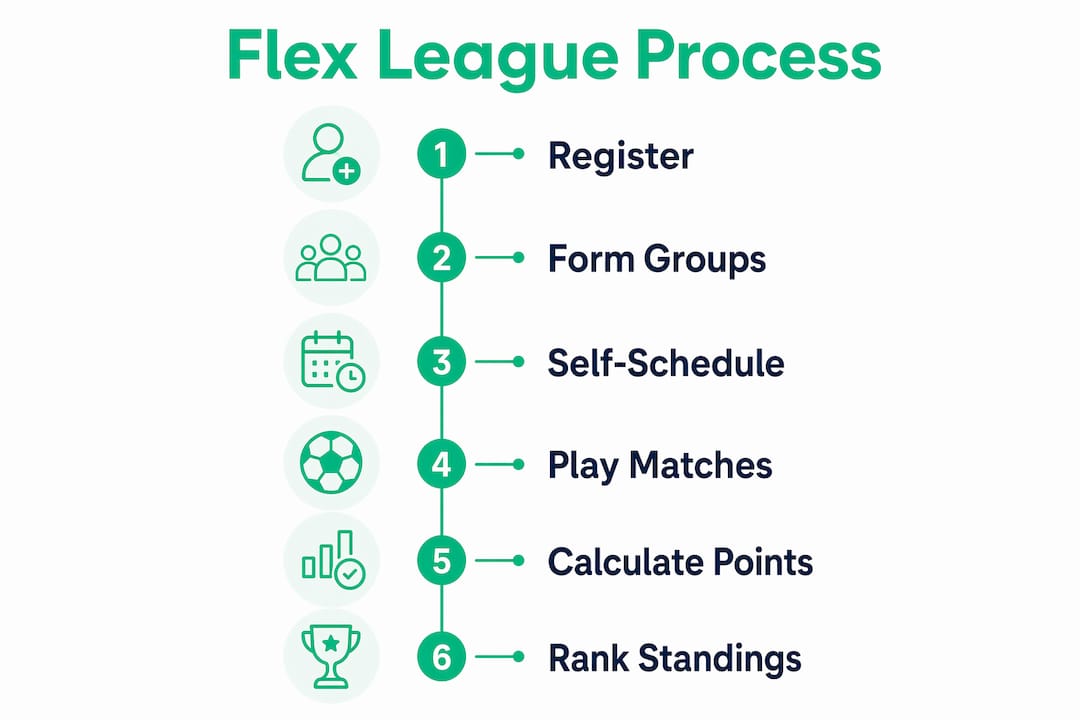
- Registration and placement. Players sign up and get placed into a skill division or ladder group based on their rating.
- Group assignment. The league organizer assigns round-robin groups of 4–10 players.
- Match scheduling. Players contact each other directly to set match times within the season window.
- Score reporting. Both players confirm the result through the league platform after each match.
- Standings update. Point differential rankings update automatically after each reported result.
- Playoffs. Top finishers from each group advance to a playoff bracket at the end of the season.
Pro Tip: Schedule your first match in week one. Players who wait until the final two weeks often scramble to find mutual availability, which leads to defaults and incomplete standings.
Participation thresholds matter too. Many leagues require 80% weekly participation or a minimum number of game-day appearances to qualify for awards. Showing up consistently is what separates players who benefit from the format and those who fall through the cracks.
Why flex leagues beat traditional fixed-schedule leagues
Fixed-schedule leagues work well for players with predictable weekly availability. For everyone else, they create a recurring conflict between life and sport. Flex leagues remove that conflict without removing the competition.
The core advantages are clear:
- Schedule control. You arrange matches when both players are free, not when the league says you must be free.
- Skill-appropriate competition. Ladder movement based on point differential keeps you playing opponents at your level, which makes every match meaningful.
- Community building. Reaching out to opponents, finding courts together, and playing without a referee builds real relationships. Many players report that flex league opponents become regular hitting partners.
- Lower barrier to entry. Entry fees around $40 and no equipment requirements beyond a paddle make this one of the most accessible pickleball league options available.
- Prize incentives. Pro shop credits and recognition structures tied to participation reward players who show up and compete, not just those who win.
- Format variety. Platforms like Flexleagueplus support singles, men’s doubles, women’s doubles, mixed doubles, and team formats modeled after Major League Pickleball, giving organizers real flexibility in how they structure their leagues.
The ladder system deserves special attention. When players move up or down based on point differential rather than just wins, the competitive balance across the whole league improves. You rarely see a 11-2, 11-1 blowout when the groupings are working correctly. That keeps matches engaging for both players.
How to join or organize a flex league
Finding a flex league near you starts with checking local recreation centers, pickleball clubs, and community parks programs. Many facilities post seasonal league registration on their websites or social media pages. If you already have a DUPR rating, that number will place you in the right skill division from day one.
Once you register, the process is straightforward:
- Confirm your skill division and group assignment with the organizer.
- Get contact information for your assigned opponents.
- Book a court at a facility both players can reach.
- Share relevant court details in advance, including lighting cutoff times and any surface issues, so neither player is surprised mid-match.
- Report your score through the league platform immediately after finishing.
For organizers, the process requires more upfront work but pays off in community engagement. The table below outlines the core responsibilities by role.
| Task | Player | Organizer |
|---|---|---|
| Register and pay entry fee | Yes | Sets up registration |
| Schedule matches with opponents | Yes | Provides contact list |
| Book court time | Yes | May provide court access |
| Report match scores | Yes | Monitors and confirms |
| Manage standings and playoffs | No | Yes |
| Handle disputes and defaults | No | Yes |
Organizers running leagues for facilities or community groups benefit most from dedicated pickleball league software that automates standings, handles score reporting, and integrates payment processing. Manual spreadsheets work for small groups but break down quickly once you have more than 20 players across multiple divisions.
Pro Tip: When you reach out to an opponent for the first time, suggest three specific time slots rather than asking “when are you free?” That one habit cuts scheduling back-and-forth in half.
Common challenges in flex leagues and how to handle them
The biggest challenge in any flex league is the same: players who treat “flexible” as “optional.” Registering for a flex league means committing to complete all assigned matches, not just the ones that fit conveniently. When one player goes dark, the whole group’s standings suffer.
Other common problems include:
- No-shows and defaults. Set a clear policy at registration. Most leagues award a default win to the player who showed up and attempted to contact their opponent.
- Incomplete matches. Court interruptions, weather, or lighting issues can cut a match short. Sharing court logistics in advance prevents most of these situations.
- Front-loading matches. Players who complete all four matches in week one are technically within the rules, but front-loading matches can reduce engagement over the rest of the season. Spreading matches across the full window keeps the community active.
- Dispute resolution. Without a referee, score disputes happen. Require both players to confirm scores through the platform before results are posted.
- Competitive imbalance. If the ladder groupings are off, players at opposite ends of a skill range end up in the same group. Regular rating updates and DUPR integration help organizers catch this early.
“Flex does not mean optional. Every player who registers is making a commitment to their group. When one person drops out or goes silent, it affects four to ten other people who planned their schedules around those matches. Treat your opponents’ time the same way you treat your own.”
Maintaining engagement across a full season requires organizers to send mid-season reminders, track who has completed matches, and follow up with players who are falling behind. That communication work is where software platforms earn their value.
Key Takeaways
A pickleball flex league works best when players treat scheduling flexibility as a tool for commitment, not an excuse to avoid it.
| Point | Details |
|---|---|
| Format structure | Groups of 4–10 players complete best-of-three matches to 11 points within a 5–6 week season. |
| Scoring method | Point differential ranks players, rewarding consistent performance across all games, not just wins. |
| Scheduling responsibility | Players self-schedule matches, making communication and follow-through the most critical skills. |
| Commitment requirement | Registering means completing all assigned matches; defaults hurt the whole group’s standings. |
| Organizer tools | Software like Flexleagueplus automates standings, score reporting, and payment for leagues of any size. |
What I’ve learned from years inside flex leagues
The players who thrive in flex leagues are not always the best on the court. They are the ones who respond to messages quickly, show up prepared, and treat every opponent like a future hitting partner. I have watched highly skilled players finish at the bottom of their group simply because they were hard to schedule. And I have watched mid-level players win their division because they were organized, communicative, and consistent.
The community dynamic in a well-run flex league is unlike anything in a fixed-schedule format. When you have to reach out to a stranger, find a court together, and play a competitive match without any official oversight, you build trust fast. Those connections are what keep players coming back season after season, not the prize credits.
My biggest piece of advice for new players: do not wait for your opponents to reach out first. Send that first message the day your group assignments arrive. Set the tone early, and the rest of the season takes care of itself. For organizers, invest in a platform that handles the administrative work so you can focus on the community side. The league management tools that automate standings and score reporting free you up to do the work that actually builds a league worth joining.
One mistake I see repeatedly is treating the flex format as a casual arrangement. The best flex leagues I have been part of had clear rules, fast dispute resolution, and organizers who followed up consistently. Flexibility in scheduling does not mean flexibility in standards.
— Robert
Run your flex league with Flexleagueplus
Flexleagueplus is built for exactly this format. Organizers can set up singles, doubles, or team divisions, manage player registration through Stripe-powered payments, and track standings automatically as scores come in.
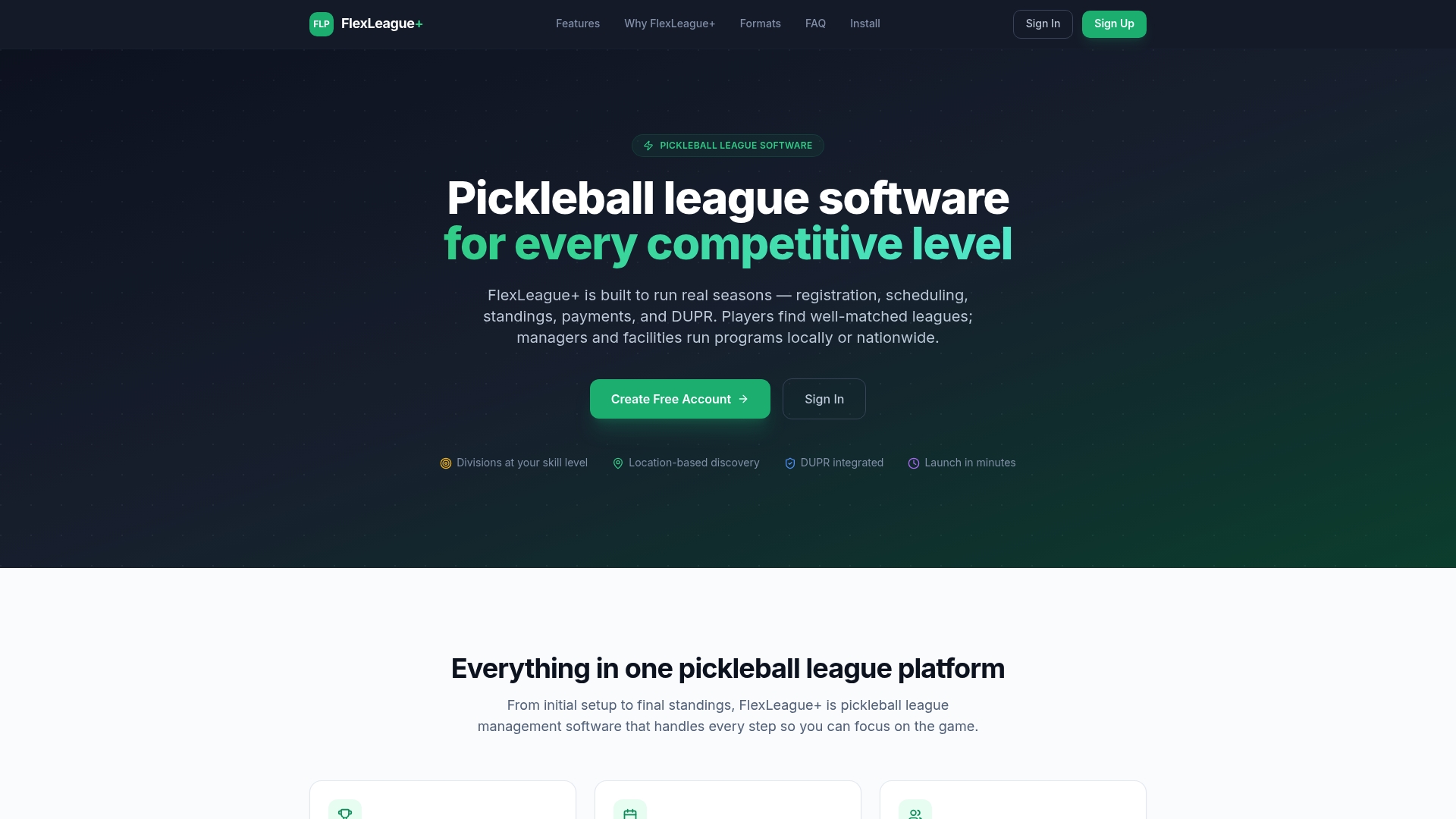
The platform is DUPR approved, which means player ratings stay current and skill-based groupings stay accurate. Players sign up, schedule matches, and report scores all in one place. No spreadsheets, no group texts, no confusion about who won what. Whether you are running a 10-person recreational group or a 200-player community league across multiple divisions, Flexleagueplus gives you the structure to run it cleanly and the flexibility to make it your own.
FAQ
What is a pickleball flex league?
A pickleball flex league is a competitive format where players are placed in round-robin groups and self-schedule their matches within a set season window, typically 5–6 weeks.
How are standings calculated in a flex league?
Standings use point differential, calculated by subtracting total points allowed from total points scored, so consistent performance across all games matters.
How many matches do players get in a flex league season?
Most flex leagues guarantee 4 matches per player within a 5-week session, with playoff rounds added for top finishers.
What does “flex” mean in a pickleball flex league?
“Flex” refers to scheduling freedom. Players choose when and where to play within the season window, but registering means committing to complete all assigned matches.
How do I organize a pickleball flex league for my community?
Use dedicated pickleball league software to handle registration, group assignments, score reporting, and standings. Platforms like Flexleagueplus also integrate DUPR ratings and Stripe payments for a complete solution.