Cut Score Fights: 5 Step Match Result Verification for Organizers
Cut Score Fights: 5 Step Match Result Verification for Organizers
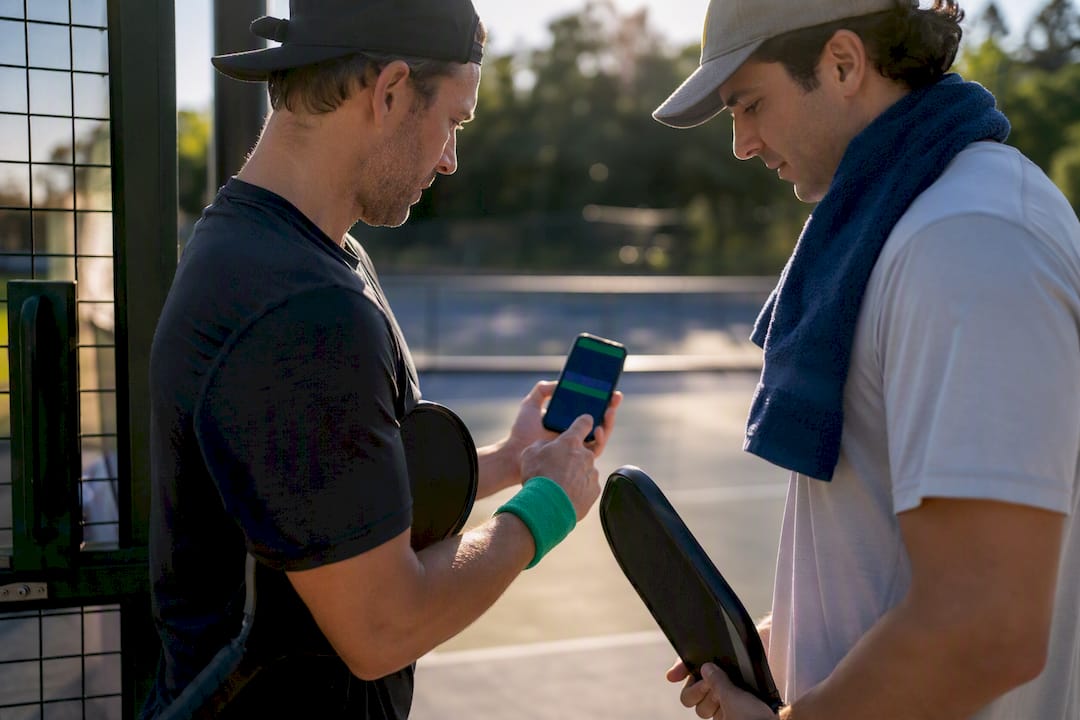
The most reliable setup is automated score confirmation sent to both players, a short editable window to fix honest mistakes, and a saved audit log of every change. For leagues with real money on the line, add a commit-reveal step that publishes a proof before the match and reveals it after. Platforms like DUPR and Stripe already fit into this stack, which covers the three ways results actually go wrong: fat fingers, memory disputes, and outright manipulation.
TL;DR:
- Automated score confirmation emails should be sent immediately after a match to prevent forgotten mistakes and reduce disputes.
- An editable confirmation window allows scores to be corrected before finalization, lowering permanent errors and arguments.
- Audit logs of score changes and replayable proofs are essential for high-stakes matches to verify results and prevent manipulation.
- For leagues with significant prizes, implementing commit-reveal systems ensures results cannot be rigged or disputed after the match.
- Consistent, transparent processes—such as fixed dispute deadlines and clear correction policies—significantly reduce the likelihood of disputes starting.
Table of Contents
- What Are the Best Methods for Match Result Verification?
- How Do You Build a Reliable Result Verification Process?
- What Reduces Disputes Before They Start?
- What Robert Learned From Automating League Operations
- Why Most Leagues Over-Engineer or Under-Build Their Verification Process
- How Flex League Plus Handles Verification for You
- Where to Learn More About Verification Tools
- Sources
- FAQ
What Are the Best Methods for Match Result Verification?
Score disputes rarely start as fraud. They start as two players remembering a set differently three days after the match. Match result verification exists to close that gap before it turns into a forfeit argument or a refund request.
Automated scorecard emails. Once a captain submits a score, the system fires off a confirmation email to the opposing side. Tournament platforms like GolfGenius already build this in: a “when a scorecard is complete” trigger that sends players their completed scorecard automatically, giving both sides a second look before anything gets locked. ScoreApp’s support docs describe the same pattern, recommending organizers test and customize the results email before a season starts, not after the first dispute lands.
Editable confirmation windows. A score should not be permanent the second it’s typed in. Judging platforms like Zealous let scores stay editable while a decision window is still open, which reduces permanent errors because players know a genuine mistake can still be fixed. That small design choice does more to prevent arguments than any punishment policy.
Audit logs and replayable proofs. Every score change should leave a trail: who changed it, what it was before, and when. Platforms like TradeStars publish raw proof data so anyone can replay the timeline of a result and see exactly how a final score was calculated. For a pickleball league, that means keeping a simple log of edits, not just the final number.
Commit-reveal for high-stakes events. This is overkill for a Tuesday night rec league and essential for a $2,000 payout bracket. A commitment (a hash of the outcome) gets published before the match; the underlying seed gets revealed after settlement. Verifiers described by 155.io and Provable recompute the result from the revealed seed and show a green check if it matches the published commitment, with Provable’s system also checking Merkle-root inclusion for the strongest possible proof.
- Casual or social leagues: automated email plus a short editable window is usually enough.
- Paid competitive divisions: add an audit log so any disputed match has a paper trail.
- Cash-prize brackets or high-stakes tournaments: layer in commit-reveal so no one can plausibly claim the fix was rigged after the fact.
Pro Tip: Send the confirmation email the moment a score posts, not at the end of the night. A player who gets a wrong score corrected in real time forgets about it. A player who finds out the next morning files a complaint.
One detail organizers miss: provable-fairness systems are built so a neutral third party, not just the organizer, can rerun the check. That’s the difference between “trust me” and “verify it yourself.”
How Do You Build a Reliable Result Verification Process?
A verification process only works if it runs the same way every week, whether it’s week 1 or the playoff final. Here’s the sequence that holds up across a full season:
- Turn on automated result notifications. Every completed match should trigger an email or push notification to both sides with the reported score attached. Flex League Plus’s automated match reminders cover the setup in under an afternoon, and pairing them with ready-made confirmation email templates means you’re not writing copy mid-season.
- Set a confirmation window. Give both sides time to flag an error, but keep the window short enough that memories are still fresh. During that window, the score stays editable.
- Lock the result and log the audit trail. Once the window closes, freeze the score and save who submitted it, who confirmed it, and any edits made along the way, with timestamps.
- Handle disputes with a fixed evidence request. Ask for a photo of the scorecard, a text thread, or a witness name. Set a resolution deadline, usually 48 hours, and stick to it publicly so players know the process isn’t arbitrary.
- Add commit-reveal only where the stakes justify it. For a bracket with real prize money, publish the commitment before the round starts and reveal the seed after settlement so any player can independently verify the outcome.
The step organizers skip most often is step 3. A confirmed score with no saved history is functionally the same as an unconfirmed one the moment someone challenges it two weeks later. You need the “before” version, not just the “after.”
Pro Tip: Keep dispute evidence in one place, even a shared folder is fine, so you’re not hunting through text messages when a captain appeals a result during playoffs.
What Reduces Disputes Before They Start?
The best verification process is the one you never have to use. Most disputes trace back to ambiguity that a little upfront clarity would have prevented.
- Publish a standard score-calling script during registration so every match starts with the same language. Score-calling templates cut down on the “wait, what was the score again?” arguments that flare up mid-match.
- Link every player profile to a verified DUPR ID. This closes two problems at once: it stops identity mix-ups on rosters and makes sandbagging (playing under a lower rating than you’ve earned) much harder to pull off.
- Line up your registration and payment rules with your confirmation window. If Stripe payouts or prize disbursements happen before a result window closes, you’ve removed the incentive for anyone to flag an error.
- Post standings weekly, not just at the end of the season, and publish your correction policy alongside them. Players who see a transparent, repeatable process file fewer complaints because they know exactly how a mistake gets fixed.
None of this eliminates disputes entirely. It shrinks the pool of matches where a dispute is even possible.
What Robert Learned From Automating League Operations
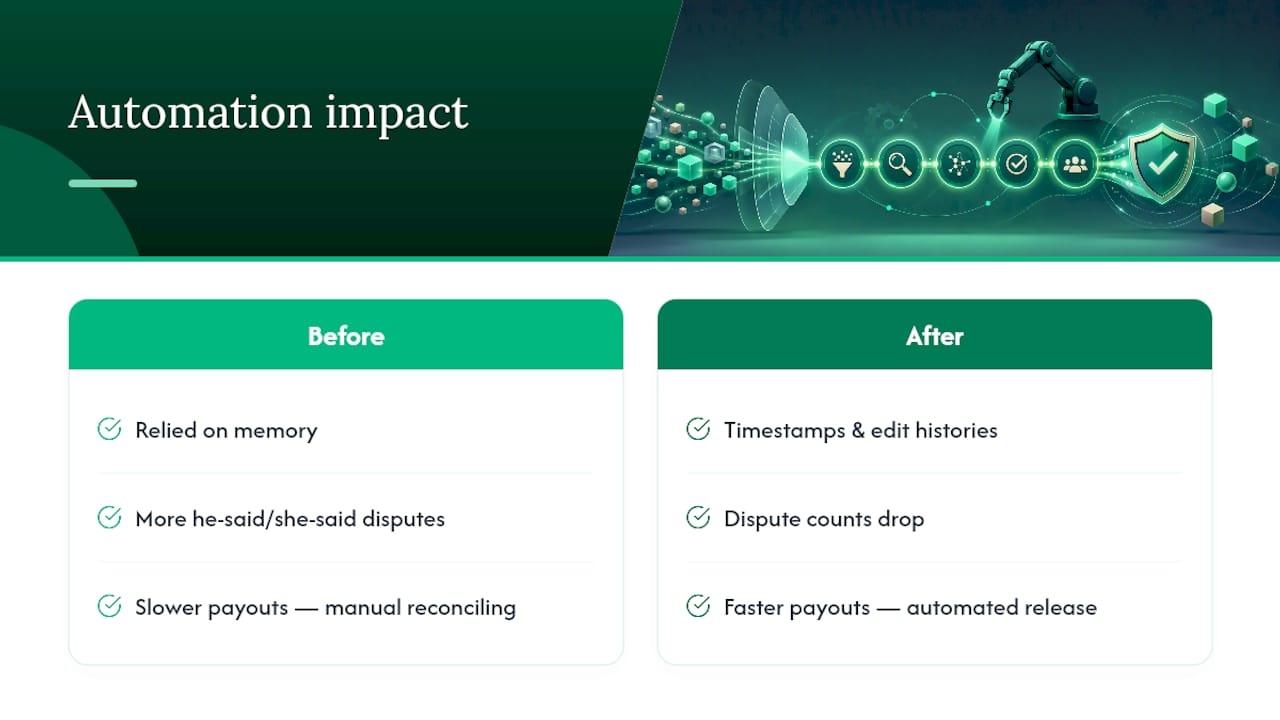
Automation’s real payoff isn’t speed, it’s the removal of memory as a variable. Once a league starts saving confirmation timestamps and edit histories instead of relying on captains remembering who said what, the number of “he said, she said” disputes drops fast because there’s a record to point to instead of an argument to settle.
Two patterns show up consistently once leagues automate confirmation and logging: dispute counts drop because there’s less to argue about, and payouts move faster because organizers aren’t stuck manually reconciling scores before releasing funds.
Why Most Leagues Over-Engineer or Under-Build Their Verification Process
Most organizers land on one of two extremes. Either they run everything on trust and a group chat, which works fine until a $500 bracket final gets contested, or they read about commit-reveal cryptography and try to bolt it onto a casual Tuesday night league that never needed it. Both are mistakes born from not matching the tool to the stakes.
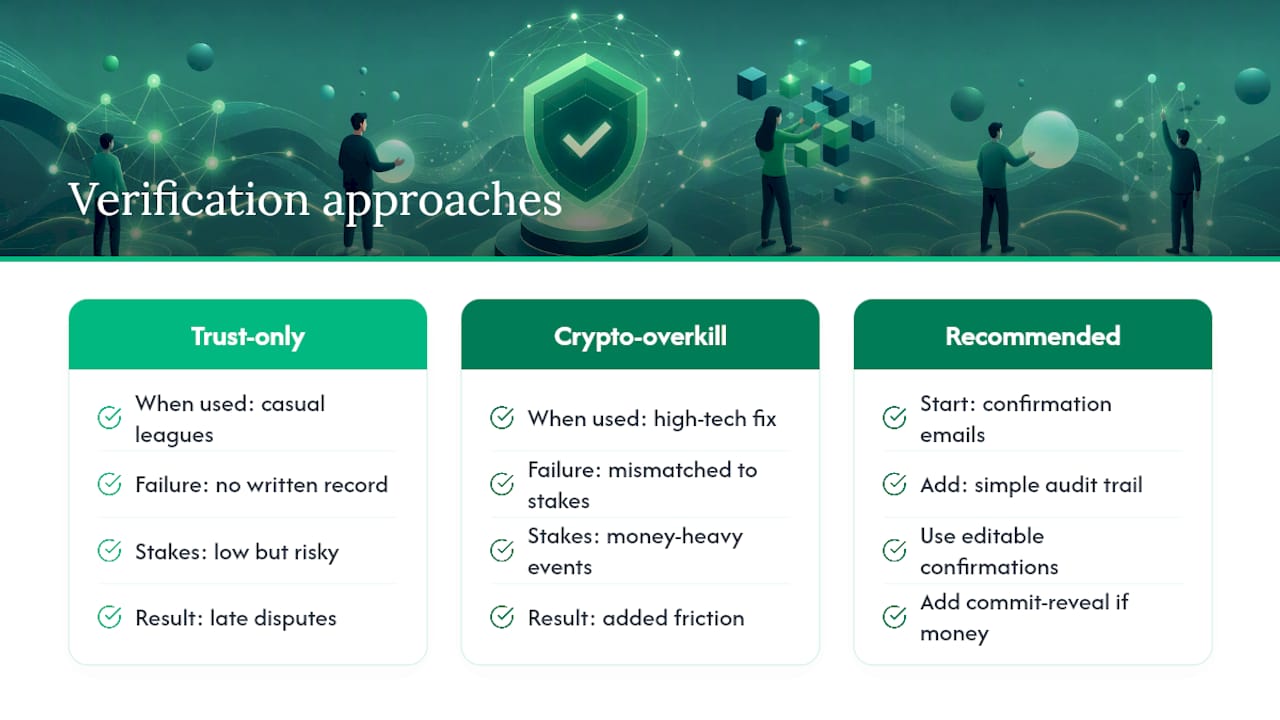
The conventional advice treats verification like a security problem first. It isn’t. It’s a memory and timing problem. Most disputes happen because nobody wrote anything down in the moment, not because anyone lied. That’s why an editable confirmation window matters more than any cryptographic layer for the average paid league. It fixes the actual failure mode.
Where I’d push back on organizers who resist automation: the fear is usually that it adds friction for players. In practice, the opposite happens. A player who gets an automatic email showing the score already knows the process is fair, and that removes friction, because there’s nothing to argue about later. Start with confirmation emails and an audit trail. Add commit-reveal only when actual money is on the line.
— Robert
How Flex League Plus Handles Verification for You
Flex League Plus is built for organizers who don’t want to choose between running a real competitive season and manually policing every score dispute. It ties result reporting, DUPR integration, and automated confirmation flows into one system, so every match gets a confirmation notification, every score stays editable during a set window, and standings update without a spreadsheet in sight.
Payments run through Stripe with organizer-controlled payouts, so registration fees and prize money settle on your terms, not before a disputed match clears. There’s no monthly subscription. You pay a flat $25 platform fee per division when you set one up. If you’re running a league right now on group texts and a shared spreadsheet, start a division and see how the confirmation flow handles your first contested score. Check pricing or explore the full platform before your next season kicks off.
Where to Learn More About Verification Tools
- 155.io’s verifier docs walk through recomputing a settled round from a published commitment.
- Provable covers hash checks and Merkle-root inclusion proofs.
- GolfGenius’s scorecard email guide shows how automated result emails get configured.
- TradeStars’s proof documentation explains replaying score-update timelines to resolve disputes.
Sources
- Verify a Round | 155.io API Docs
- Provable
- Can I send automated emails to players that include their completed scorecard after a round? | Tournament Management Help Center
- Result Checks | TradeStars
FAQ
What Is Match Result Verification?
It’s the process of confirming a reported score is accurate before it’s treated as final, usually through player confirmation, an editable window, and a saved record of any changes.
How Long Should a Confirmation Window Stay Open?
Most leagues use a short confirmation window, long enough for both players to review the score while it’s still fresh, short enough to keep standings and payouts moving.
Does Flex League Plus Support Automated Score Confirmation?
Yes. Flex League Plus sends automated result notifications, integrates with DUPR for player ID verification, and handles payments through Stripe so confirmed results and payouts stay aligned.
What Should I Do if a Player Disputes a Confirmed Score?
Request supporting evidence such as a scorecard photo or witness statement, check the audit log for the original entry and any edits, and resolve it against a published deadline, typically within 48 hours.
Is Commit-Reveal Necessary for a Recreational League?
No. It’s mainly useful for cash-prize brackets or high-stakes tournaments where independent proof of fairness matters; a casual league is usually well served by confirmation emails and an editable window alone.