Avoid Double Charges: Installment Payments for Pickleball Organizers
Avoid Double Charges: Installment Payments for Pickleball Organizers

Yes, most pickleball leagues can offer installment payments, and the model is simple: a deposit followed by three or four scheduled charges, usually pulled automatically through a processor like Stripe. It boosts sign-ups by lowering the upfront cost, but it also adds real work for organizers, from tracking missed payments to writing clear refund rules. Whether it’s worth it depends on how much friction you’re willing to trade for higher enrollment.
TL;DR:
- Most pickleball leagues use a four-installment schedule with a deposit of 20% to 30% due at signup, followed by three monthly payments aligned with the season calendar.
- Setting up payment plans requires choosing exact dates and amounts upfront, naming plans clearly, and testing the process with a test registration after the second installment.
- Organizers can offer native Stripe installment plans or third-party BNPL options like Affirm, each with different control, risk, and refund handling considerations.
- Transparent communication, clear labeling of schedules, and reminders reduce chargebacks and disputes caused by confusion over payment terms.
- Lower upfront costs increase sign-ups, but only if the platform setup is carefully managed to avoid silent errors and maintain player trust.
Table of Contents
- How Installment Plans For Leagues Are Structured
- Step-by-Step: Set Up A Payment Plan In Your League’s Checkout
- Integrated Installments Vs. Third-Party Financing: What’s The Difference?
- Best Practices For Communicating Plans And Handling Late Signups
- What Players Should Check Before Choosing An Installment Option
- Why Installment Plans Are Worth The Setup Headache
- Run Installment Payments Without The Spreadsheet Chaos
- Helpful Resources For Setting Up Payment Plans
- Sources
- FAQ
How Installment Plans For Leagues Are Structured
Most pickleball league installment plans follow a pattern borrowed straight from youth sports and rec leagues: a deposit due at signup, then the balance split into equal chunks. Arena Sports structures its league programs as a deposit plus four scheduled payments, while shorter class offerings sometimes drop to a deposit plus three. That four-payment rhythm has become close to a default in the pickleball league space, mostly because it maps cleanly onto a season’s calendar. A deposit collected at registration, then three roughly monthly charges leading up to or through the season, keeps cash flow predictable for organizers without asking players to front the full fee in one shot.
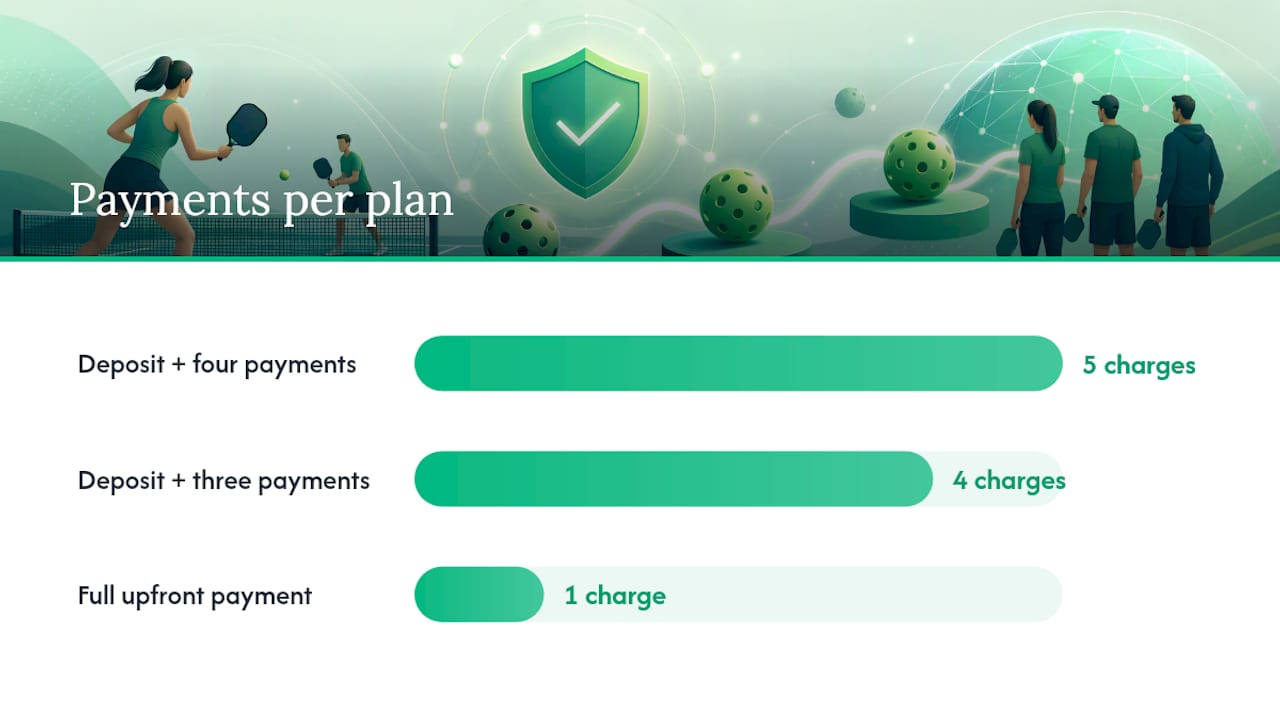
The mechanics behind that schedule matter more than they look. Platforms typically require every installment date to sit in the future at the moment you create the plan, and once a plan goes live, edits only apply to new registrations going forward. That’s not a technical quirk. It exists so a player who already agreed to a schedule doesn’t wake up to a changed bill.
A few structural details organizers need to nail down before launch:
- Deposit size: usually 20% to 30% of total fees, enough to signal commitment without scaring off a player deciding in the moment.
- Number of installments: three or four is standard for a single season.
- Processing fees: decide whether you absorb them per installment or pass them to the player, since platforms typically support both.
- Missed-installment handling: registering after an installment date has already passed often triggers an immediate charge for whatever was missed.
That last point trips up more organizers than any other setting in the checkout builder.
Step-by-Step: Set Up A Payment Plan In Your League’s Checkout
Configuring a payment plan is one of the few setup tasks where getting the order right actually saves you support emails later. Here’s the sequence that avoids the most common mistakes.
- Pick your deposit and installment count first. Decide the exact percentage due at signup and whether the remainder splits into three or four payments, then map real calendar dates to each one rather than vague “monthly” language.
- Name the plan so it explains itself. A checkout label like “Spring League: $40 Deposit + 3 Payments of $35 (due March 1, April 1, May 1)” prevents more disputes than any refund policy ever will.
- Decide what the plan covers. Some organizers bundle the platform fee into the first installment; others spread it evenly. Confirm whether partial payments outside the schedule are even allowed, or if the system locks players into the exact dates.
- Connect and verify your payment processor. Stripe has to be enabled at the organization level before it shows up as a checkout option alongside any onsite payment method. Turn on autopay for scheduled installments so you’re not manually charging cards every month.
- Run a test registration dated after an early installment. This is the step people skip. Registering a test account after your first due date shows you exactly how the system reacts, whether it bills the missed installment immediately, and what the confirmation email actually says.
Pro Tip: Build your test registration for a date one day after your second installment, not your first. That’s where most organizers discover their platform is silently double-charging or skipping a step in the reminder sequence.
Integrated Installments Vs. Third-Party Financing: What’s The Difference?
Organizers have two real paths for making league fees more affordable, and they work in opposite directions.
- Platform-native installments through Stripe keep every dollar flowing through the organizer’s own merchant account. Reconciliation stays simple because you can see every scheduled charge, every success, and every failure in one dashboard.
- Third-party buy-now-pay-later services, the kind Affirm offers, work differently: the player finances the purchase through the lender, and the organizer typically gets paid in full at checkout while the player repays Affirm on their own terms.
That second model shifts the risk almost entirely off the organizer’s books. You get the deposit, minus the transaction fee, and the credit relationship becomes a conversation between the player and the lender, not you. The trade-off is control. With BNPL, refund logistics can get messier, since money moves through a third party instead of your own Stripe balance. With integrated installments, you own the collection process, including the awkward part where a card gets declined mid-season.
Best Practices For Communicating Plans And Handling Late Signups
Confusion over payment plans causes more chargebacks than fraud does, and almost all of it is preventable with better labeling. Every plan description should spell out the schedule in plain language, not just a total. Platform-support guidance consistently points to the same fix: name each plan with its exact dates and amounts rather than a generic “installment plan” label, and require players to acknowledge the schedule before completing checkout.
A short operational checklist keeps this from becoming a mess:
- Send automated reminder emails or texts a few days before each installment charges.
- Display installment history inside the player’s account so nobody has to ask “did that go through?”
- Set a written policy for late registrants: either charge all missed installments immediately at signup or pro-rate the remaining balance, but pick one and state it publicly.
- Keep exportable invoices for every transaction so season-end reconciliation doesn’t turn into a spreadsheet archaeology project.
Pro Tip: Put your late-registration policy directly on the registration page, not buried in a terms link. Players who see the rule before they click “pay” almost never dispute it later.
What Players Should Check Before Choosing An Installment Option
Before you hit submit on a payment plan, a few minutes of reading saves you a confusing charge later.
- Confirm the deposit amount, the number of remaining payments, and the total cost, added up, not just the deposit shown at checkout.
- If you’re using a BNPL option, check the repayment schedule with the lender directly, since that relationship is separate from the league itself.
- Find out who to contact for a refund and how long returned funds typically take to hit your account or card.
- Read the plan’s fine print on processing fees, especially what happens if a payment fails or gets returned, since that can trigger an extra charge on top of your next installment.
None of this takes long, but skipping it is exactly how players end up disputing a charge that was spelled out in the checkout flow the whole time.
Why Installment Plans Are Worth The Setup Headache
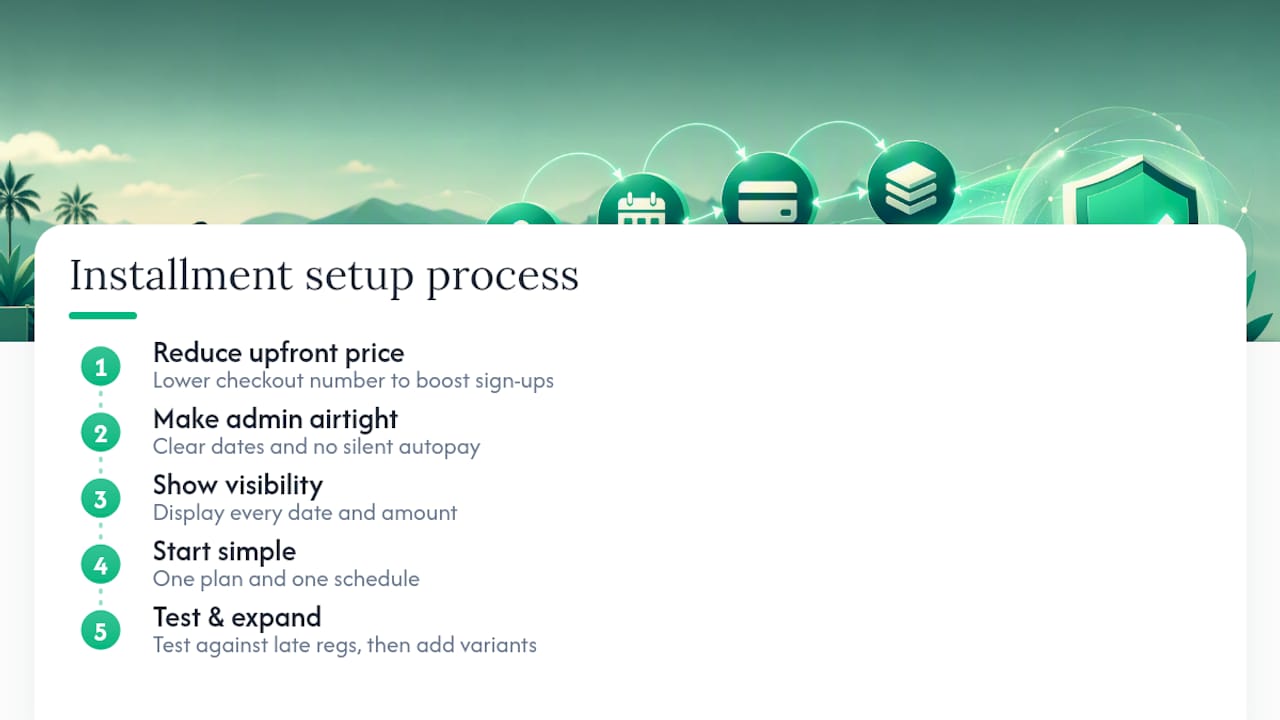
Offering installments almost always lifts sign-ups. Lower the number a player sees at checkout, and more of them commit. But that upside only holds if the admin side is airtight, because a payment plan with fuzzy dates or silent autopay is where trust erodes fastest.
The biggest lesson from watching platforms like Stripe handle recurring charges: visibility kills disputes. When a player can see every date and amount before they pay, and DUPR-verified standings keep the competitive stakes clear, the payment conversation practically resolves itself. Start with one plan, one schedule, test it against a late registration, and only add variants once you see how players actually behave.
— Robert
Run Installment Payments Without The Spreadsheet Chaos
Flexleague+ gives organizers a $25 one-time platform fee per division instead of a monthly subscription, so the payment plans you build don’t come with a recurring software bill stacked on top of processing costs.
The platform runs on Stripe for payment collection, which means the installment mechanics described above, deposits, scheduled charges, autopay, and missed-payment handling are already built into the league software rather than something you have to duct-tape together. Integration with official rating systems can keep standings verified, while automated scheduling, standings, and playoff brackets cut down the manual tracking that usually eats an organizer’s Sunday afternoon. If you’re setting up a season and want the deposit-plus-installments model working before your first registrant signs up, check the pricing page and set up your first division.
Helpful Resources For Setting Up Payment Plans
For deeper setup detail, see how to collect league fees, Arena Sports’ deposit-plus-four-payment example, and Affirm’s player financing details.
Sources
FAQ
Can I Offer Both Installments And Full Payment At Checkout?
Yes, most platforms let you display a full-payment option alongside an installment plan, letting players pick whichever fits their budget at registration.
What Happens If I Register After The First Installment Date?
Many systems charge you for any missed installments immediately at checkout, so registering late can mean a larger first charge than someone who signed up on time.
Does Flexleague+ Support Installment Payments?
Flexleague+ processes payments through Stripe, giving organizers the tools to set up deposit-based and scheduled payment structures without a monthly subscription, for a $25 one-time platform fee per division.
Are Processing Fees Included In My Installment Amount?
That depends on how the organizer configures the plan. Some absorb the fee into the total price, while others pass it along per installment, so check the plan description before paying.
How Do Refunds Work With A Payment Plan?
Refund timelines and eligibility vary by organizer policy, so confirm the contact person and expected turnaround before you register, especially if you’re using a third-party financing option like Affirm.