7 Step Setup for Consolation Bracket Leagues for Rec Organizers
7 Step Setup for Consolation Bracket Leagues for Rec Organizers
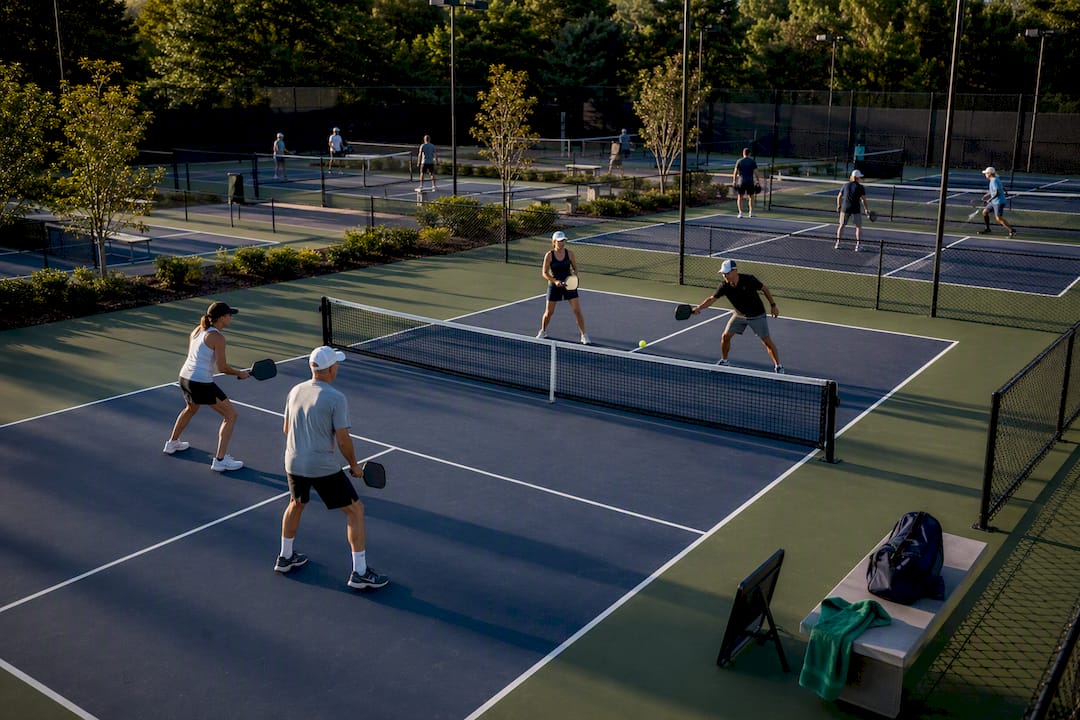
A consolation bracket is a separate secondary bracket that gives eliminated teams or players a path to keep competing instead of going home after one loss. Organizers use it for three reasons: it guarantees extra games for entry fees already paid, it produces a full set of final placements, and it keeps more of the field engaged through the last day of play. It runs parallel to the championship bracket, never feeding back into it, which is what separates it from double-elimination.
TL;DR:
- Using a consolation bracket guarantees additional matches for eliminated teams, especially in full formats that produce complete rankings up to last place.
- Match calculations, wave planning, and buffer time should be done beforehand, with tools like bracket calculators ensuring venue capacity is sufficient.
- Seeding and handling byes require clear policies, and late withdrawals should be addressed with pre-established replacement or forfeit rules.
- Full consolation formats often double match counts compared to single-elimination, making them suitable for leagues with ample time and staffing.
- Automated software platforms can handle draw creation, score reporting, and scheduling to prevent chaos and reduce organizer workload.
Table of Contents
- How Consolation Bracket Leagues Work: Mechanics and Outcomes
- Consolation Formats and When to Pick Each One
- Planning Match Counts, Waves, and Venue Time
- Seeding, Byes, and Handling Uneven Entrants or Late Drops
- Step-by-Step Setup Checklist for Organizers
- What Organizers Get Wrong About Consolation Brackets
- Reference Links for Building Your Bracket
- Why I Recommend Consolation Brackets for Most Rec Leagues
- Run Your Consolation Brackets Without the Spreadsheet Chaos
- Sources
- FAQ
How Consolation Bracket Leagues Work: Mechanics and Outcomes
Think of it as two tournaments running side by side. The championship bracket chases the title. The consolation bracket, built from teams knocked out of the first one, chases its own winner entirely. A team that loses in the consolation round doesn’t get a second life back in the championship. That’s the core mechanical difference from double-elimination, where a single loss just moves a team to a loser’s bracket that still funnels toward the same championship match.
Where a team drops into the consolation side depends on the trigger you set:
- First-round losers only feed a small consolation bracket for teams knocked out early.
- Semifinal losers feed a bracket that typically produces a 3rd place game.
- Full consolation pulls every eliminated team into an ongoing bracket that plays down to last place.
The output you publish depends on the trigger. A semifinal-loser setup gives you a champion, a runner-up, and a 3rd place finisher. A full consolation format gives you a complete ranked list from first to last, which matters if your league standings or points system depends on final placement rather than just “won” or “lost.”
Consolation Formats and When to Pick Each One
Picking the wrong format is the single most common scheduling mistake organizers make, usually because they choose based on fairness alone and ignore the clock. Here’s how the main options compare:
- First-round consolation. Only teams eliminated in round one get a second bracket, usually a single extra game. This is the leanest option and fits single-day events where you can’t spare extra court or table time but still want to avoid a one-and-done experience for early losers.
- Playback to 3rd. Semifinal losers play each other for 3rd place while the finalists play for the title. This adds just one extra match slot and is the most common format for tournaments that need a complete podium without expanding the schedule much.
- Full consolation. Every eliminated team keeps playing in a parallel bracket until a consolation champion and full rankings emerge. This is the standard choice for youth and recreational leagues, where guaranteeing multiple games matters more than schedule efficiency.
- Placement games. Structured matches (5th place, 7th place, and so on) slot underneath a full consolation bracket to formalize every rank. Multi-week leagues with standings that carry real weight, like seeding for the next season, tend to justify this level of detail.
The tradeoff is consistent across all four: more games guaranteed means more courts, more hours, and more volunteers running score sheets. A single-day rec tournament rarely has room for full placement games. A ten-week league usually does.
Planning Match Counts, Waves, and Venue Time
Once you’ve picked a format, the real question is whether your venue can actually run it. Start with the match count. A 16-team bracket running full consolation roughly doubles your total matches compared to a straight single-elimination bracket, since every eliminated team keeps playing instead of going home. First-round consolation, by contrast, might only add 4 to 6 extra matches for that same 16-team field.
From there, calculate waves: divide total matches by the number of courts or tables you have running simultaneously, then round up. Bracket calculators built for this exact problem let you plug in station count and average match length to see how many waves you’re actually facing before you commit to a format.
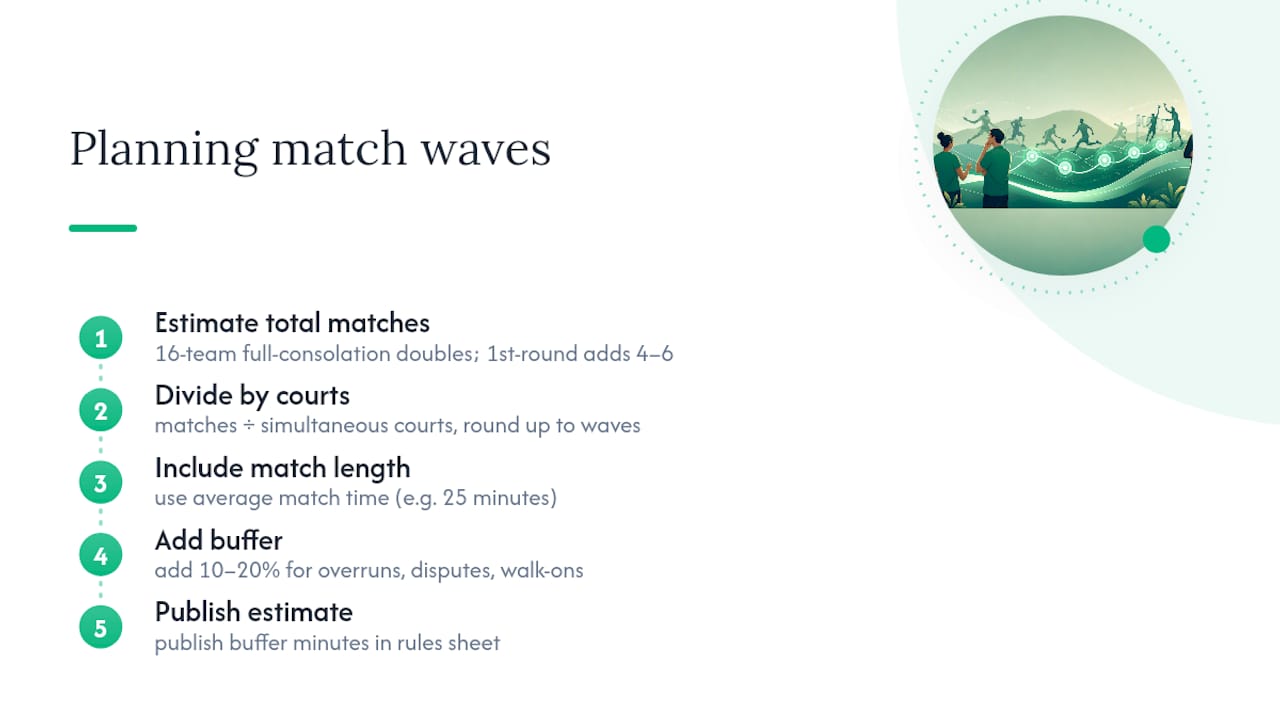
Match length and buffer time matter as much as the raw match count. If your average pickleball match runs 25 minutes, a 10 to 20 percent time buffer covers overruns, disputes, and the ten minutes it takes to walk scores over to the front table.
Pro Tip: Publish your buffer minutes in the rules sheet before the event starts. Telling players upfront that wave times are estimates, not guarantees, heads off half the scheduling complaints you’ll get otherwise.
Seeding, Byes, and Handling Uneven Entrants or Late Drops
Seeding for a consolation bracket doesn’t need to be as rigorous as the championship side, but it still needs rules. Most organizers pick one of three approaches:
- Bracket seeding, where consolation position mirrors the seed a team lost with in the main draw.
- Table-based seeding, common in pickleball leagues, where pool standings determine consolation placement.
- Random draw, the simplest option, useful when speed matters more than precision.
Byes complicate the math more than most first-time organizers expect. If you’re running 12 entrants in a bracket built for 16, those 4 empty slots are byes, not played matches, and they don’t feed the consolation bracket the same way a real first-round loss does. Recalculate your expected consolation feeder count based on actual matches played, not the bracket’s full capacity.
Late withdrawals and no-shows need a policy written down before the event, not decided on the fly. A common approach: any team dropping out before brackets are drawn gets replaced from a waitlist, while a no-show after the draw is locked counts as a forfeit loss that still feeds the consolation side normally. Document this once and reuse it every season.
Step-by-Step Setup Checklist for Organizers
- Pick your format and confirm the goal. Decide if you need guaranteed extra games, a full podium, or complete placement rankings, and lock in any prize or points implications before you touch the draw.
- Run the match math. Calculate total matches, divide by station count for wave count, and add your buffer minutes.
- Build the draw. Set your championship bracket first, then create the consolation bracket and assign drop-down feeds, following the same naming and configuration logic vendor platforms use.
- Assign courts and times, then publish the schedule with wave times clearly labeled.
- Publish the rules. Cover scoring, tie-breaks, and how consolation results affect final standings or future seeding.
- Run score collection and monitor live. Confirm reported scores match the bracket feed and resolve disputes before the next wave starts.
- Publish final standings, including consolation results, as soon as the last match closes.
| Step | What it prevents |
|---|---|
| Confirm format and prize rules first | Confusion over what a consolation win actually means |
| Calculate matches and waves before drawing brackets | Overbooked courts and late-running events |
| Publish rules and tie-breaks in advance | Disputes mid-event with no clear resolution |
| Post final standings immediately | Players leaving before results are official |
What Organizers Get Wrong About Consolation Brackets
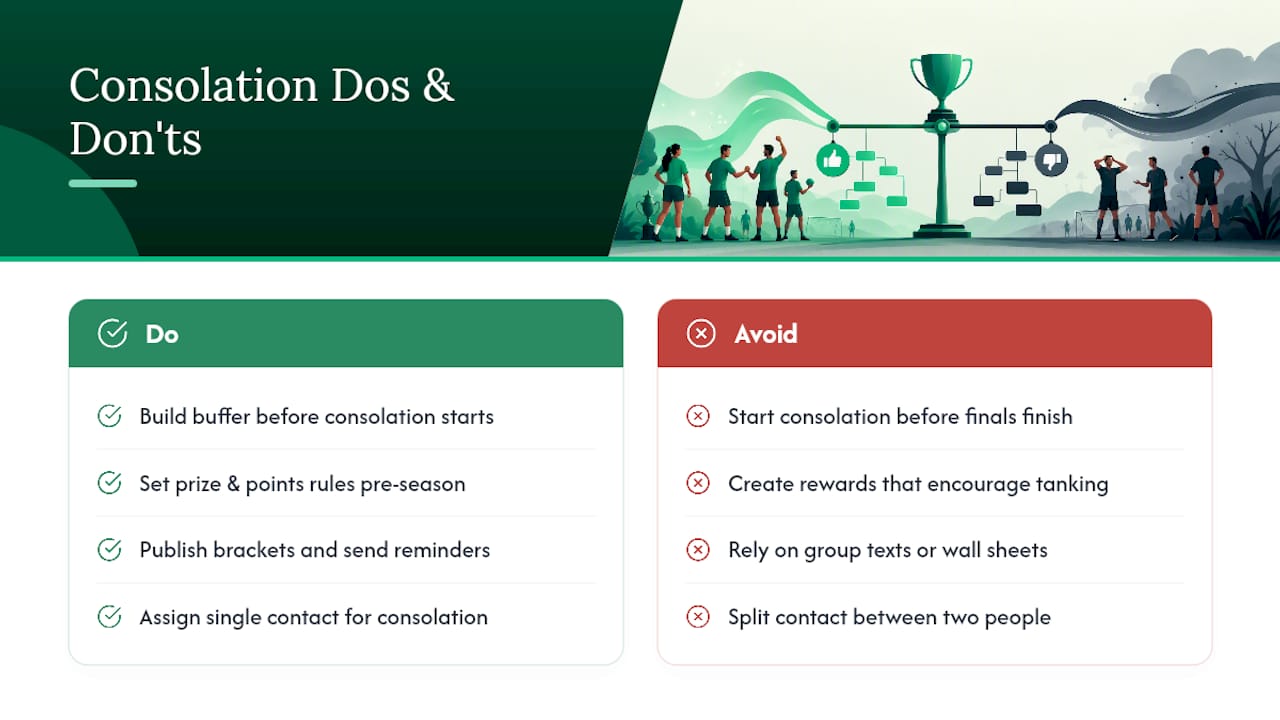
The most common scheduling failure is letting consolation matches start before the corresponding championship round actually finishes. If your semifinal losers are supposed to feed the 3rd place game, that game can’t start until both semifinals are done, and building buffer time into your championship rounds specifically avoids the awkward wait where consolation players are standing around a court with nothing to do.
The second failure is subtler: perverse incentives. In leagues where placement affects next season’s seeding or draft order, a team that’s already eliminated from the title race might realize losing on purpose gets them an easier consolation bracket or a better future draw slot. Fantasy platforms have wrestled with this exact problem, and some deliberately exclude certain placement games from official standings specifically to remove the incentive to tank. Write your prize and points rules before the season starts, not after someone exploits a gap in them.
A league with clear public brackets, automated reminders, and a single point of contact for scoring questions runs smoother than one relying on group texts and a printed sheet taped to a wall.
Pro Tip: Assign one person as the consolation bracket’s point of contact for the whole event. Split responsibility between two people and you’ll get two different answers to the same rules question, which is worse than one wrong answer consistently applied.
Some pickleball league software platforms build consolation bracket support directly into their playoff tools, which is where a lot of this planning gets tested against real weekly play rather than a single tournament weekend. For organizers running pickleball-specific consolation brackets, this introductory resource on pickleball rules and basics can provide valuable guidance.
Reference Links for Building Your Bracket
A few tools do the heavy lifting once you’ve settled on a format. Table Games Hub’s calculator estimates bracket size, byes, and wave counts. Score7’s generator auto-builds cup and consolation flows for organizers who’d rather not draw brackets by hand. For pickleball-specific scheduling mechanics, FlexLeague+'s guide to automated scheduling walks through mapping rounds to waves.
Why I Recommend Consolation Brackets for Most Rec Leagues
Most players don’t remember whether they won a title. They remember whether they got their money’s worth in games played. A consolation bracket is the cheapest fix for the single biggest complaint in recreational tournament play: paying an entry fee and playing one match before going home. The tradeoff is real, though. Full consolation with placement games can turn a tight Saturday schedule into a marathon that burns out volunteers and courts alike. My honest advice: default to playback to 3rd for anything single-day, and save full consolation for leagues with the venue time and staffing to support it.
— Robert
Run Your Consolation Brackets Without the Spreadsheet Chaos
Everything in this guide, the wave math, the seeding rules, the bracket feeds, is exactly what Flex League Plus’s pickleball league software automates for organizers running singles, doubles, and team leagues.
Instead of hand-drawing a consolation bracket and tracking byes on a clipboard, you build the draw once and let the platform handle drop-down feeds, court assignments, and score reporting as matches finish. DUPR integration keeps competitive standings verified, and Stripe payment processing means registration fees get collected automatically instead of chased down after the fact. There’s no monthly subscription: organizers pay a $25 one-time platform fee per division, and you keep control of what you charge players. If you’re planning a season with consolation rounds built in from week one, check the pricing page and set up your first division before your next signup deadline hits.
Sources
- Tournament brackets 101 — Lucid
- Cup and consolation bracket: How it works — Score7 Knowledge Base
- Consolation bracket calculator — Table Games Hub
- Consolation Brackets — Golf Genius Knowledge Base
- Is there a consolation bracket for teams that don’t make the playoffs? — Fleaflicker Help
FAQ
How Do Consolation Brackets Work?
A consolation bracket runs as a separate bracket for teams eliminated from the championship side, and it never feeds back into the title race. Depending on the format, it can produce a single 3rd place game or a full set of final rankings down to last place.
Who Plays in a Consolation Bracket?
Entry depends on the trigger the organizer sets: first-round losers only, semifinal losers, or every team eliminated at any stage under a full consolation format. Cup and consolation setups typically guarantee at least two matches for anyone knocked out in round one.
What Are the Teams That Compete in a Fantasy Consolation Bracket?
In fantasy leagues, teams that miss the playoffs but still get scheduled matches make up the consolation bracket, and some platforms handle these games separately from official standings. Certain fantasy platforms exclude specific placement games from final rankings to prevent teams from losing on purpose for a better draft slot next season.
What Is a Consolation Bracket in Wrestling or Head-to-Head Sports?
In wrestling, martial arts, and similar head-to-head formats, a consolation bracket lets wrestlers who lose early keep competing for lower-tier placements like 3rd or 5th instead of being eliminated outright. This mirrors the same first-round or full consolation structures used in bracket-based team sports.
What Does Flex League Plus Cost for Running Consolation Brackets?
Flex League Plus charges a $25 one-time platform fee per division, with no recurring subscription required for organizers or players. Full pricing details are listed on the platform’s pricing page.