Captain Roles in Pickleball: A Complete League Guide
Captain Roles in Pickleball: A Complete League Guide
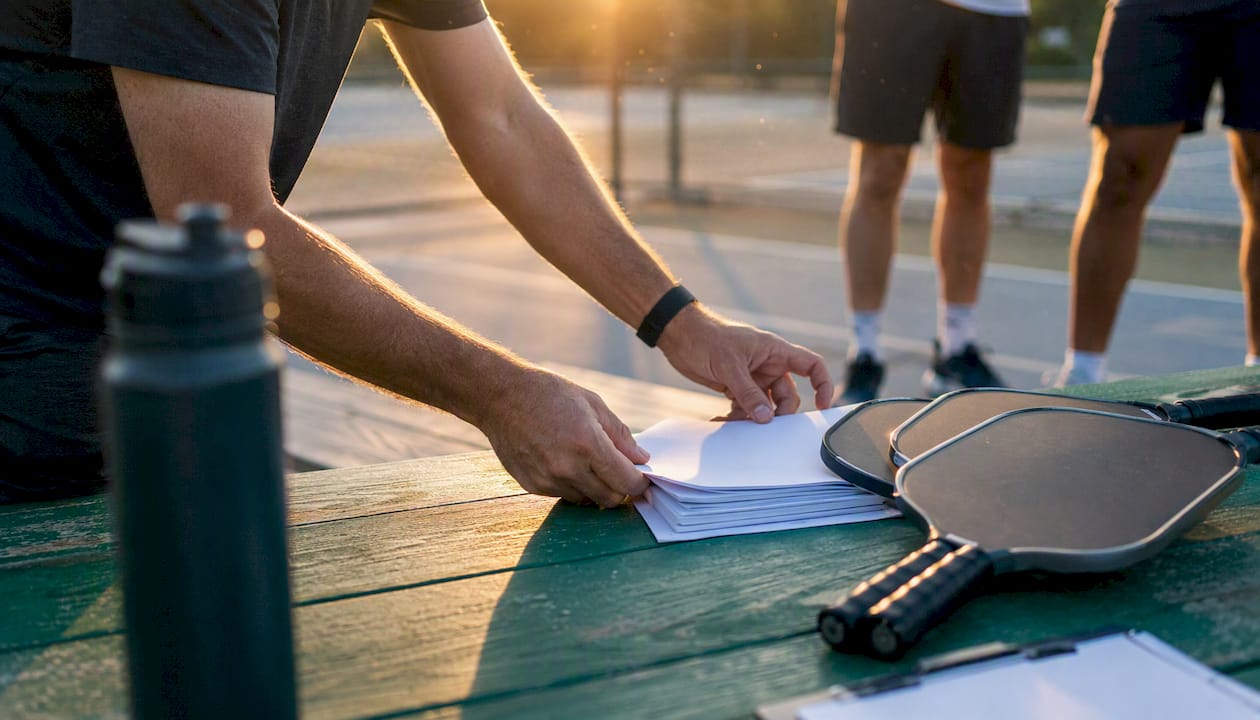
A pickleball team captain is the team’s on-court leader and season administrator, responsible for roster management, registration and payments, scheduling, match-day scorekeeping, and team communication. Get this role right and your season runs smoothly. Get it wrong and you’re chasing unpaid fees and forfeited matches in week three.
Your top captain duties at a glance:
- Register the team and collect player fees before the roster deadline
- Build and manage the roster, verify eligibility and DUPR ratings
- Reserve courts and confirm venue logistics before each match
- Coordinate schedules, collect availability, and set lineups
- Bring scorecards on match day, verify lineups, and record scores
- Submit scores to the league within the required window (often 48 hours)
- Communicate rules, conduct expectations, and schedule changes to the team
- Enforce the code of conduct and escalate unresolved disputes to the league coordinator
First three actions after being named captain: (1) Confirm your registration deadline and fee structure with the league. (2) Send a team link or invite to all players and collect registrations. (3) Schedule a short kickoff call or message to set expectations for the season.
Key Takeaways
A pickleball team captain’s effectiveness depends on preparation before the season, consistent communication during it, and a clear process for match day.
| Point | Details |
|---|---|
| Registration comes first | Confirm fees, collect payments, and verify every player’s status before the roster deadline. |
| Eligibility is the captain’s responsibility | Check DUPR ratings and registration status for every player, including substitutes, before each match. |
| Score reporting has a deadline | Most leagues require score submission within 48 hours; the visiting team typically has the same window to contest. |
| Leadership is behavioral, not titular | Model the conduct you expect, give feedback privately, and recognize effort consistently throughout the season. |
| Flexleagueplus automates the admin layer | Registration, payments, scheduling, and score reporting run through the platform, reducing captain workload from week one. |
Table of Contents
- What do captain roles in pickleball actually look like?
- How does captain registration and fee collection work?
- How do you build a roster and manage eligibility?
- What should you confirm before reserving a venue?
- How do captains coordinate schedules and keep players informed?
- What happens on match day?
- What rules does a captain need to know?
- How do you run a captain meeting and train new captains?
- How do you lead a team, not just manage it?
- What tools and templates make the captain role easier?
- Legal and liability considerations for pickleball captains
- What running real leagues teaches you about the captain role
- Flexleagueplus handles the admin so captains can focus on the game
- Sources
What do captain roles in pickleball actually look like?
The captain role across sports) often blends ceremonial duties with real administrative ones. In pickleball leagues, the administrative side dominates. You’re the primary contact between your team and the league, which means you handle everything from paperwork to pre-match logistics that most players never think about.
How captains are selected
Selection methods vary by league and team culture. Here are the four most common approaches, each with a real tradeoff:
- Coach or organizer appointment. Fast and decisive, but players may not buy in if they don’t respect the choice. Works best in competitive leagues where skill and reliability matter most.
- Team vote. Builds buy-in and peer respect, but can favor popularity over competence. Run it with a short rubric (see below) so the vote reflects actual captain qualities.
- Coach-plus-team hybrid. The organizer nominates two or three candidates; the team votes among them. Balances authority with player input and tends to produce the most durable selections.
- Rotating weekly captains. Spreads the load and develops leadership across the roster, but creates inconsistency in communication and accountability. Best for casual recreational leagues.
Transparent selection criteria and athlete input reduce captain turnover and make the process feel fair. Before any vote or appointment, publish a short rubric so candidates know what’s being evaluated.
A practical selection rubric (score each 1–5):
- Attendance and reliability at practices and matches
- Communication clarity and responsiveness
- Conflict management and composure under pressure
- Court skill relative to the team’s division
- Willingness to handle administrative tasks
Role clarity from day one
When you accept the captain role, confirm these specifics in writing with your league organizer:
Name a vice-captain early. Assign them a specific duty (availability collection, scorekeeping, or venue coordination) rather than a vague backup role. Rotate duties at the season midpoint so the vice-captain is genuinely prepared if you need to step back.
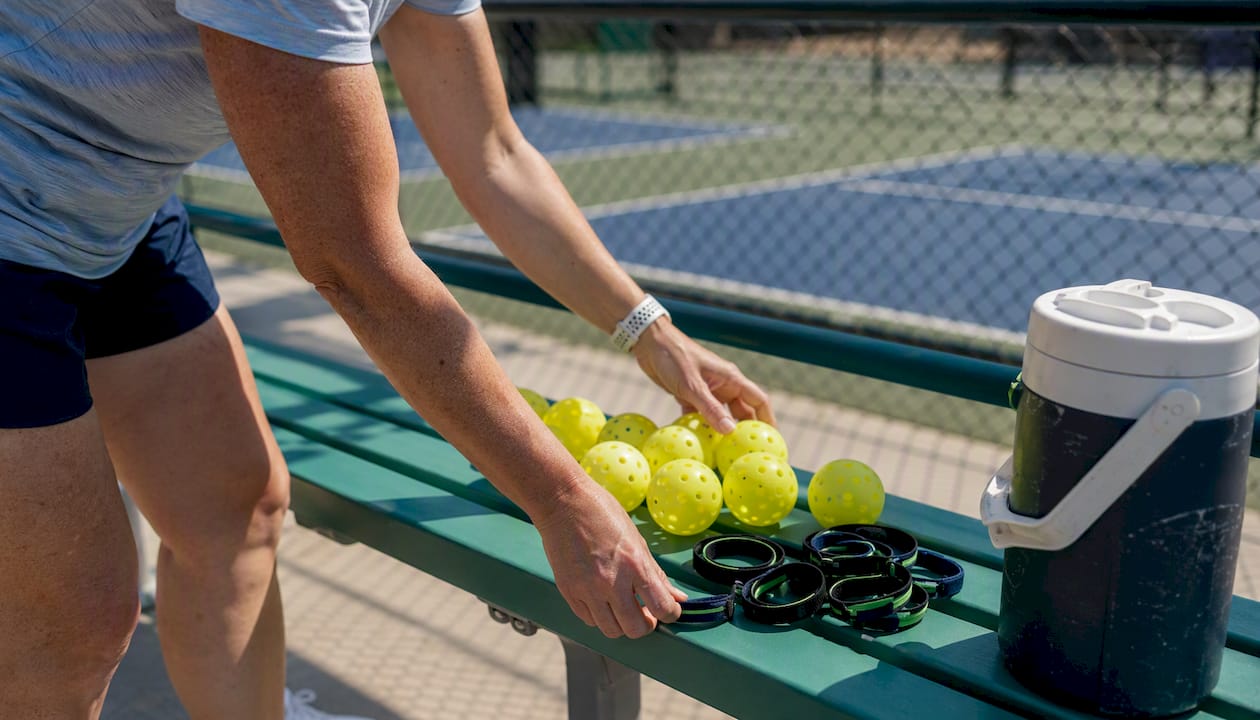
Pro Tip: Write a one-page “captain agreement” that lists your responsibilities and what you won’t cover. Share it with your team before the season starts. It prevents the most common source of captain burnout: scope creep.
How does captain registration and fee collection work?
Fee structures vary by league, but the shape is consistent: a captain registration fee plus a per-player league fee. As one example, Power Play documents a captain fee plus a player fee as a typical structure. Your league’s numbers will differ, but the two-tier model is standard.
Fee collection timeline
Missing a payment deadline can cost a player their eligibility. Build this sequence into your calendar:
- Week 1 of registration: Send the fee breakdown and payment instructions to every player.
- One week before the roster deadline: Follow up with anyone who hasn’t paid or registered.
- 48 hours before the deadline: Final reminder. Unregistered players cannot play.
- Day of the deadline: Confirm each player’s registration status in the league portal before submitting your roster.
Collection methods
The cleanest approach is directing every player to pay the league directly through the official payment system. This eliminates the awkward situation of you fronting money and chasing reimbursements. When a league uses an integrated payment platform (Stripe-connected portals, for example), players register and pay in one step, and you can verify status in real time.
If your league requires the captain to collect and remit fees, use a trackable method: Venmo, Zelle, or a shared spreadsheet with payment confirmation dates. Never rely on verbal confirmations.
Your registration checklist:
- League registration link sent to all players
- Captain fee paid and confirmed
- Each player’s registration status verified in the portal
- Roster submitted before the deadline
- Confirmation email or receipt saved
Pro Tip: Screenshot or export the registration status page the day before your roster deadline. If a dispute arises about who was registered, you have timestamped proof.
How do you build a roster and manage eligibility?
Captains manage rosters, verify DUPR ratings, and confirm eligibility for every player before each match. An unregistered or ineligible player on the court can result in a forfeit, and that’s entirely on the captain.
How roster systems typically work
Most leagues issue a private team link that only the captain controls. Players join through that link, which means you decide who’s on the roster. Don’t share the link publicly. If a player joins who shouldn’t be there, removing them mid-season creates friction and potential eligibility disputes.
Common eligibility pitfalls:
- Player registered but hasn’t paid: ineligible until payment clears
- Player’s DUPR rating exceeds the division ceiling: ineligible for that division
- Substitute not pre-approved by the league: scores may not count
- Player registered on two teams in the same division: check your league’s rules
Adding substitutes
The substitution process varies by league, but the general steps are:
- Confirm the substitute meets eligibility requirements (DUPR rating, membership, payment).
- Notify the league coordinator before match day, not during.
- Notify the opposing captain when you make contact before the match.
- Bring documentation (registration confirmation) to the match in case it’s questioned.
Pro Tip: Keep a digital roster with each player’s registration date, DUPR rating, and payment status. Add a column for signed waivers. A shared Google Sheet works fine. You’ll thank yourself the first time eligibility is questioned on match day.
What should you confirm before reserving a venue?
Venue problems are the most preventable source of match cancellations. A court that’s double-booked or missing lights for an evening match is a captain problem, not a league problem.
Venue confirmation checklist
Before committing to any facility, verify:
- Indoor or outdoor courts (and weather contingency plan for outdoor)
- Number of courts available per match slot
- Lighting for evening matches
- Restrooms and parking availability
- Facility-required waivers or liability forms
- Whether the facility allows outside equipment (balls, nets)
Reservation timing and court math
Reserve courts at least two weeks in advance for weekday evenings and four weeks for weekend slots. For a standard team match, reserve one court per concurrent game plus one buffer court if your format allows warm-up time. Confirm the reservation 48 hours before match day.
Steps to confirm with a facility manager:
- Provide the match date, start time, and expected duration.
- Confirm the number of courts and their surface type.
- Ask about the cancellation and rescheduling policy.
- Get confirmation in writing (email is fine).
- Ask who to contact if there’s a facility issue on match day.
Who pays facility fees depends on your league’s structure. Some leagues build court costs into the player fee and handle reservations centrally. Others require the home team captain to reserve and pay, then submit for reimbursement. Clarify this before the season starts.
Pro Tip: Save the facility manager’s direct phone number in your contacts. On match day, if something goes wrong, you need to reach a person, not a general inbox.
How do captains coordinate schedules and keep players informed?
Scheduling is where most captain communication happens, and where most captains lose time. A consistent cadence and reusable templates cut the back-and-forth significantly.
Availability collection
For a season-long league, collect availability at two points: before the season starts (to identify blackout dates) and weekly (to confirm each match). A simple Google Form or group poll works for the weekly check. For season-long blackouts, a shared spreadsheet is easier to reference.
Recommended communication cadence:
- Season start: Send blackout date request and introduce the team schedule.
- One week before each match: Send availability request.
- 48 hours before: Send lineup confirmation and match details.
- Day of match: Send a brief reminder with court location and arrival time.
Message templates
Availability request: Match reminder: Last-minute change: Season wrap-up:
Confirming lineups and late changes
Lock your lineup 24 hours before the match and send it to the opposing captain at the same time. If a player drops out after that, notify the opposing captain immediately and document the change. Most leagues require lineup changes to be communicated before the match starts, not after.
Pro Tip: Use a group chat for quick logistics, but send official lineup confirmations by text or email so there’s a record. “I posted it in the group chat” is not a defense in a dispute.
What happens on match day?
Match day is where preparation either pays off or falls apart. A short pre-match contact between captains to confirm courts, arrival time, and any site rules dramatically reduces on-site confusion. Make that call or send that message two days before, not the morning of.
Pre-match checklist
- Confirm court assignment with the facility and opposing captain
- Bring printed scorecards (don’t assume the facility has them)
- Verify both teams’ lineups and eligibility before play starts
- Exchange scorecards with the opposing captain
Scorekeeping and score reporting
During the match, one captain (usually the home captain) records scores on the official scorecard. Both captains sign off at the end. Most leagues require score submission within 48 hours of match completion. Texas Team Pickleball League, for example, requires score reporting within 48 hours, with a 48-hour contest window for the visiting team to dispute the result.

Handling disputes
If a dispute arises during the match, follow this sequence: stay calm, record the specific point or situation in writing, and declare the match “under protest” if it cannot be resolved on site. Do not continue play under protest without documenting it. Contact the league coordinator after the match with your written account.
Pro Tip: Take a photo of the signed scorecard before you leave the facility. Score disputes are almost always about what was written down, and a photo timestamp settles them fast.
What rules does a captain need to know?
Captains don’t need to memorize every rule, but they need to know where to find answers quickly and how to apply the conduct standards their league requires.
Key rulebooks to reference
- Your league’s specific rulebook (the primary source for all disputes)
- USA Pickleball’s official rules for standard play rules
- Your league’s code of conduct and eligibility policies
The league rulebook overrides general pickleball rules when they conflict. If your league says scores must be submitted within 24 hours and the general guidance says 48, your league’s rule applies.
Conduct enforcement
Your conduct checklist as captain:
- Set expectations at the season kickoff (no verbal abuse, no equipment throwing, respect officials)
- Address minor issues privately and immediately, not in front of the team
- Document repeated incidents in writing
- Escalate to the league coordinator when a player’s behavior affects the match or other players
The ALTA guidance frames it well: steady leadership from the captain reduces disputes and improves team morale. That’s not a soft skill. It’s a match-day outcome.
How do you run a captain meeting and train new captains?
A season-start captain meeting sets the tone for everything that follows. Run it before the first match, keep it under an hour, and send notes afterward.
Captain meeting agenda template
- Registration deadlines and fee structure (10 minutes)
- Roster submission process and eligibility rules (10 minutes)
- Score reporting: how, where, and the 48-hour window (10 minutes)
- Conduct expectations and dispute procedure (10 minutes)
- Scheduling and venue logistics (10 minutes)
- Q&A and open issues (10 minutes)
New captain training checklist
Before a new captain runs their first match, they should complete:
- Practice score entry in the league portal or app
- Review the eligibility checklist with an experienced captain
- Run through the dispute procedure with a scenario (what would you do if…)
- Confirm they have the league coordinator’s contact information
- Read the league rulebook, not just the summary
Store meeting notes and shared templates in a folder all captains can access (Google Drive works). When a captain steps down mid-season, the vice-captain picks up a folder with everything they need, not a blank slate.
Pro Tip: Record the captain meeting (with permission) or take structured notes using the agenda as a template. New captains who join mid-season can watch or read it instead of asking the same questions again.
How do you lead a team, not just manage it?
Administrative competence gets you through the season. Leadership is what makes players want to come back next year.
The IHSAA captain’s handbook makes a point worth repeating: holding the captain title doesn’t guarantee leadership. Teams should train captains in communication, conflict management, and role clarity so the title equals consistent behavior.
Influence over authority
You can’t bench a recreational pickleball player. Your only real lever is influence, which means modeling the behavior you want to see. Show up early. Know the rules. Stay composed when a call goes against you. Players follow what they see, not what they’re told.
Practical leadership behaviors:
- Give feedback privately and specifically (“Your third-shot drop was off today, let’s talk about it”) rather than publicly and generally
- Recognize effort, not just results (“You covered that lob perfectly even though we lost the point”)
- Let informal leaders on the team take ownership of specific tasks (warm-up, social planning, stats)
- Step back when a teammate is handling something well
Motivation and team cohesion
Short pre-match huddles (two minutes, specific focus) work better than long motivational speeches. Pick one tactical point and one recognition. Keep it concrete.
Small rituals matter more than big events. A consistent post-match tradition (a quick debrief, a group message, a standing joke) builds the kind of camaraderie that keeps players committed through a losing streak.
Pro Tip: Balance your captain duties with your playing time deliberately. If you’re so focused on logistics that you’re not competing well, your teammates notice. A captain who plays hard sets a standard. A captain who’s distracted by admin during the match sets a different one.
What tools and templates make the captain role easier?
The right tools cut captain admin time significantly. The wrong ones create more coordination overhead than they solve.
Templates every captain should have ready
- Availability spreadsheet: Player names across the top, match dates down the side, YES/NO/MAYBE in each cell. Share it in Google Sheets so players can fill it themselves.
- Lineup template: Match date, opponent, court assignment, player names by position, sub slot.
- Match reminder text: Fill-in-the-blank format (see the communication section above).
- Captain meeting agenda: The six-item template from the previous section, saved as a reusable doc.
- Score report template: Match date, teams, court-by-court scores, total, both captains’ signatures.
What to look for in league software
When choosing a platform for your league, prioritize these features:
- DUPR integration for automatic eligibility verification
- Stripe-connected payment processing so players pay directly and you don’t handle cash
- Automated scheduling that generates match slots based on availability
- Live standings and playoff brackets so captains don’t maintain manual tables
- Score reporting built into the app with a submission timestamp
The best scheduling apps for pickleball leagues combine availability collection, automated match generation, and score submission in one workflow. That’s the combination that actually reduces captain workload.
When to use the league portal vs. a quick group tool
Use the league’s official portal for anything that creates a record: registration, score submission, lineup confirmation, eligibility checks. Use a group chat or poll tool (GroupMe, WhatsApp, Google Forms) for quick availability checks and logistics. Don’t blur the two. A score submitted in a group chat is not an official submission.
Pro Tip: Set up your availability spreadsheet and message templates before the season starts, not during week two when you’re already behind. One hour of setup saves five hours of reactive coordination.
Legal and liability considerations for pickleball captains
Most recreational captains don’t think about liability until something goes wrong. Here’s what to know before the season starts.
Waivers: Most leagues require players to sign a liability waiver before participating. As captain, confirm that every player on your roster has signed the league’s waiver before they step on the court. If a player is injured and hasn’t signed, the liability question gets complicated fast. Keep copies or confirm waiver status in the league portal.
Facility liability: When you reserve a court, the facility may require you (as the reserving party) to sign their liability agreement. Read it. Some facilities require proof of insurance for organized group play. Check with your league organizer about whether the league’s insurance covers your team’s court reservations, or whether you need a separate certificate.
League insurance: Many organized pickleball leagues carry general liability insurance that covers players during sanctioned matches. USA Pickleball membership includes liability coverage for sanctioned events. Confirm whether your league is sanctioned and what that coverage includes before assuming you’re protected.
Player conduct and captain liability: If a player on your team causes injury to another player through reckless behavior, and you as captain were aware of prior incidents and took no action, that creates a potential negligence question. Document conduct issues and escalate them to the league coordinator. That paper trail protects you.
Minor players: If any player on your roster is under 18, a parent or guardian waiver is typically required in addition to the standard league waiver. Verify this with your league organizer.
This is general information, not legal advice. Confirm your league’s specific waiver, insurance, and liability requirements with the league organizer or a qualified professional before the season starts.
What running real leagues teaches you about the captain role
The administrative side of captaining is learnable in an afternoon. The part that trips people up is the gap between what captains are told they’re responsible for and what they’re actually prepared to handle.
The most common recurring issue in recreational leagues isn’t rule disputes or scheduling conflicts. It’s the captain who agreed to the role without understanding the scope, then went quiet when the first problem hit. A player didn’t pay. A sub showed up unregistered. A score wasn’t submitted. Each of those is a small problem in isolation. Together, they create a team that stops trusting its captain by week four.
The fix is almost always the same: a short written agreement at the start of the season, a vice-captain with a real job, and a platform that handles the transactional work automatically. When payment collection, score submission, and eligibility checks run through a system rather than through the captain’s personal effort, the captain can focus on the part that actually requires a human: keeping the team together.
Leagues that use Flexleagueplus for registration, scheduling, and score reporting see fewer of these mid-season breakdowns because the administrative layer is handled before the captain ever has to chase it.
Flexleagueplus handles the admin so captains can focus on the game
Running a team is genuinely easier when registration, payments, and score reporting aren’t manual tasks. Flexleagueplus is built specifically for pickleball league management, and its feature set maps directly to the duties that consume most captain time.
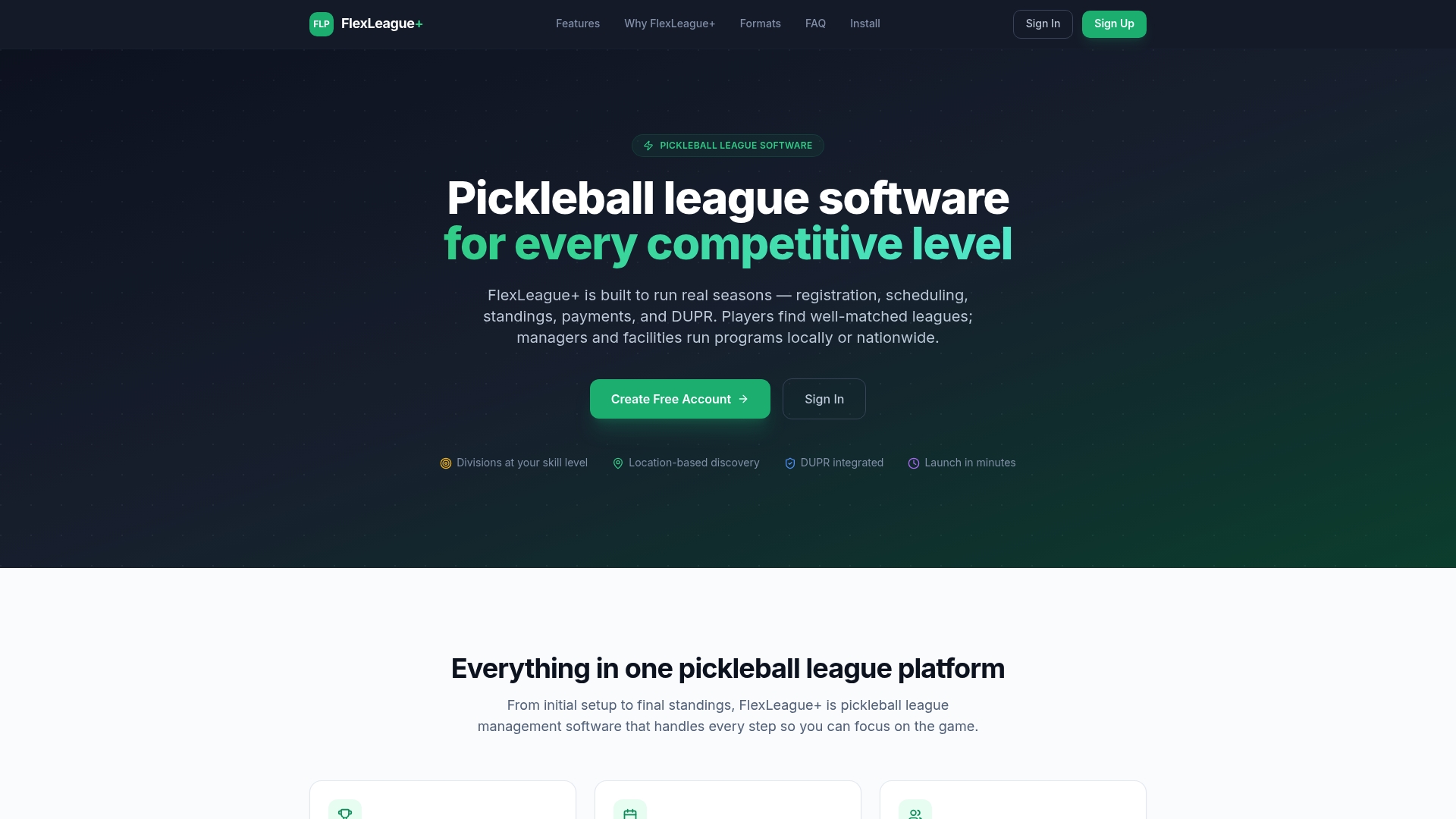
Here’s how the platform covers the workload:
- Private team links let captains control exactly who joins the roster, no open signups
- Stripe-connected payment collection means players pay at registration, and captains never handle cash or chase Venmo requests
- DUPR integration verifies player ratings automatically, so eligibility checks happen in the system, not on a spreadsheet
- Automated scheduling generates match slots and sends notifications without captain involvement
- Built-in score reporting with a submission timestamp creates the official record the league needs
A captain using Flexleagueplus spends the pre-season setting up the team link and confirming the schedule. A captain managing everything manually spends it texting payment reminders and building spreadsheets. The difference shows up by week three.
Start running your league on Flexleagueplus and see how much of the captain’s administrative load the platform handles automatically.
Sources
Every captain should have these references saved before the season starts:
- Pickleball Team Captain’s Guide | Pickleball Power Play
- Captains Role
- The Joy And Thrills Of Captaining - ALTA Net News Magazine
- Thegazette
For disputes and appeals, use your league’s official policy document, not general pickleball rules or third-party summaries. The league rulebook is the only document that governs your specific season.